


So we turn to the question, does the history of ideas really matter?
There was a time (now, mercifully, mainly past) when it was fashionable in Anglo-Saxon philosophy departments to deride the history of thought. In this particular form of heresy, the great thinkers who have largely created the intellectual atmosphere in which we all, more or less consciously breathe were either disregarded entirely as "old hat" or else taken wholly out of context as if they could be fully understood without any reference whatsoever to the intellectual atmosphere in which they themselves breathed.
The truth is, of course, that this heresy can only impoverish philosophy. The great thinkers of the past are as much a part of the continuing conversation of our civilisation as are the thinkers of the present. But they are participants whose contributions can be fully understood only by reference to the context within which they operated. And the subtler points of their contextualised contributions can be grasped only through reading a text which is as near as we can get to what the author himself intended.
So yes, the history of ideas really does matter, and the precision of the great texts in the history of ideas also matters, not just because our history matters in itself but also because the ability to see accurate texts accurately placed in the context of their history contributes to an understanding of the ideas that constitute philosophy and, in particular, political theory.
These are points that Dr Malcolm himself (and indeed his two very distinguished co-editors of the Clarendon edition of Hobbes, Quentin Skinner and Keith Thomas) would of course regard as so obvious as to be hardly worth making. But, in defence of civilisation against the barbarian incursions, these things do in fact sometimes need to be restated — and there seems to be no more suitable time to do so than in the course of reflecting on Dr Malcolm's magnificent edition of Leviathan.


Post your comment

- Online Only: The Price Paid for Criticising Islam
- Birthrate of a Nation
- Uncritical Theorists Who Misread the Nazis
- The Alternative History of an Undivided India
- The Beeb Needs its Mavericks
- Is a Stradivarius Just a Fiddle?
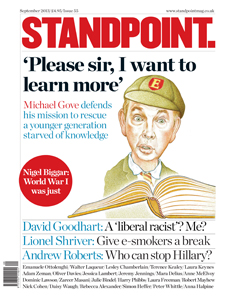
- 'Please Sir, I Just Want to Learn More'
- A 'Liberal Racist'? Me? I Felt Like a Heretic