


Perhaps because Paulson himself is now based in London (he is a partner of Alexander Mamut, the Russian owner of Waterstones bookshops) the city which has just held the Olympics will also become the hub of world chess. On September 21 the first event of the next cycle of World Chess Grand Prix, involving 12 of the world's strongest grandmasters, will be held at Simpson's-in-the-Strand. This is a wonderful homage by the highly cultured Paulson to the history of the game. In the 19th century Simpson's Divan was for chess what Wimbledon is for tennis or Lord's for cricket. The leading players of the day would there take on all comers, while Simpson's also held some of the era's greatest tournaments, including the first-ever women's international in 1897.
Paulson also plans to be an innovator, contracting the designers Pentagram to create a purpose-built "cockpit" so that the players will compete almost in the style of boxers or sumo wrestlers; and he has taken on the former Director of Interactive Design at the BBC, Vibeke Hansen, to — as Paulson enthusiastically put it to me over a good bottle of wine at his club, the Garrick — "transform chess into a spectator sport".
Much has been made of the social benefits of holding the Olympics in London — that a generation of youngsters will want to emulate the determination and competitiveness of our sporting champions, whether on the running track or on two wheels. Physical fitness is obviously desirable in the young and competitive sport in schools is to be encouraged; but the argument for proselytising on behalf of chess is if anything stronger. It not only harnesses the competitive spirit, but has universally acknowledged benefits in teaching children the value of patience, planning and perseverance — the attributes most valued by employers in a developed world where manual labour is increasingly redundant and intellectual powers are in ever greater demand. Paulson recognises this, of course, and at the world championship candidates match he has scheduled for London next March, he will invite more than 200 promising youngsters to participate in tournaments and instruction before the official games begin.
Puzzle: The most celebrated game in history was played in Simpson’s, the venue for this month’s Grand Prix event. Here is the conclusion of the so-called immortal game, played between Adolf Anderssen and Lionel Kieseritsky in 1851. Anderssen (White) has sacrificed a Bishop and two rooks to reach this position. How did he now achieve immortality?
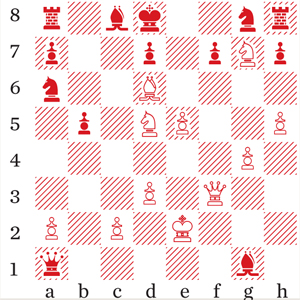
Solution: Anderssen finished his masterpiece with 22.Qf6+!! Nxf6 23.Be7 checkmate.


