


If conservative-minded readers have not been snorting already, they will be now. How typical of the cultural elite. They did not greet Labour's election victory by running anti-Left dramas. Indeed, they have presided over such a thinning of intellectual life that today there are no Conservative writers to write anti-Left dramas. The only criticisms of Labour they allowed were from the Left, most incessantly about the overthrow of Saddam Hussein. Before Thatcherism, England's greatest writers — Philip Larkin, Kingsley Amis, Anthony Powell — were conservatives. Partly because of the repulsion the mass unemployment of the 1980s generated but also because of ideological policing by cultural institutions, you cannot now see political drama from an unorthodox perspective.
The old saying that "the Right won the economic war and the Left won the cultural war" is usually wheeled out on these occasions but it falls from the lips too glibly. The real victors of the past 30 years were neither the Left nor the Right but blaring populists, ignorant and proud of it, who made fortunes by opposing aesthetic or political seriousness in any form. Greg Dyke, Simon Cowell or Peter Bazalgette embody cultural power today, not Sir David Hare. Even if we confine ourselves to serious art, the idea of cultural victory remains ambiguous. While I don't doubt that the artists' presentation of Thatcherism as a vicious, selfish aberration did long-term damage to the Right — damage that Cameron is still struggling to repair — victory in a culture war was likely to be pyrrhic at best when it was accompanied by defeat in the economic war and, for a long time, the political war as well.
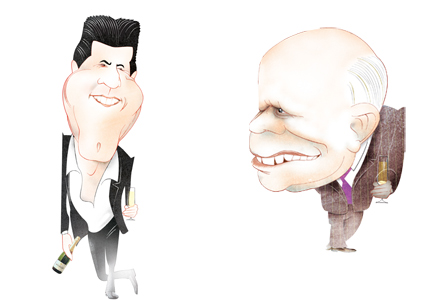
Simon Cowell and Greg Dyke: The embodiment of cultural power today
I certainly did not feel that I was a foot soldier in a victorious army, and I'm not sure anyone else did either. Return to Coe's Thatcherite plotters cackling in their gentlemen's club about the primitive nature of a British conscience "that can only hold two or three things in its memory at the same time" and note the author's despairing assumptions. The failure of the electorate to show they gave a hoot by throwing out the Tories bred the despairing suspicion that the voters were fools being manipulated by propagandists.
Ian McEwan's 1983 film The Ploughman's Lunch makes the despair explicit. He deflates images of Margaret Thatcher urging the British to return to traditional values and bring a "renewed sense of pride and self-respect to our country" after the victory in the Falklands War by introducing us to Matthew, yet another amoral adman. He takes the lead character, an equally cynical BBC journalist, to a pub and explains both the phoniness of Thatcherite Britain, and the title of the film, when he boasts:
"We might have led the world once in the Industrial Revolution, now we lead with television commercials. We're the best, it's as simple as that. Even the Americans will admit it now...the camera work, the acting, the scripts, special effects. We've got the lot. Nearly all the good directors here have ambitions to make serious films...That food you're eating.


6:12 PM
2:12 PM