


It has long been the perception of researchers into the Press Council and the PCC that these bodies have been funded by media proprietors with the real purpose of staving off a law against invasion of privacy. For many years the PCC has routinely boasted in every annual report of its ability to protect privacy and raise the ethical standards of the British press:
The application and observance of the Code are part of the culture of every newsroom and every editorial office...the PCC has clearly raised standards of reporting...most activities which brought newspapers and magazines into disrepute in the 1980s have long since vanished — and the PCC continues to ratchet up standards on the back of adjudications. (PCC Annual Review, 2000.)
Boasts like this have been demonstrably idle. The PCC has no investigative powers or procedures, holds no adversary hearings and never actually monitors the press. Its Code offers only a weasel-worded right of reply to those attacked. Its claim to offer an "effective remedy" for breaches of privacy is untrue and was rejected by the European Commission in Earl Spencer's case: "The PCC has no legal power to prevent publication of material, to enforce its rulings or to grant any legal remedy against the newspaper in favour of the victim." The UK government did not contest this conclusion, and the European Court held that no remedy can be "effective" unless it includes compensation for victims. PCC rulings on paparazzi photographs have been wildly inconsistent, and its Code provisions against intrusion into grief and shock, chequebook journalism and payment of "blood money" are regularly breached.
The days when the PCC was expected to provide a fig-leaf remedy to prevent the development of a law against invasion of privacy are now over. Article 8 of the Human Rights Act has permitted judges to do what they had long wanted to do, at least since Lord Bingham despaired of protecting 'Allo 'Allo! star Gorden Kaye from a journalist who infiltrated his hospital room while he was coming round from brain surgery, and conducted an "interview under anesthetic". However satisfactory it may be to have a judge-made law that now gives damages to victims of such misbehaviour, Article 8 (which reads: "Everyone has the right to respect for his private and family life...") has been allowed to trump genuine and sometimes important exercises of free speech. This is partly the fault of the European Court, with its incoherent definitions of privacy as encompassing "psychological integrity" and "a zone of interaction with others, even in public". But it also arises from a mistake by the English law lords, who rejected Lord Scarman's insistence that Article 10 ("Everyone has the right to freedom of expression" — not the right merely to "respect" for that freedom) would prevail over privacy considerations whenever a public interest might be served by publication. Now, courts insist on "balancing" the two rights instead of making a presumption in favour of free speech. This has had the result that subjective value judgments by the judiciary have suppressed stories of some public importance.


Post your comment
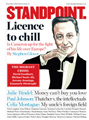
- Licence To Chill? Not Yet, Prime Minister
- Money Can't Buy Us Love: Profiting From Loneliness
- More Immigration Means Less Integration
- Is France As Doomed As Houellebecq Thinks?
- Compassion To Refugees, Not Capitulation To Islamic State
- How Mervyn King Got Northern Rock Wrong
- Fix Rotten Boroughs Or Risk Voting Wars
- Migrant Crisis? Europe Hasn't Seen Anything Yet
- Why Palmyra Should Matter To The West
- Corbyn's Rise Makes Cameron Redundant
- No, Jeremy: Politics Is All About Borders Now
- Why 'Lady Chatterley' Still Provokes Us
- For Climate Alarmism, The Poor Pay The Price
- Will Putin's Empire Outlast The Soviets?
- British Witnesses To Lenin's Revolution
- Bibliophiles Beware: Online Prices Are A Lottery
- How Jeremy Corbyn's Coup Hijacked Labour
- Corbyn's Signpost Back To The Ghetto
- Unionists, Don't Despair: Scotland Is Not Lost — Yet
- Britain's Apologists For Child Abuse
