


Border anxiety is thus a rational response to a global crisis — the crisis of Islam. The causes of that crisis have little to do with the West, except in the general sense that it is responsible for modernity. But the effects of the Islamic world’s travails are making themselves felt in every city in Europe. On the Continent, border anxiety may sour into outright hostility, but for us it is the discomfort of the Englishman who finds his home is no longer his castle. As long as it is he who chooses whom to invite, his hospitality knows no bounds; but if that choice is usurped by others over whom he has no control, he is likely to become less hospitable.
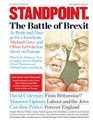
The migration crisis bears on Britain’s decision about whether or not to leave the EU (“Brexit”). Those who urge the British to stay — let’s call them the Remainders — are usually also those who want open borders, not only to refugees but to migrants of all kinds. They must answer the charge that, by denying Britain sovereignty over its borders, they make it almost inevitable that border anxiety will dominate the referendum. Voters must also beware of “Project Fear” — the attempt by Downing Street and the Remainders to generate a more irrational kind of border anxiety, the fear of being excluded from Europe, to avert Brexit.
The Leavers too should be warned that, in making the case for Brexit as the only way to reassert control over our borders, they must not encourage an atmosphere of hostility to immigrants — and indeed to those who settled here long ago. Border anxiety may be a rational and legitimate response, but it can be manipulated by the unscrupulous on all sides — as Putin has done in Ukraine.
European culture is unique thanks to achievements that transcend borders: music, literature, the arts, science, technology, religion, philosophy. The immortal is universal, but we mortals depend on the particular. We need borders in politics for the same reason that we need boundaries in life: “Only in self-limitation does the master first show himself,” wrote Goethe. The glory of Europe lies in its infinite variety, which requires a polycentric politics of nation states. There is no necessary contradiction between sovereignty and co-operation: it works for the Atlantic alliance. But a “pooling” of sovereignty is bound to strain any spirit of amity by forcing nations to compete for power. Europe’s “ever-closer union” has in reality become ever more fissiparous — to the point of collapse.
At the time of writing, the EU Council of Ministers has not yet agreed the terms of Britain’s “renegotiation”, but it is already clear that they fall short even of the modest promises made by the Prime Minister in 2013. It took Margaret Thatcher six years of negotiation to “get our money back”. So how did David Cameron suppose he would get our sovereignty back in three? That task now falls to the British people in the referendum that is his real achievement.
The migration crisis bears on Britain’s decision about whether or not to leave the EU (“Brexit”). Those who urge the British to stay — let’s call them the Remainders — are usually also those who want open borders, not only to refugees but to migrants of all kinds. They must answer the charge that, by denying Britain sovereignty over its borders, they make it almost inevitable that border anxiety will dominate the referendum. Voters must also beware of “Project Fear” — the attempt by Downing Street and the Remainders to generate a more irrational kind of border anxiety, the fear of being excluded from Europe, to avert Brexit.
The Leavers too should be warned that, in making the case for Brexit as the only way to reassert control over our borders, they must not encourage an atmosphere of hostility to immigrants — and indeed to those who settled here long ago. Border anxiety may be a rational and legitimate response, but it can be manipulated by the unscrupulous on all sides — as Putin has done in Ukraine.
European culture is unique thanks to achievements that transcend borders: music, literature, the arts, science, technology, religion, philosophy. The immortal is universal, but we mortals depend on the particular. We need borders in politics for the same reason that we need boundaries in life: “Only in self-limitation does the master first show himself,” wrote Goethe. The glory of Europe lies in its infinite variety, which requires a polycentric politics of nation states. There is no necessary contradiction between sovereignty and co-operation: it works for the Atlantic alliance. But a “pooling” of sovereignty is bound to strain any spirit of amity by forcing nations to compete for power. Europe’s “ever-closer union” has in reality become ever more fissiparous — to the point of collapse.
At the time of writing, the EU Council of Ministers has not yet agreed the terms of Britain’s “renegotiation”, but it is already clear that they fall short even of the modest promises made by the Prime Minister in 2013. It took Margaret Thatcher six years of negotiation to “get our money back”. So how did David Cameron suppose he would get our sovereignty back in three? That task now falls to the British people in the referendum that is his real achievement.
Like this article? Share, save or print using the icons below:


