



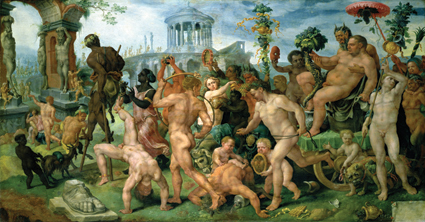
Concerns over binge drinking — the habit of drinking large quantities of alcohol with the intention of getting drunk, usually in company but without the benefit of conversation of any kind — have brought into focus the great difference that exists between virtuous and vicious drinking. Our puritan legacy, which sees pleasure as the doorway to vice, makes it difficult for many people to understand this difference. If alcohol causes drunkenness, they think, then the sole moral question concerns whether you should drink it at all, and if so how much. The idea that the moral question concerns how you drink it, in what company and in what state of mind, is one that is entirely foreign to their way of understanding the human condition.
This puritan legacy can be seen in many aspects of British and American society. And what is most interesting to the anthropologist is the ease with which puritan outrage can be displaced from one topic to another and the equal ease with which the thing formerly disapproved of can be overnight exonerated from all taint of sin. This has been particularly evident in the case of sex. Our parents and grandparents were concerned — and rightly concerned — that young people should look on sex as a temptation to be resisted. However, they did not see chastity as a preparation for sexual enjoyment: in their eyes it was precisely the enjoyment that was wrong. As a result, they made no real distinction between virtuous and vicious desire. The whole subject was taboo and the only answer to the question of sexual urges was "Don't!" The old idea of chastity as a form of temperance eluded them. Yet what Aristotle said about anger (by way of elucidating the virtue of praotes or "gentleness") applies equally to sex. For Aristotle it is not right to avoid anger absolutely. It is necessary rather to acquire the right habit — in other words, to school oneself into feeling the right amount of anger towards the right person, on the right occasion and for the right length of time.
In just such a way we should define sexual temperance, not as the avoidance of desire, but as the habit of feeling the right desire towards the right object and on the right occasion. That is what true chastity consists in, and it provides one of the deep arguments in favour of marriage or, at least, in favour of the constraint upon sexual appetite that is offered by love, that it makes sexual enjoyment into a personally fulfilling habit.


- Our EU Deal Gives Us The Best Of Both Worlds
- Brexit Would Save Us And Set Europe An Example
- Are Both Sides Playing By The Referendum Rules?
- Should We Stay Or Should We Go?
- Ignore Project Fear: Brexit Won't Ruin Us
- Uncontrolled Immigration Means Finis Britanniae
- The Next US President Must Carry A Big Stick
- Can Clinton Or Trump Crack The US Tax Code?
- How to Survive the Fourth Industrial Revolution
- The Spectre Of Mayor Khan's Islamist London
- Students Are Leading The Free Speech Fightback
- Fortress Europe Faces An African Migrant Tsunami
- Trump May Be Bad, But What Comes Next Will Be Worse
- Myth Of Stressed-Out Soldiers On The Street
- The Russian Love Affair With Palmyra Resumes
- How Russia Is Ruled By The Putin Doctrine
- The Doors Of Holocaust Memory Are Closing
- Rediscovering The Point Of Language
- The Novelist For Whom Small Was Beautiful
- A Recipe For Disaster

7:02 PM