



When Mao Tse-Tung launched the Cultural Revolution in May 1966, one of the principal targets of attack were intellectuals. Thousands were silenced, beaten to death, imprisoned, tortured or sent out to the countryside to be re-educated and purified through manual labour. Many of their persecutors were university students and schoolchildren. But theirs was also a death warrant signed by fellow-travelling intellectuals in the West.
Richard Wolin advances no one theory to explain this act of betrayal. The Maoist temptation was part radical chic, part revolutionary tourism, part orientalism. It drew upon a deep-seated discontent with the corruption of Western society as well as the illusion of a radiant utopian future. It was also heavily infused with bourgeois self-hatred. By placing the emphasis on culture — the Great Helmsman was after all a poet as well as a revolutionary — Maoism offered intellectuals in Paris (if not Beijing) the opportunity to act out the role of revolutionary vanguard. So, too, it appealed to those enamoured of the invigorating and moralising qualities of popular violence. Robespierre's ghost was much in evidence.
In all of this what was happening in the real China did not matter. Indeed, as Wolin makes clear, the less that was known the better. Not even a visit to communist China could be allowed to dim the enthusiasm for the heroic struggles of the Red Guards and of the Chinese people. That the Great Proletarian Revolution might degenerate into tyranny was not something to be contemplated.
Wolin is merciless in his exposure of the willing naivety this involved. If the Maoists exploited Jean-Paul Sartre for their own ends, he tells us, by the same token the latter used Maoism to revivify his career. For France's most famous philosopher, the excesses of revolutionary violence amounted to justifiable homicide. Worse still was the shameless behaviour of Philippe Sollers and Julia Kristeva. In their craving for the intellectual limelight, the editor of Tel Quel and his wife took Sinophilia to new heights, Sollers sporting Maoist dress and Kristeva announcing that the feudal practice of foot- binding testified to the secret power of Chinese women. That Kristeva had been brought up in Stalinist Bulgaria makes this even more difficult to pardon. As for Sollers, he was just a rich kid from Bordeaux living out his immature fantasies. One person who emerges relatively unscathed from Wolin's account, however, is Michel Foucault. Apart from the occasional lapse of judgment, he trod a far more cautious and circumspect path than many of his contemporaries. It is hard not to be impressed by Foucault's detailed investigations into the French prison system and by his desire to reform it.
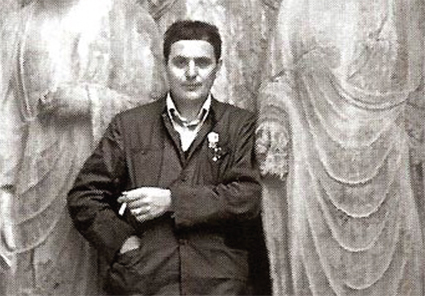 Philippe Sollers: Mesmerised by Mao
Yet, as Wolin acknowledges, if this were only a tale of political folly it would not be worth retelling. The stupidities proclaimed by Parisian intellectuals about Mao's China were no more dangerous and self-serving than those they had previously proclaimed about Stalin's Russia. Rather, the tale is intriguing because it is one of unintended consequences.
Coming in the wake of May '68 student protests, Maoism in France was a harbinger of the collapse of orthodox Marxism. To Sartre's evident dismay and frustration, the anti-Bolshevik Daniel Cohn-Bendit simply denied that the students had any programme or long-term objectives. The organisational mentality of the once-mighty French Communist Party was dead.
What replaced it, Wolin contends, was a new form of politics focusing on personal identity and the transformation of everyday life. Repentant Maoists — including the so-called "New Philosophers" André Glucksmann and Bernard-Henri Lévy — not only set out a defence of human rights and of humanitarian intervention but also began the process leading to calls for a regeneration of civil society. Breaking with the centuries-long tradition of State centralisation, the new politics focused on direct democracy and the expansion of associational life. Utopian hopes, Wolin concludes, were brought down to earth in the form of the ideal of democratic citizenship.
There is much that is convincing in this analysis. The French Communist Party has all but disappeared. What remains of the radical Left in France has largely redirected its activities towards a series of single-issue campaigns and protest groups (concerned with the homeless, illegal immigrants and so on). Statistics indicate that the number of associations in France continues to grow significantly every year. Yet France today is hardly a country that would have Alexis de Tocqueville jumping for joy and I doubt that David Cameron would see it as a model for the Big Society. Opinion polls indicate that the desired profession of the majority of young people is that of State functionary. Attempts at reform are met by a moral posture of resistance and a populist anti-establishment rhetoric. Anti-modernism — in the shape of hostility to what is taken to be an American-led process of globalisation, for example — is much in evidence. Liberalism — and, even worse, neo-liberalism — remains a dirty word.
As Wolin's chapter on the unrepentant (and now very fashionable) Maoist Alain Badiou illustrates, the mistake has been to believe that the collapse of communism would lead to a disappearance of anti-capitalism. For his part, Richard Wolin has provided a fascinating and dispassionate account of one of the more curious follies of recent times. Just as importantly, he avoids seeing May '68 as either the source of our modern ills or as a cause for wide-eyed romantic nostalgia. As Hegel might have said, it is just another example of the cunning of history.


- Shame On The Liberals Who Rationalise Terror
- The Establishment Is In Denial — Yet Again
- Is There A Right Way To Write?
- A Fascist Coup In Poland? Give Us Poles A Break
- Censoring The Censors Won't Do
- France, Islam, And The Second Class Sex
- The Stalinist Past Of Corbyn’s Strategist
- The Long Shadow Of Malthus
- Shame On The Liberals Who Rationalise Terror
- The Establishment Is In Denial — Yet Again
- Is There A Right Way To Write?
- A Fascist Coup In Poland? Give Us Poles A Break
- Censoring The Censors Won't Do
- France, Islam, And The Second Class Sex
- The Stalinist Past Of Corbyn’s Strategist
- The Long Shadow Of Malthus
1:10 PM
4:10 AM
4:10 AM
1:10 AM
11:10 PM
9:10 PM
3:10 PM
3:10 PM
2:10 PM
1:10 PM