



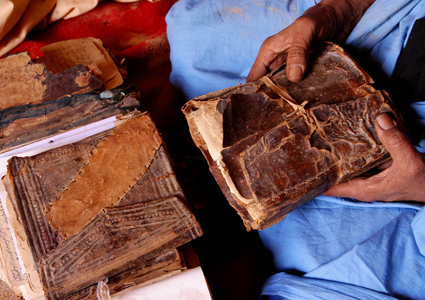
 Manuscripts recovered from Timbuktu. Credit: D INTL/SAVAMA DCI/GAMMA
Until recently, our picture of Mali's heritage was a blurred one. If the events of the past year have served one purpose, it is to have brought it sharply into focus.
Since April 2012, Islamic militants had been reducing listed monuments in the historic towns of Douentza, Goundam and Timbuktu to rubble. International observers and much of the local population looked on in dismay as radical fighters tore down shrines and tombs they considered idolatrous. "Not a single mausoleum will remain," boasted Abou Dardar, leader of Ansar Dine, a group suspected of ties with al-Qaeda in the Islamic Maghreb.
In January, as French troops moved out of the capital Bamako to secure the northern reaches of a country largely beyond government control, reports emerged of even further damage: Timbuktu's Ahmed Baba Institute was said to have been torched, along with some 20,000 documents. The town's mayor declared the collection, a section of Mali's rich literary tradition which included texts dating back as early as the 13th century, had been destroyed.
Such events are all too common. The past two decades have seen the wilful destruction of the Institut d'Egypte in Cairo; Iraq's National Library and Archive; and the Kabul University Library. Hundreds of thousands of books have been lost, burnt and looted by angry mobs or falling governments.


Post your comment
- Thanks, Ma
- Corbyn's Trots
- Jeremy's Justice
- Acropolis Now
- Dalí In Wonderland
- Spend, Spend, Spend!
- Glorious Summer
- Tearing Down History
- Their Man In London
- Email Etiquette
- Chelsea Haven
- Bad Examples
- Iraq Myths
- Unhappy Birth Days
- Close Encounters
- Saving Greece
- Home Sweet Home
- Left Foot Forward
- NGOs NBG
- Lechery à la Grecque
