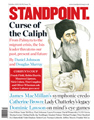



Herod was born around 73 BC. His family origins were not exactly Jewish: on his father's side he was an Edomite, and his mother was a Nabataean. The Edomites were one of the ancient peoples of Palestine, mentioned often in the Bible; they had been converted to Judaism en masse a generation or two before Herod's birth. The Nabataeans were an Arab people, whose caravan city of Petra is still one of the wonders of the region. Although he gave many tokens of his attachment to Judaism, Herod was sometimes reproached by other Jews with the taint of his foreign origins. Like other members of the ruling class in the Middle East in the centuries following Alexander the Great's conquest, he combined Semitic and Greek elements in his upbringing and culture, fusing them into a rich but sometimes unstable compound.
In the dramatically shifting power politics of Rome and the East, Herod displayed an uncanny knack for backing a winner, shifting his allegiance from Pompey to Julius Caesar, and then to Cassius, one of Caesar's killers, and later to Mark Antony, who persuaded Octavian (the future Augustus) and the Roman Senate to appoint him king of Judaea (which was under Parthian rule at the time). In 37 BC, with Roman military help, he entered Jerusalem and began his 33-year reign as king of the Jews.
Vermes skilfully reduces the political intrigues and military campaigns of this long reign to a succinct and readable narrative. He also conjures up the magnificence of Herod's main building works, which included, besides the enlarged Jerusalem temple, and other public works in his capital, entire cities, such as Caesarea, on the coast, and several splendid palaces, as well as temples, bathhouses and other public buildings across the Greek world. Tourists today can still admire the massive Herodian masonry visible at the Western Wall and elsewhere in Jerusalem, the aqueduct that carried water to Caesarea from Mount Carmel, several miles up the coast, the spectacular desert fortress and palace of Masada, and the imposing fortress of Herodion, near Bethlehem, whose breast-shaped mound houses the mausoleum Herod built for himself.
Vermes also traces, for good measure, the story of Herod's successors, which is intertwined with the Gospel narratives which are also responsible for establishing Herod the Great in popular imagination as "the prototype of iniquity", as Vermes puts it.
Both Greek and Jew, Herod built pagan temples, adorned with statues (including his own) in Greek cities, but in Judaea, and particularly in Jerusalem, he made an effort to respect Jewish sensibilities, and avoided representations of gods, men and even animals, out of respect for the biblical Second Commandment, which forbids the making of "any graven image, or any likeness".
This was a matter not just of religious scruple but of political realism, as we can see from the affair of the golden eagle. One of the most expensive public gestures Herod made in rebuilding the Jerusalem temple was his gift of a huge golden eagle that was erected over the great gate. This was the only specimen of representational art in the temple complex, and the allusion to Roman power was inescapable. Apparently it was taken by some Jews as a provocation. When the 70-year-old Herod lay dying, two of the most learned and popular Jewish leaders took advantage of the king's illness to stir up their young followers to pull down the eagle, saying that it was contrary to God's law, and that it would be a noble cause to risk one's life in imposing respect of the law. In Josephus's words, "The Law forbids those who propose to live in accordance with it to think of setting up images or to make dedications of (the likenesses of) any living creatures." The young men climbed on to the roof and hacked down the eagle in front of a large crowd. Herod had the ringleaders arrested and burnt alive. It was almost his last act.
In the dramatically shifting power politics of Rome and the East, Herod displayed an uncanny knack for backing a winner, shifting his allegiance from Pompey to Julius Caesar, and then to Cassius, one of Caesar's killers, and later to Mark Antony, who persuaded Octavian (the future Augustus) and the Roman Senate to appoint him king of Judaea (which was under Parthian rule at the time). In 37 BC, with Roman military help, he entered Jerusalem and began his 33-year reign as king of the Jews.
Vermes skilfully reduces the political intrigues and military campaigns of this long reign to a succinct and readable narrative. He also conjures up the magnificence of Herod's main building works, which included, besides the enlarged Jerusalem temple, and other public works in his capital, entire cities, such as Caesarea, on the coast, and several splendid palaces, as well as temples, bathhouses and other public buildings across the Greek world. Tourists today can still admire the massive Herodian masonry visible at the Western Wall and elsewhere in Jerusalem, the aqueduct that carried water to Caesarea from Mount Carmel, several miles up the coast, the spectacular desert fortress and palace of Masada, and the imposing fortress of Herodion, near Bethlehem, whose breast-shaped mound houses the mausoleum Herod built for himself.
Vermes also traces, for good measure, the story of Herod's successors, which is intertwined with the Gospel narratives which are also responsible for establishing Herod the Great in popular imagination as "the prototype of iniquity", as Vermes puts it.
Both Greek and Jew, Herod built pagan temples, adorned with statues (including his own) in Greek cities, but in Judaea, and particularly in Jerusalem, he made an effort to respect Jewish sensibilities, and avoided representations of gods, men and even animals, out of respect for the biblical Second Commandment, which forbids the making of "any graven image, or any likeness".
This was a matter not just of religious scruple but of political realism, as we can see from the affair of the golden eagle. One of the most expensive public gestures Herod made in rebuilding the Jerusalem temple was his gift of a huge golden eagle that was erected over the great gate. This was the only specimen of representational art in the temple complex, and the allusion to Roman power was inescapable. Apparently it was taken by some Jews as a provocation. When the 70-year-old Herod lay dying, two of the most learned and popular Jewish leaders took advantage of the king's illness to stir up their young followers to pull down the eagle, saying that it was contrary to God's law, and that it would be a noble cause to risk one's life in imposing respect of the law. In Josephus's words, "The Law forbids those who propose to live in accordance with it to think of setting up images or to make dedications of (the likenesses of) any living creatures." The young men climbed on to the roof and hacked down the eagle in front of a large crowd. Herod had the ringleaders arrested and burnt alive. It was almost his last act.
Like this article? Share, save or print using the icons below:


