


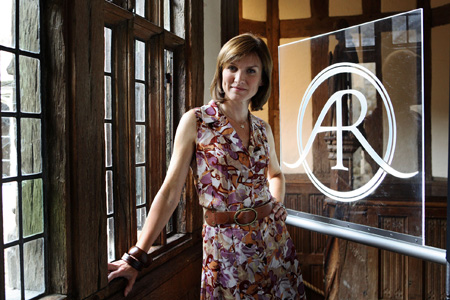
Fiona Bruce: More at home on "Antiques Roadshow" than "Panorama" (photo: BBC)
When James Harding was Editor of The Times he was a decent man who made some bad journalistic decisions. Now he has moved on to head BBC News he is still making bad journalistic decisions and his sense of decency appears to have deserted him.
Reporters remember him as the equivalent of Dick Rowe, the talentspotter who refused to sign the Beatles because "guitar groups were on the way out". Harding might have had the MPs' expenses scandal, the scoop of the last decade. He might have exposed how politicians, who passed punitive laws to discipline their constituents, fiddled their expenses and home allowances with a riotous disregard for propriety and the criminal law. A source had collected tens of thousands of expense claims, and offered Harding the evidence to stand up a report which would transform British politics. Harding refused to pay for the information or touch the story. Instead, Tony Gallagher of the Telegraph took the glory of breaking one of the greatest instances of public-interest journalism anyone can remember.
You might have thought that, for Harding, that would have been that. Anything but. The BBC recruited him as its Head of News — a far more important job than editing one of Britain's declining newspapers.
The BBC's decision was not as perverse as it seemed. Harding got on well with Times journalists, who were genuinely sorry to see him leave. He had refused to bend the knee to Rupert Murdoch, which again spoke well of his character. Most important for the BBC, his refusal to run the expenses scandal did him no harm in its eyes. Because it is state-funded, the BBC cannot break the biggest stories, whether MPs' corrupt expenses or an exposé of state surveillance, as the Guardian did. Politicians would hold the BBC liable. They would not accept that it was reporting facts. They would blame the messenger and say that the BBC rather than MPs or GCHQ had created the scandal. The Director-General would be finished, and the BBC's funding would be threatened.
The restriction is not as onerous as it seems. The BBC follows up other people's stories well. Panorama produces excellent investigations of its own, which may not be earth-shattering but are important nevertheless. Despite an outrageous attempt to silence it from the supposedly impartial Attorney-General, who was looking to recommend the Tory Party to Rupert Murdoch before an election, last month Panorama ran an exposé of News International's "fake sheikh" Mazher Mahmood, some of whose dubious claims the Metropolitan Police had taken for reputable evidence. BBC television and more importantly BBC radio, meanwhile, produce a vast amount of honest, straightforward news reporting under conditions which guarantee its probity.
I would not have raised Harding's decision to run away from the expenses scandal had he not arrived at Broadcasting House and — true to form — attacked the investigative and straight news reporting which make the BBC an essential institution.
He first hit the BBC's probity by appointing a string of associates to well-remunerated posts, without formal interviews by a BBC board. The BBC's requirement that recruitment should be open is, among other things, a protection against cronyism and sexual harassment of women. Harding tossed that requirement aside. While BBC reporters were airing discussions on the decline of social mobility in public, their own head of news was building a chumocracy in private. More seriously, he hit the very programmes that make the BBC worthwhile.
Like this article? Share, save or print using the icons below:


11:04 AM
7:02 PM
5:12 PM
10:12 PM
11:12 AM
1:11 AM
1:11 AM
12:11 AM
12:11 PM