



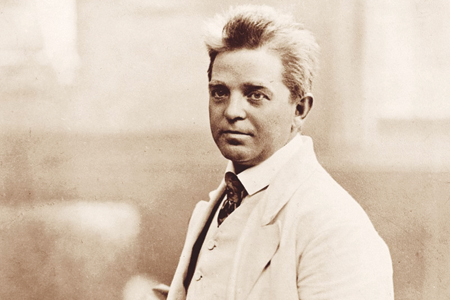
Carl Nielsen: His feeling for existential torment is seldom seen in Sibelius
The Nordic countries have produced two important composers in the last 150 years. Unluckily, both were born in the same year, condemning them to share jubilees and centenaries for all time. Chronology can be cruel to composers, especially the losers.
Carl Nielsen, born on June 9, 1865, flickers in the shadow of Jean Sibelius, born on December 8. Sibelius is an epochal figure. His music defined a nation and his craggy face personified it at times of existential crisis. His symphonies are formally immaculate, neat as a Bergman film set. The second and fifth symphonies won instant and lasting popularity. For half of the last century, the leading composers in Britain and America outdid one another in vain efforts to emulate Sibelius.
Nielsen, by contrast, has no imitators. Few musicians anywhere can whistle his tunes. Aside from masterpieces for wind instruments, none of his works makes an irresistible case for regular performance.
That said — and I'm about to outrage five million Finns — Nielsen is, as a man and a composer, more interesting than Sibelius. He is more authentic, more expressive, easier to approach and appreciate.
Economics determined their disparate destinies. Sibelius was a rich man in a poor land, Nielsen a struggler in lush pastures. The Finn was born into a middle-class home within commuting distance of Helsinki (the rail link was laid three years before he was born). Nielsen was the seventh child of subsistence peasants on the island of Funen, a long boat ride from anywhere except Hans Christian Andersen's cottage. He described taking milk from his mother's breast as a boy of five. His memoirs, published in 1927, are an exquisite evocation of lost simplicities.
Sibelius grew up with attention deficit disorder and signs of an addictive personality. A dunce at school, he cut classes to play in a Helsinki orchestra. Sent to university to study law, he switched to music and toured its great capitals.
Nielsen worked the fields, played music at night and, at 14, was drummed into the army as a bugler. He was 18 before he saw a city. A scholarship lad at Copenhagen's Conservatoire, he yearned for Funen "where a joyous symphony issues from the birds' nests every time a mother feeds her young".
The two young men met on a study year in Berlin and recognised a potential rivalry. They struck up a diplomatic friendship, wary on Sibelius's side, warmer on Nielsen's. Sibelius moved on to Vienna, where a bout of homesickness awoke him to Finnish folklore and a concert of Bruckner's third symphony taught him form and structure. He composed "Kullervo", "En Saga" and the Karelia overture in 1892, followed by the political anthem, "Finlandia". A grateful nation awarded him a lifelong pension. He built a homestead 30 miles north of Helsinki and never needed to work again. A contemporary novel caricatures him as indolent, often drunk.
Nielsen, at 27, wrote a symphony. It broke all symphonic rules by starting in one key and finishing in another. Ahead of Mahler and Schoenberg, Nielsen recognised that tonality was on the verge of exhaustion, in need of reconfiguration. While avoiding dissonance, he pursued what the English composer Robert Simpson saw as an "evolving tonality", an organic alternative to the established format.
Like this article? Share, save or print using the icons below:


4:12 AM
8:12 PM
2:12 PM