This week I received a rather angry email from somebody called Glyn Rhys who insisted that as "a white British woman" I am unaffected by sharia and Islamism and that by commenting on it, I am (of course) an "Islamophobe". Putting aside the deep immorality of this "I'm all right Jack" attitude, the fact is that his claim is simply untrue.
I have written before about how non-Muslim women, even in the West, are expected to alter their actions to accommodate the misogyny of some Muslim men. Sharia therefore affects me as a woman, just as it affects everyone who wishes to express an honest opinion about Islam or Islamic extremism.
My friend Chris Moos, and his colleague Abishek Phadnis, at the London School of Economics Atheist, Secularist and Humanist Society (ASH), found out again recently just how much Islamism continues to affect freedom of speech in Britain, and freedom of expression more broadly.
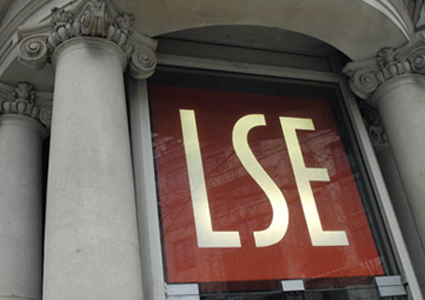
On October 3, Abishek and Chris were manning the ASH stall at the LSE Students' Union Freshers' Fayre. They were approached by the Students' Union's Community and Welfare Officer Anneessa Mahmood, its Anti-Racism Officer Rayhan Uddin, its Deputy Chief Executive Jarlath O'Hara, and several others.
According to Chris, Anneessa Mahmood began removing items from their stall without explanation and when challenged, claimed that the material was "offensive". She would not offer an explanation as to what rules or regulations were being breached. The pair were also told to remove their t-shirts; the wearing of which, it was claimed, amounted to "harassment". The t-shirts depicted a cartoon known as "Jesus and Mo" which depicts Jesus and Mohammed in various comical situations. Having refused to remove the shirts, the ASH stall was surrounded by uniformed security who threatened to remove Chris and Abishek from university premises by force. When they agreed to put on their jackets and zip them up, this apparently was insufficient because the word "prophet" could still be seen. They were informed that they were not behaving in an "orderly or responsible" manner, and were accompanied by uniformed security for the rest of the afternoon.
The following day, Chris and Abishek again wore their t-shirts, but this time with the word "censored" covering the "offending" material. They promptly received a letter from the school secretary informing them that they were in breach of the LSE Harassment Policy, and repeating the order that if they did not remove the t-shirts, they would be forcefully removed. Again, uniformed security accompanied them for the day.
If you're thinking that the LSE was worried about offending Christians, think again. This is not the first time that the Students' Union there has seen fit to take firm action against the heinous crime of displaying a cartoon, nor I suspect will it be the last — particularly given the strict rules on Islamophobia agreed by the union in a resolution passed at an Extraordinary General Meeting in 2012. This all-encompassing edict was decreed following a previous "incident" involving the Jesus and Mo cartoon, this time featured on the ASH society's Facebook site. No similar dictatorial motion was passed with reference to Christianity, making the motivation of the union leaders perfectly clear.
The resolution defined "Islamophobia" as "a form of racism expressed through the hatred or fear of Islam, Muslims, or Islamic culture, and the stereotyping, demonisation or harassment of Muslims, including but not limited to portraying Muslims as barbarians or terrorists, or attacking the Koran as a manual of hatred".
Herein lies the reason for the success of the word "Islamophobia" in silencing criticism of a religion — it is casually equated with racism and thus is given a legitimacy it simply does not deserve. No other religion is explicitly protected in this way. The definition does not mention solely the harassment of human beings (which is clearly immoral), but of questioning or criticising the religion itself.
The motion specifically states that we are not allowed to "attack" the Koran, or to "fear" Islam or Islamic culture. No doubt this includes sharia law. But there is everything to fear from strict sharia law (particularly its family and criminal codes), especially if you happen to be female, or gay, or both.
People simply cannot be told what to fear, this in itself creates fear. Fear is often a natural, and healthy, reaction to things that pose danger, and it is a simple fact that sharia law, as practiced in Islamic states the world over, presents a serious danger to many people. Telling people that they cannot fear sharia because they will be "racists" if they do, is a blatant attempt to silence them and will achieve nothing but increase resentment and anger between different communities. And let's not forget the many Muslims who seek to question or criticise Islam — where do they fit in?
In a few weeks' time, I will be debating when criticism of Islam becomes Islamophobia at Oxford University; but the fact is that criticism of Islam is Islamophobia. Most definitions of the word confirm this. In its report on the subject The Runnymede Trust offered up eight characteristics of Islamophobia. Pretty much all of them refer to Islam itself and they are very precise about what we can or cannot say about it.
The Organistion of Islamic Cooperation, a domineering bloc at the United Nations which has tried on numerous occasions to pass a global law criminalising criticism of Islam, clearly defines it as constituting language that disparages the religion. In its first report on the issue, the OIC argued "The proponents of Islamophobia, who for whatever reasons are either prejudiced or hold a negative view against Islam and Muslims, are active in defaming Islam."
This definition is widespread and is often defended using the argument that "defaming" Islam is an attack on Muslims because it is hurtful to them. I'm sure it is, but why are Muslims immune from being hurt or offended, when people of other belief systems are not? I have no doubt that Christians are equally offended by ridicule of Christianity, or Communists by ridicule of Communism, or secularists by ridicule of secularism — but none of these groups have had laws passed with the sole aim of protecting their feelings.
That is what free speech is all about — you have to accept you are going to be offended and have your feelings hurt. That's life I'm afraid.
Islam should not be protected from criticism, just as any other religion or ideology should not. Indeed, given the murder and mayhem currently being carried out in the name of Islam (rightly or wrongly) it is even more important that this religion be subject to scrutiny at the current time.
The word "Islamophobia" did not even exist a few decades ago and I suspect it is no coincidence that its introduction to the language coincided with the global rise of a brutal form of political Islam. Islamists and their many left-wing allies have elevated this word to a form of racism in a deliberate attempt to sanitise it — thus having a profound effect on the right to free speech, to the detriment of Muslims and non-Muslims alike.
Mr Glyn Rhys can continue to deny that the sharia dictat that Islam may not be criticised is having no effect on non-Muslims if he wishes, but the evidence is very clear. I have been threatened with violence, receive regular hate mail, and have been labelled a racist on numerous occasions. Secular and atheist students have been intimidated and bullied, as have many others who have dared to speak out — including, of course, Muslims. While remains the case, and I have no doubt it will, Mr Rhys's claim will remain as dishonest as the word Islamophobia itself.