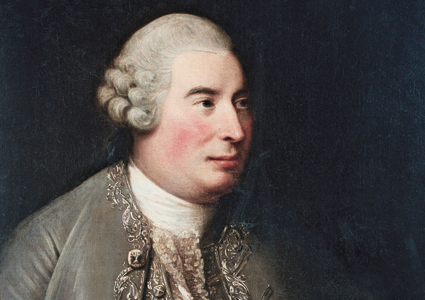
David Hume: Is there any new philosophical thinking in his later work?
In the years immediately following Hume’s death in 1776 his near-contemporaries were in no doubt about the surest foundation of his claim to lasting reputation. Thomas Ritchie, writing in 1807, could see no merit in Hume’s contributions as either a metaphysician, or a moralist, or as a writer on economics and politics. For Ritchie, it had been only when Hume turned aside from these speculations and applied himself to the history of his country that he had achieved anything durable. In the pages of the History of England, Ritchie announced, there was to be found “a source of useful information to the statesman, a noble monument of its author’s talents, and an invaluable bequest to his country”.
The disregard for Hume’s philosophical writings expressed by Ritchie strengthened during the first half of the 19th century. In that Kantian climate Hume could be presented only as a thinker who had, with a kind of gifted wrong-headedness, explored the dead-end of scepticism with unprecedented thoroughness. Hume had been a mesmerising magician who with virtuoso flourishes had demonstrated the melancholy truth that, pursued in this way, there was after all no rabbit in the philosophical hat. Sir William Hamilton dramatised Hume’s career as a moment of disciplinary dilemma, when philosophers were forced to choose between “either . . . surrendering philosophy as null, or of ascending to higher principles, in order to re-establish it against the sceptical reduction”. Hume’s contribution had been the vital but ancillary one of supplying the crucial first impetus to Kant.
The Victorians, however, were no more enthusiastic about Hume’s historical works than about his philosophy. Even when the volumes of the History of England had first been published some had noticed that they were, in the polite euphemism, “lightly researched”. It was clear that Hume had worked solely from printed sources, and that he possessed neither the technical skills, nor in all probability the appetite, to forage in archives to any good effect. His was a history written in a library, and it was bound to suffer once the Germanic revolution in historiography had been assimilated by English writers. John Stuart Mill dismissed the History of England as “really a romance [which] bears nearly the same degree of resemblance to any thing which really happened, as Old Mortality or Ivanhoe”. Francis Jeffrey, writing in the Edinburgh Review, pronounced the devastating verdict (he was of course fond of pronouncing devastating verdicts) that Hume’s “credit among historians, for correctness of assertion, will soon be nearly as low as it has long been with theologians for orthodoxy of belief”.
It was only towards the end of the 19th century that the tide began to turn, and then only in a limited way. In respect of Hume’s philosophy, eventual disenchantment with Kant was a necessary preliminary to a partial restoration of Hume’s fortunes. The publication of Leslie Stephen’s History of English Thought in the Eighteenth Century in 1876 initiated a tentative reassessment of Hume’s philosophy, in that the questions Hume had pondered were rescued from the condition of being simply misconceived. On the contrary: these had been and were still the stubborn, fundamental philosophical questions. Stephen did not find Hume’s answers satisfactory, but the questions had at least been the right ones:
Stephen and other late-Victorian writers such as James McCosh and Hume’s editors T. H. Green and T. H. Grose tended to script Hume’s career as a drama of two acts. In the first, Hume had written the Treatise of Human Nature and had thereby discovered the dismaying truth that progress in philosophy was not to be had. In Act Two, he had turned aside from philosophy, had dabbled in essays and history-writing, had pursued a public career, and amassed considerable wealth and public fame. As Grose sourly remarked, “Few men of letters have been at heart so vain and greedy of fame as was Hume.”
One might have expected that the preferences and aversions of Bloomsbury would have overturned this narrative. In a way, they did. In Portraits in Miniature Lytton Strachey admired what his Victorian predecessors had disparaged: “Had Hume died at the age of twenty-six” — the age at which he had completed the two volumes of the Treatise — “his real work in the world would have been done, and his fame irrevocably established.” For Strachey the Treatise was the “masterpiece” which contained all that was most important in Hume’s thought. The rest of his life had been nothing more than filling in time. It is clear, however, that in reversing the Victorian evaluation of Hume which he had inherited, Strachey had done nothing to reshape the underlying narrative of Hume’s career. This was still a drama of two acts, and the interval still arrived disconcertingly early.
Although later 20th-century study of Hume’s philosophy continued further down this path of rehabilitation, the notion that the Treatise contained all Hume’s really hard and original thinking, and that he spent the rest of his life re-packaging and re-formulating the insights that had broken upon him in his mid-twenties would prove very durable.
Hume began as a philosopher . . . but in the Treatise reasoned himself into a position which made philosophy look as though it had destroyed itself under the pressure of systematic sceptical argumentation. Therefore, he turned from philosophy to subjects which could be treated purely empirically, such as politics, political economy, and history, but in each case the work that he produced was evidence that . . . his power as a destroyer was much greater than his abilities as a creator. . . . Hume’s scepticism left him trying to make ropes of sand in his writings on these topics.
Stephen and other late-Victorian writers such as James McCosh and Hume’s editors T. H. Green and T. H. Grose tended to script Hume’s career as a drama of two acts. In the first, Hume had written the Treatise of Human Nature and had thereby discovered the dismaying truth that progress in philosophy was not to be had. In Act Two, he had turned aside from philosophy, had dabbled in essays and history-writing, had pursued a public career, and amassed considerable wealth and public fame. As Grose sourly remarked, “Few men of letters have been at heart so vain and greedy of fame as was Hume.”
One might have expected that the preferences and aversions of Bloomsbury would have overturned this narrative. In a way, they did. In Portraits in Miniature Lytton Strachey admired what his Victorian predecessors had disparaged: “Had Hume died at the age of twenty-six” — the age at which he had completed the two volumes of the Treatise — “his real work in the world would have been done, and his fame irrevocably established.” For Strachey the Treatise was the “masterpiece” which contained all that was most important in Hume’s thought. The rest of his life had been nothing more than filling in time. It is clear, however, that in reversing the Victorian evaluation of Hume which he had inherited, Strachey had done nothing to reshape the underlying narrative of Hume’s career. This was still a drama of two acts, and the interval still arrived disconcertingly early.
Although later 20th-century study of Hume’s philosophy continued further down this path of rehabilitation, the notion that the Treatise contained all Hume’s really hard and original thinking, and that he spent the rest of his life re-packaging and re-formulating the insights that had broken upon him in his mid-twenties would prove very durable.
James A. Harris admires the Treatise, and his account of its arguments and its relation to the British philosophical conversation of the late 1730s is fine and probing. But his intellectual biography is committed to destroying and clearing away for ever this “two-stage” model of Hume’s career, with its attendant thesis that the Treatise contains the whole of Hume’s subsequent thought in concentrated form and that the later decades of thinking and writing amounted to nothing more than a process of dilution:
Here Harris is wise enough to follow Hume’s own lead. “My Own Life”, that wry and posthumous autobiographical narrative, establishes the broad sequence of Hume’s literary career, and establishes that the key turning point was the rejection of the mode, if not the insights, of the Treatise, and all that that rejection implied.
In the place of the reductive Victorian two-stage model of Hume’s career, Harris proposes a different understanding of what Hume was about, based on a more historically-informed idea of what it was to practise philosophy, on a more nuanced conception of scepticism, particularly as it could be understood in the 18th century, and above all positioned in relation to a subtle understanding of what it could have meant in the 18th century to commit yourself to a career as a man of letters. Commenting on Hume’s wish to revive the calm discursiveness of antiquity, when “Atticus and Cassius the Epicureans, Cicero the Academic, and Brutus the Stoic, could, all of them, live in unreserved friendship together, and were insensible to all those distinctions, except so far as they furnished matter to discourse and conversation”, Harris remarks:
Once he had given up on the Treatise, Hume never once presented himself as a systematic thinker, as someone who conceived of his writings in terms of foundation and superstructure, or of core and periphery, or of trunk and branches. The abandonment of the project of the Treatise would appear, on the contrary, to have been the giving up of the whole idea of a philosophical system, in favour of several distinct and different kinds of philosophical project.
Here Harris is wise enough to follow Hume’s own lead. “My Own Life”, that wry and posthumous autobiographical narrative, establishes the broad sequence of Hume’s literary career, and establishes that the key turning point was the rejection of the mode, if not the insights, of the Treatise, and all that that rejection implied.
In the place of the reductive Victorian two-stage model of Hume’s career, Harris proposes a different understanding of what Hume was about, based on a more historically-informed idea of what it was to practise philosophy, on a more nuanced conception of scepticism, particularly as it could be understood in the 18th century, and above all positioned in relation to a subtle understanding of what it could have meant in the 18th century to commit yourself to a career as a man of letters. Commenting on Hume’s wish to revive the calm discursiveness of antiquity, when “Atticus and Cassius the Epicureans, Cicero the Academic, and Brutus the Stoic, could, all of them, live in unreserved friendship together, and were insensible to all those distinctions, except so far as they furnished matter to discourse and conversation”, Harris remarks:
Hume wrote these words, perhaps, more in hope than in expectation. He was reminded often how hard even the men of letters among his contemporaries found it to lay aside personal animosities and rivalries. He was told that he was both a Whig and a Tory when he took himself to be neither. He was told that he was an atheist when he believed he had revealed nothing at all in his writings about his personal religious views. He was told he was licentious and a subverter of morality when what he thought he had done was merely to show how morality might better be understood. Sometimes Hume found these things amusing, sometimes he found them deeply offensive. They showed him that the philosophical conversation which he desired to join could not be presumed to be already going on, waiting for him to take his place in it. His task as a man of letters was to be part of the effort to bring that conversation, the conversation that we call the Enlightenment, into existence.
Guided by this general strategy Harris follows the various twists and turns of Hume’s career, which he presents as possessing a real narrative, and as being in some respects improvised and not teleological. Hume, like the rest of us, responded to reversals and unexpected opportunities, and these left a trace on his career. This means that Harris has to follow Hume also in his various kinds of expertise, and one of the impressive features of this book is the author’s mastery of the different fields — philosophical, political, economic, historical, literary — in which Hume wandered. What are the particularly strong points in Harris’s biography?
In the first place, Harris is very sure-footed — and often persuasively surprising — in mapping the relationships of Hume’s arguments to his great predecessors in the post-Renaissance intellectual tradition: to thinkers such as Grotius, Locke, Hutcheson, Berkeley, and Shaftesbury. Most interesting, however, are Harris’s findings concerning Hume’s relation with the iconoclastic and controversial Bernard Mandeville, by whose provocations Hume was initially allured, but only until he found, as he thought, more powerful and subtle arguments for a less inflammatory view of human nature which allowed him to offer a measure of rejection to a man who nevertheless must be acknowledged as a powerful influence.
Harris brings Hume’s relation to ancient philosophy into a particularly sharp focus. As we have seen, Hume wanted to restore to the philosophy of his own day something of the equable temper of ancient philosophy. Of course, this wish was in part encoded disparagement of the dogmatic, intemperate spirit with which Christianity had infected the realm of thought ever since the momentous Church councils of the fourth century.
What it did not mean was that Hume wanted to reintroduce the ancient idea of philosophy as intellectual medicine. Concerning the ends of philosophy Hume was unswervingly modern. For him philosophy was a mode of investigation and a style of thought. It could never be a therapy.
Not that Hume’s world had no need of therapies. After he had abandoned the Treatise he turned his attention to the English and Scottish society in which he lived, and which he found to be riven by disputes bequeathed to it by the 17th century. Hume’s essays and his History of England were calculated as balms to be applied to these disputes, no matter how enraging or inflammatory their arguments might at first sight seem to the combatants. Harris explains Hume’s strategy in these writings with great insight, while at the same time drawing attention to the particular judgments which contradicted the idées reçues Hume considered especially mischievous.
In the first place, Harris is very sure-footed — and often persuasively surprising — in mapping the relationships of Hume’s arguments to his great predecessors in the post-Renaissance intellectual tradition: to thinkers such as Grotius, Locke, Hutcheson, Berkeley, and Shaftesbury. Most interesting, however, are Harris’s findings concerning Hume’s relation with the iconoclastic and controversial Bernard Mandeville, by whose provocations Hume was initially allured, but only until he found, as he thought, more powerful and subtle arguments for a less inflammatory view of human nature which allowed him to offer a measure of rejection to a man who nevertheless must be acknowledged as a powerful influence.
Harris brings Hume’s relation to ancient philosophy into a particularly sharp focus. As we have seen, Hume wanted to restore to the philosophy of his own day something of the equable temper of ancient philosophy. Of course, this wish was in part encoded disparagement of the dogmatic, intemperate spirit with which Christianity had infected the realm of thought ever since the momentous Church councils of the fourth century.
What it did not mean was that Hume wanted to reintroduce the ancient idea of philosophy as intellectual medicine. Concerning the ends of philosophy Hume was unswervingly modern. For him philosophy was a mode of investigation and a style of thought. It could never be a therapy.
Not that Hume’s world had no need of therapies. After he had abandoned the Treatise he turned his attention to the English and Scottish society in which he lived, and which he found to be riven by disputes bequeathed to it by the 17th century. Hume’s essays and his History of England were calculated as balms to be applied to these disputes, no matter how enraging or inflammatory their arguments might at first sight seem to the combatants. Harris explains Hume’s strategy in these writings with great insight, while at the same time drawing attention to the particular judgments which contradicted the idées reçues Hume considered especially mischievous.
Had English liberty been born in the profound glooms of the Hercynian forest, as Montesquieu had asserted, and as generations of Whiggish English historians before him had also proclaimed? On the contrary, “It was nonsense to say . . . that the modern English system of liberty was found in the forests of ancient Europe.” Had the Norman Conquest fastened the chains of feudal servitude upon a once proud and free people? Not a bit of it: “The conquest put people in a situation of receiving slowly from abroad the rudiments of science and cultivation, and of correcting their rough and licentious manners.”
Was medieval Catholicism a bondage of the spirit? Considered as a natural religion it had its weak points, to be sure, but there were also points to be made on the other side of the account: “tho’ the religion of that age can merit no other name than that of superstition, it served to unite together a body of men who had great sway over the people, and who kept the community from falling to pieces, from the factions and independent [sic] power of the nobles.” Were the Puritans of the 17th century nothing more than the panders of despotism, as the hotter Whigs of the later 17th century had claimed? The truth, notwithstanding the autocratic interlude of Cromwell, was slightly different once a longer perspective was taken: “The precious spark of liberty had been kindled, and was preserved, by the puritans alone; and it was to this sect, whose principles appear so frivolous and habits so ridiculous, that the English owe the whole freedom of their constitution.”
Why has this kind of study of Hume — calm, reflective, patient, informed, but far from uncommitted — been so long to seek? In part this is perhaps because Hume until very recently had not really become a subject for dispassionate study. Although the conflicts in which he was a participant have all long since been concluded for better or worse (usually for worse), nevertheless a totemic potency clung to Hume as the embodiment of the impotence of reasonableness in the face of prejudice and obscurantism. Now, when (depending on your point of view) either that battle has been won, or one despairs of its ever being won, Hume is released from the condition of being a combatant or a proxy and can be considered in a more free and more historical way.
Guided by Harris we can now see a figure more human and more engaging, whose ideas developed and flexed over time. Harris’s meticulous anatomising of this figure is a major achievement in Hume studies and in studies of the Enlightenment more generally.
Was medieval Catholicism a bondage of the spirit? Considered as a natural religion it had its weak points, to be sure, but there were also points to be made on the other side of the account: “tho’ the religion of that age can merit no other name than that of superstition, it served to unite together a body of men who had great sway over the people, and who kept the community from falling to pieces, from the factions and independent [sic] power of the nobles.” Were the Puritans of the 17th century nothing more than the panders of despotism, as the hotter Whigs of the later 17th century had claimed? The truth, notwithstanding the autocratic interlude of Cromwell, was slightly different once a longer perspective was taken: “The precious spark of liberty had been kindled, and was preserved, by the puritans alone; and it was to this sect, whose principles appear so frivolous and habits so ridiculous, that the English owe the whole freedom of their constitution.”
Why has this kind of study of Hume — calm, reflective, patient, informed, but far from uncommitted — been so long to seek? In part this is perhaps because Hume until very recently had not really become a subject for dispassionate study. Although the conflicts in which he was a participant have all long since been concluded for better or worse (usually for worse), nevertheless a totemic potency clung to Hume as the embodiment of the impotence of reasonableness in the face of prejudice and obscurantism. Now, when (depending on your point of view) either that battle has been won, or one despairs of its ever being won, Hume is released from the condition of being a combatant or a proxy and can be considered in a more free and more historical way.
Guided by Harris we can now see a figure more human and more engaging, whose ideas developed and flexed over time. Harris’s meticulous anatomising of this figure is a major achievement in Hume studies and in studies of the Enlightenment more generally.