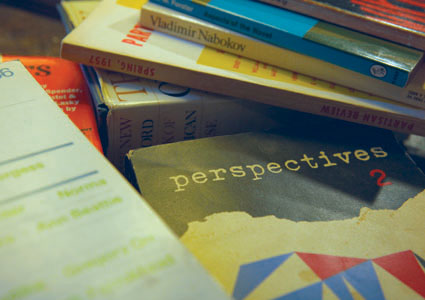
 (photograph by Constance Meath Baker)
Via email I received an invitation to contribute to a memorial tribute to Jeremy Jacobson, of whom I’m fairly certain you’ve never heard, unless you happen to be deeply addicted to the internet. Jeremy was a college teacher of English, and a blogger and twitterer of relentless energy. He died in his late fifties, and in his lifetime wrote a single book: a published version of his doctoral thesis on the incursion of literary critics into American English departments beginning in the 1950s and through the 1980s. Jeremy Jacobson was also, briefly, my student. I didn’t take long to decide that I would not be contributing to his online memorial.
He came in ten or so minutes late, took a seat in the front row, and, looking up eagerly at me, spread out his notebook and made himself at home. The course was on Henry James, with forty or so students, which I taught from 10.30 a.m. to noon, on Tuesdays and Thursdays. First day of class, I hadn’t planned to keep everyone the full ninety minutes. I gave a twenty or so minute talk outlining James’s life and career, passed out copies of the syllabus, wrote my office hours on the board, and ended by remarking that Henry James was a leading figure in my small pantheon of gods. Before dismissing the students, I warned that I planned to do all in my power to convert them to the cult known as Jamesianism. As everyone was beginning to leave, Jeremy raised his hand.
“How, exactly, do you expect us to read these novels?” he asked.
“I’m sorry,” I said. “I’m not sure I understand.”
“I mean,” he said, “from a Marxist or feminist or Derridean perspective, or what?”
“I hope I don’t disappoint you,” I said, “but we’ll read them to discover what is in them and what Henry James might have had in mind in writing them. I’m fairly sure this will be enough to keep us busy through the term.”
After everyone had left the room, and as I was gathering up my notes, he came up to introduce himself.
“Jeremy Jacobson,” he said, putting out a hand. “I’m a graduate student, but very passionate about Henry James. With your permission I was hoping to audit this course, even though it’s for undergraduates.”
A small man, on the plump side, wearing rimless glasses, brown hair parted near the middle of his head, he looked Jewish, though as I later learned, he wasn’t. He was twenty-six, older than most beginning graduate students, having worked for a while on a small-town newspaper in Oregon. He had gone to school at the University of Washington.
“I’m especially interested,” he said, “in the influence of Henry James Senior’s Swedenborgianism on the development of William but especially on that of Henry James.”
“I know next to nothing about it,” I answered. “You may be wasting your time sitting in this class.”
“I don’t think so,” he answered. “I’ve read your novels and really love them. If you don’t mind, I’d like to continue auditing.”
“I’ll be pleased to have you,” I said, as we walked out of the classroom together.
Turned out I wasn’t in the least pleased to have Jeremy sit in on my class. As Henry James would never have said, he was, not to put too fine a point on it, a royal pain in the ass. He spoke three times more than anyone else. He offered many opinions, most of which went contrary to my own views. He regularly compared James to Philip Roth, for example, in favour of the latter. One day he asserted that the greatest novel of the past century was Lolita. I suppose I could have argued him out of these views — they were opinions, really, little more — but I didn’t wish to interupt the flow of the class’s discussion of James’s novels, so I just let them pass.
Truth is, I didn’t want to seem to be putting Jeremy Jacobson down. When he spoke his younger classmates would often roll their eyes or make faces at what they took to be his outrageous pretentiousness. Pretty pretentious he could be. Once in class he carried on for a full five minutes — it seemed to last a full fiscal quarter — about his possession of a first edition of James’s early novel Roderick Hudson. He often dragged in nearly incomprehensible disquisitions about the views of R.P. Blackmur and F.R. Leavis and other critics on James. The other students in the class hadn’t a notion of what he was talking about. They must have wondered why I didn’t cut him off.
The reason I didn’t was that I grasped that Jeremy Jacobson was one of those unfortunate people who, so enraptured are they by their own performance, haven’t the least notion of the effect they have on other people. I thought about talking to him in my office about his misguided behaviour in class. I thought I might tell him that he was giving the mistaken notion that we were team-teaching this course, making plain to him that if he wished to continue auditing the class, he would do well to remember that the root meaning of the word audit was to hear, to listen. Somehow, though, I couldn’t bring myself to do it. I regretted that he was the unknown (to him) target of my other students’ probably appropriate yet still philistine disdain and felt sorry for him because of my foreknowledge that his life, with his crippling imperception, couldn’t possibly be an easy one. Henry James it was who invoked his readers to try to be young men and women on whom nothing was lost. Jeremy Jacobson was a young man on whom nearly everything was lost.
One day we bumped into each other off campus, and he suggested a cup of coffee at a nearby Starbucks. Over coffee he told me that he planned to write a dissertation about how practising critics would slowly replace philological scholars in English departments across America.
“A rich subject,” I said.
“And one still relatively untouched,” he said. “I was wondering if I could get you to serve on my dissertation committee.”
When I asked him if he had approached anyone else, he mentioned two men for whom I had very little regard, one a dogmatic older professor, the other a refugee from the country known as the Sixties, a man who taught in jeans and unlaced Air Jordans and insisted his students call him by his first name in class. Jeremy Jacobson’s taste in people, I concluded, was not of the best, and that he had chosen me to join these other two teachers was no compliment.
“I’ll be pleased to have you,” I said, as we walked out of the classroom together.
Turned out I wasn’t in the least pleased to have Jeremy sit in on my class. As Henry James would never have said, he was, not to put too fine a point on it, a royal pain in the ass. He spoke three times more than anyone else. He offered many opinions, most of which went contrary to my own views. He regularly compared James to Philip Roth, for example, in favour of the latter. One day he asserted that the greatest novel of the past century was Lolita. I suppose I could have argued him out of these views — they were opinions, really, little more — but I didn’t wish to interupt the flow of the class’s discussion of James’s novels, so I just let them pass.
Truth is, I didn’t want to seem to be putting Jeremy Jacobson down. When he spoke his younger classmates would often roll their eyes or make faces at what they took to be his outrageous pretentiousness. Pretty pretentious he could be. Once in class he carried on for a full five minutes — it seemed to last a full fiscal quarter — about his possession of a first edition of James’s early novel Roderick Hudson. He often dragged in nearly incomprehensible disquisitions about the views of R.P. Blackmur and F.R. Leavis and other critics on James. The other students in the class hadn’t a notion of what he was talking about. They must have wondered why I didn’t cut him off.
The reason I didn’t was that I grasped that Jeremy Jacobson was one of those unfortunate people who, so enraptured are they by their own performance, haven’t the least notion of the effect they have on other people. I thought about talking to him in my office about his misguided behaviour in class. I thought I might tell him that he was giving the mistaken notion that we were team-teaching this course, making plain to him that if he wished to continue auditing the class, he would do well to remember that the root meaning of the word audit was to hear, to listen. Somehow, though, I couldn’t bring myself to do it. I regretted that he was the unknown (to him) target of my other students’ probably appropriate yet still philistine disdain and felt sorry for him because of my foreknowledge that his life, with his crippling imperception, couldn’t possibly be an easy one. Henry James it was who invoked his readers to try to be young men and women on whom nothing was lost. Jeremy Jacobson was a young man on whom nearly everything was lost.
One day we bumped into each other off campus, and he suggested a cup of coffee at a nearby Starbucks. Over coffee he told me that he planned to write a dissertation about how practising critics would slowly replace philological scholars in English departments across America.
“A rich subject,” I said.
“And one still relatively untouched,” he said. “I was wondering if I could get you to serve on my dissertation committee.”
When I asked him if he had approached anyone else, he mentioned two men for whom I had very little regard, one a dogmatic older professor, the other a refugee from the country known as the Sixties, a man who taught in jeans and unlaced Air Jordans and insisted his students call him by his first name in class. Jeremy Jacobson’s taste in people, I concluded, was not of the best, and that he had chosen me to join these other two teachers was no compliment.
“A lot of the critics I have in mind were of course Jewish,” he said. “I’m thinking of men like Lionel Trilling and Irving Howe and Alfred Kazin and Philip Rahv and William Phillips. I’m not Jewish myself, though with my last name I’m often taken for a Jew. My parents were born-again Christians. They came to it late in life, too late to bring me along with them.”
When he pressed me about when he might have my decision on being on his dissertation committee, I told him that, not having a PhD myself, I didn’t think it would be quite de rigueur for me to serve on his committee.
“That’s a shame,” he said. “I know you lived in New York and you’ve had dealings with some of my key figures — Howe and Kazin, for example — and your input and feedback would have been helpful. Hope you don’t mind if I pick your brain, even though you won’t be on my committee.”
I thought to tell him that if he one day planned to teach English he would do well to knock off phrases like “input” and “feedback” and “pick your brain”, but decided not to do so. His speech and anything else about him was none of my business, and, frankly, I wished to keep it that way. I didn’t want any responsibility for him.
Instead I asked him how he was finding life in the middle-west. A little dull, he allowed, but otherwise OK. He tried to get me to gossip about my colleagues, but I resisted, telling him that, as a writer and man without tenure, I wasn’t at the centre of English Department affairs, but was only here — though I had been at the university now for more than a decade — on sufferance, signing a new contract each year.
I could feel his loneliness, his wanting my friendship, even though I was nearly twenty years older than he and married with children of high-school age. I’m not usually so guarded, but something told me to keep Jeremy Jacobson at a safe distance without being outwardly or obviously cold to him. He asked if it would be all right to call me by my first name, Ted, and I said sure, that would be fine, except of course not in class.
In the following weeks I would see Jeremy from time to time in the English Department office. As usual, he made himself at home, and took mistaken liberties. One afternoon, while getting my mail, I noticed him ask the department secretary, a Southerner in her early sixties and of stern dignity named Clarisse Hansen, if she would make copies for him of five scholarly magazine articles, and winced while she instructed him that she didn’t extend such services to graduate students. He should have figured this out on his own, but, typically, didn’t. He called two of the older professors by their first names, until one of them, a Chaucerian named Vandermeer, said that some of his oldest friends and acquaintances always called him Professor Vandermeer and he would be pleased if he, Jeremy, would do likewise?
Jeremy Jacobson vastly over-estimated his charm. Lots of people do, of course, and any of us who think ourselves winning have seriously to consider that, God forfend, maybe we’re not. I don’t believe Jeremy ever considered the possibility. From what I could tell he didn’t have many friends among his fellow graduate students. The younger faculty, some of them, tolerated him, barely. His power for turning people off was nearly pitch perfect.
When he pressed me about when he might have my decision on being on his dissertation committee, I told him that, not having a PhD myself, I didn’t think it would be quite de rigueur for me to serve on his committee.
“That’s a shame,” he said. “I know you lived in New York and you’ve had dealings with some of my key figures — Howe and Kazin, for example — and your input and feedback would have been helpful. Hope you don’t mind if I pick your brain, even though you won’t be on my committee.”
I thought to tell him that if he one day planned to teach English he would do well to knock off phrases like “input” and “feedback” and “pick your brain”, but decided not to do so. His speech and anything else about him was none of my business, and, frankly, I wished to keep it that way. I didn’t want any responsibility for him.
Instead I asked him how he was finding life in the middle-west. A little dull, he allowed, but otherwise OK. He tried to get me to gossip about my colleagues, but I resisted, telling him that, as a writer and man without tenure, I wasn’t at the centre of English Department affairs, but was only here — though I had been at the university now for more than a decade — on sufferance, signing a new contract each year.
I could feel his loneliness, his wanting my friendship, even though I was nearly twenty years older than he and married with children of high-school age. I’m not usually so guarded, but something told me to keep Jeremy Jacobson at a safe distance without being outwardly or obviously cold to him. He asked if it would be all right to call me by my first name, Ted, and I said sure, that would be fine, except of course not in class.
In the following weeks I would see Jeremy from time to time in the English Department office. As usual, he made himself at home, and took mistaken liberties. One afternoon, while getting my mail, I noticed him ask the department secretary, a Southerner in her early sixties and of stern dignity named Clarisse Hansen, if she would make copies for him of five scholarly magazine articles, and winced while she instructed him that she didn’t extend such services to graduate students. He should have figured this out on his own, but, typically, didn’t. He called two of the older professors by their first names, until one of them, a Chaucerian named Vandermeer, said that some of his oldest friends and acquaintances always called him Professor Vandermeer and he would be pleased if he, Jeremy, would do likewise?
Jeremy Jacobson vastly over-estimated his charm. Lots of people do, of course, and any of us who think ourselves winning have seriously to consider that, God forfend, maybe we’re not. I don’t believe Jeremy ever considered the possibility. From what I could tell he didn’t have many friends among his fellow graduate students. The younger faculty, some of them, tolerated him, barely. His power for turning people off was nearly pitch perfect.
I say nearly because one day in downtown, off campus, I saw Jeremy holding hands with an attractive young woman. He stopped to introduce me to her.
“Tiffany Carlson,” he said, “have you met Professor Ted Ross? Ted’s one of the leading novelists of our time. Tiff’s an undergraduate, Ted, majoring in communications.”
“Ted?” I thought. I suddently realised it had been a mistake to let him call me Ted.
Tiffany was small, blonde, very well set-up physically, wearing a sorority sweatshirt, Kappa Alpha Theta across the front. She was obviously taken with Jeremy.
“Pleased to meet you, Professor,” she said. “Jeremy has told me all about you.”
What could “all” be, I wondered? I wondered even more what this rather standard female undergraduate saw in Jeremy Jacobson, with his various pretensions, not the least of which was his rather preposterous sense of self-importance. He was five or six years older than she, at a stage of life when that separation in age could make him seem impressive. Perhaps she took him for a true intellectual, though I wasn’t sure she had the word “intellectual” in her vocabulary; more likely she would have called him, or at any rate thought of him, as, “a real brain”. E.M. Forster somewhere says that there are women who are stimulated by worthlessness. I suppose, as in the case with this attractive girl and Jeremy, others are stimulated by neediness.
I saw Jeremy off and on over the next few years. He told me that his doctoral dissertation was almost finished, and asked if I could find the time to read it. I had no choice but to say yes, and, with a slightly sinking feeling, said of course I should be pleased to do so. Later that afternoon I found a copy of his manuscript in my mailbox at the English office.
The dissertation was well enough written. Jeremy led off by recounting the historical anti-Semitism in American English departments, and got that right, or so I felt. His larger point, that the scholarly had given way to the critical in the study of literature in universities, was also well handled. Where he went off the rails, I thought, was in overrating — blowing up might be the better term — those figures among the critics who had been at the forefront of his subject. He compared Irving Howe favorably to Samuel Johnson, Alfred Kazin to Matthew Arnold. I recalled how, when I lived in New York and used to see them fairly regularly, I always thought that Irving’s shirt was out of his pants, even when it wasn’t; and I remembered Alfred Kazin, at a cocktail party, fawning over Hannah Arendt and being frozen out by Mary McCarthy. Hard to imagine Matthew Arnold in similar case. I thought I might tell Jeremy about this, but in the end decided not to do so. His dissertation revealed Jeremy Jacobson as smart enough but wanting — no surprise here — a sense of proportion, or measure. He had two modes, exaggerated praise and, as I was later to discover, vicious attack. His dissertation got through, and he was now, officially, Dr Jacobson.
“Tiffany Carlson,” he said, “have you met Professor Ted Ross? Ted’s one of the leading novelists of our time. Tiff’s an undergraduate, Ted, majoring in communications.”
“Ted?” I thought. I suddently realised it had been a mistake to let him call me Ted.
Tiffany was small, blonde, very well set-up physically, wearing a sorority sweatshirt, Kappa Alpha Theta across the front. She was obviously taken with Jeremy.
“Pleased to meet you, Professor,” she said. “Jeremy has told me all about you.”
What could “all” be, I wondered? I wondered even more what this rather standard female undergraduate saw in Jeremy Jacobson, with his various pretensions, not the least of which was his rather preposterous sense of self-importance. He was five or six years older than she, at a stage of life when that separation in age could make him seem impressive. Perhaps she took him for a true intellectual, though I wasn’t sure she had the word “intellectual” in her vocabulary; more likely she would have called him, or at any rate thought of him, as, “a real brain”. E.M. Forster somewhere says that there are women who are stimulated by worthlessness. I suppose, as in the case with this attractive girl and Jeremy, others are stimulated by neediness.
I saw Jeremy off and on over the next few years. He told me that his doctoral dissertation was almost finished, and asked if I could find the time to read it. I had no choice but to say yes, and, with a slightly sinking feeling, said of course I should be pleased to do so. Later that afternoon I found a copy of his manuscript in my mailbox at the English office.
The dissertation was well enough written. Jeremy led off by recounting the historical anti-Semitism in American English departments, and got that right, or so I felt. His larger point, that the scholarly had given way to the critical in the study of literature in universities, was also well handled. Where he went off the rails, I thought, was in overrating — blowing up might be the better term — those figures among the critics who had been at the forefront of his subject. He compared Irving Howe favorably to Samuel Johnson, Alfred Kazin to Matthew Arnold. I recalled how, when I lived in New York and used to see them fairly regularly, I always thought that Irving’s shirt was out of his pants, even when it wasn’t; and I remembered Alfred Kazin, at a cocktail party, fawning over Hannah Arendt and being frozen out by Mary McCarthy. Hard to imagine Matthew Arnold in similar case. I thought I might tell Jeremy about this, but in the end decided not to do so. His dissertation revealed Jeremy Jacobson as smart enough but wanting — no surprise here — a sense of proportion, or measure. He had two modes, exaggerated praise and, as I was later to discover, vicious attack. His dissertation got through, and he was now, officially, Dr Jacobson.
I meanwhile published my fifth novel, a 587-page doorstopper called Lost Departures, about which I had grave doubts when I not so much finished as abandoned it and sent it off to my agent. These doubts were confirmed when the book won the Pulitzer Prize for Fiction the year of its publication. So many wretched novels and plays and books of poems have won Pulitzers that I was a little sad to find my book among them. In the end a Pulitzer Prize is good for pleasing one’s ageing parents, impressing lots people who don’t know any better, and earning the empty esteem of universities and other institutions. The year I won my Pulitzer I received a raise from the university a little more than double that I had ever received before. As a Pulitzer Prize winner, I was suddenly in demand for university publicity events. Not my idea of a good time, any of this, but I went along with most of it.
The Pulitzer Prize was probably one of the main reasons that Jeremy Jacobson asked me to write a recommendation for him for a job at the University of New Mexico. A morally complicated business, the writing of recommendations, especially when it came to people you don’t think all that highly of yet at the same time don’t wish to sink. Which was my position with Jeremy.
I wrote, in a much more extended and slightly florid way, that Mr Jacobson was passionate in his love of literature, that he was well and widely read, that he was penetrating in analysis, and possessed a lively mind. None of this was exactly a lie, but it was of course far distant from the whole truth. I wrote the recommendation because I was tired of feeling sorry for Jeremy, of watching him overstep his bounds with people, and of many of these same people not really caring enough about him even to bother disliking him. I wished him well, in other words, but not near me.
Jeremy got the job at New Mexico. He stayed there for twenty-three years. I learned that he was offered tenure after a very close vote, for he became a figure of contention in the English Department. A friend of mine named George Bankoff, a geologist, was to spend a year as a visiting professor at New Mexico, and when he asked me if I knew anyone there on the humanities side he might look up, I mentioned, with some hesitation, Jeremy Jacobson. When he returned, I asked George if he had met Jeremy. He had indeed, though he said he didn’t spend much time with him. Met him once for a drink, another time for lunch. “Strange guy,” George said, “not much to my taste, if you don’t mind my saying so.”
“He’s a bit controversial, I discovered,” George added. “He’s a libertarian, very extreme in his views. So extreme, someone there told me, that the joke is he would prefer to deliver his own mail. I was also told he doesn’t mind mocking lots of his colleagues for those of their views opposed to his own. He’s not very well liked, apparently.”
I also learned from George that Jeremy had married a successful divorce lawyer in Albuquerque. He had become Catholic, and was very serious about his religion. As a convert, he was, as George, fearless about clichés, put it, more Catholic than the Pope. He complained about the loss of the Latin mass, wouldn’t eat meat on Fridays, never missed confession, denounced liberal-leaning clergymen. I would later learn that Jeremy named his three children, two boys and a girl, Evelyn, Graham, and Flannery, after the three leading Catholic writers of the twentieth century.
The Pulitzer Prize was probably one of the main reasons that Jeremy Jacobson asked me to write a recommendation for him for a job at the University of New Mexico. A morally complicated business, the writing of recommendations, especially when it came to people you don’t think all that highly of yet at the same time don’t wish to sink. Which was my position with Jeremy.
I wrote, in a much more extended and slightly florid way, that Mr Jacobson was passionate in his love of literature, that he was well and widely read, that he was penetrating in analysis, and possessed a lively mind. None of this was exactly a lie, but it was of course far distant from the whole truth. I wrote the recommendation because I was tired of feeling sorry for Jeremy, of watching him overstep his bounds with people, and of many of these same people not really caring enough about him even to bother disliking him. I wished him well, in other words, but not near me.
Jeremy got the job at New Mexico. He stayed there for twenty-three years. I learned that he was offered tenure after a very close vote, for he became a figure of contention in the English Department. A friend of mine named George Bankoff, a geologist, was to spend a year as a visiting professor at New Mexico, and when he asked me if I knew anyone there on the humanities side he might look up, I mentioned, with some hesitation, Jeremy Jacobson. When he returned, I asked George if he had met Jeremy. He had indeed, though he said he didn’t spend much time with him. Met him once for a drink, another time for lunch. “Strange guy,” George said, “not much to my taste, if you don’t mind my saying so.”
“He’s a bit controversial, I discovered,” George added. “He’s a libertarian, very extreme in his views. So extreme, someone there told me, that the joke is he would prefer to deliver his own mail. I was also told he doesn’t mind mocking lots of his colleagues for those of their views opposed to his own. He’s not very well liked, apparently.”
I also learned from George that Jeremy had married a successful divorce lawyer in Albuquerque. He had become Catholic, and was very serious about his religion. As a convert, he was, as George, fearless about clichés, put it, more Catholic than the Pope. He complained about the loss of the Latin mass, wouldn’t eat meat on Fridays, never missed confession, denounced liberal-leaning clergymen. I would later learn that Jeremy named his three children, two boys and a girl, Evelyn, Graham, and Flannery, after the three leading Catholic writers of the twentieth century.
The way I learned this was that momentous event, the arrival of the internet, had happened and taken hold, and Jeremy Jacobson became an early blogger, using his blog to discuss his personal as well as his professional life. Earlier he had sent me — and who knows how many other people — offprints of reviews he had published, usually of contemporary novels, in the quarterlies: Sewanee, Georgia Review, New England Review, Virginia Quarterly. He did two fiction chronicles for Hudson Review. Two pieces in the same place was unusual for Jeremy, for he seemed able to find ways of falling out with editors, I gathered, and wasn’t invited back. I’m an occasional contributor to Hudson Review myself, and I asked a sub-editor there about his experience with Jeremy.
“He comes on sweet and enthusiastic,” he said, “but soon the complaining starts. Why do we wait to print before we pay contributors? He doesn’t like the placement of his pieces in the magazine. He tells us we ought to fire our dance critic, whom we all adore and whom he called an ignoramus. We don’t want him back. The guy’s a walking alienator.”
As for the reviews, they tended to be very, even wildly, enthusiastic. Jeremy was regularly finding some great — the word “great” came to him readily — new novel that took the question of “man’s relation to faith head on”. He was not my notion of an ideal critic. But, then, I was born in another era, a time when a fundamental part of the job of the serious critic was to serve as gatekeeper of culture. The gatekeeper was there to keep all but the best of art outside the holy citadel of culture. Jeremy preferred to fling the gates wide open, declaring a new literary genius every three or four weeks.
The internet was Jeremy Jacobson’s salvation. On his blog — which he signed as J.J. Jacobson, his middle name being Jonah — he could write what he pleased, and not have to deal with fussy editors, eliminating the whole question of human relations that had always been so troublesome for him. I must confess that I became addicted to his blog. He had a way of exposing himself like no one else I had hitherto encountered; he was master of the art of telling one a little more than one wanted to know. One morning he might write about his relations with his wife, who in his account seemed to consider him slightly nuts and out of it; the next morning recount his youthful sexual escapades. He wrote a fair amount about his religion, naming saint’s days, quoting Ronald Knox, explaining the pleasures of confession.
Then one morning I tapped onto his blog and discovered he had written about me in a post called “My Great Teacher”. In the blog he suggested an intimacy between us that of course was never there. We weren’t so much teacher and student as buddies, men who deep down knew what was important in life. What my “great” teaching consisted of was never made clear, never actually touched on, really. He hinted at my flaws. I could be touchy, I could be doctrinaire, even dogmatic, but never with him. By the time the blog ended he seemed to be the teacher and I the student, mildly but genuinely in need of guidance, maybe even psychotherapy. Did he really think he was writing in a complimentary way about me? I felt the strong inclination to fire off an email to him asking him where he got this stuff, in his imagination, I assumed, and if he had ever considered writing fiction. But I held back, as I always seemed to be doing with Jeremy.
“He comes on sweet and enthusiastic,” he said, “but soon the complaining starts. Why do we wait to print before we pay contributors? He doesn’t like the placement of his pieces in the magazine. He tells us we ought to fire our dance critic, whom we all adore and whom he called an ignoramus. We don’t want him back. The guy’s a walking alienator.”
As for the reviews, they tended to be very, even wildly, enthusiastic. Jeremy was regularly finding some great — the word “great” came to him readily — new novel that took the question of “man’s relation to faith head on”. He was not my notion of an ideal critic. But, then, I was born in another era, a time when a fundamental part of the job of the serious critic was to serve as gatekeeper of culture. The gatekeeper was there to keep all but the best of art outside the holy citadel of culture. Jeremy preferred to fling the gates wide open, declaring a new literary genius every three or four weeks.
The internet was Jeremy Jacobson’s salvation. On his blog — which he signed as J.J. Jacobson, his middle name being Jonah — he could write what he pleased, and not have to deal with fussy editors, eliminating the whole question of human relations that had always been so troublesome for him. I must confess that I became addicted to his blog. He had a way of exposing himself like no one else I had hitherto encountered; he was master of the art of telling one a little more than one wanted to know. One morning he might write about his relations with his wife, who in his account seemed to consider him slightly nuts and out of it; the next morning recount his youthful sexual escapades. He wrote a fair amount about his religion, naming saint’s days, quoting Ronald Knox, explaining the pleasures of confession.
Then one morning I tapped onto his blog and discovered he had written about me in a post called “My Great Teacher”. In the blog he suggested an intimacy between us that of course was never there. We weren’t so much teacher and student as buddies, men who deep down knew what was important in life. What my “great” teaching consisted of was never made clear, never actually touched on, really. He hinted at my flaws. I could be touchy, I could be doctrinaire, even dogmatic, but never with him. By the time the blog ended he seemed to be the teacher and I the student, mildly but genuinely in need of guidance, maybe even psychotherapy. Did he really think he was writing in a complimentary way about me? I felt the strong inclination to fire off an email to him asking him where he got this stuff, in his imagination, I assumed, and if he had ever considered writing fiction. But I held back, as I always seemed to be doing with Jeremy.
Not long after this Jeremy announced on his blog that he had been diagnosed with multiple sclerosis, and of a virulent strain. He wrote that he was given three, maybe four years to live. He wrote that he trusted his religious faith would hold him in good stead during these last years. He added that he would be reporting on his illness and the state of his soul in the months ahead.
I suppose Jeremy was reassured in this dubious venture by the several specialists in literary grief who had opened shop in recent years. Two female novelists wrote books about the loss of their husbands, one of which — the books, not the husbands — became a bestseller. A provocative English journalist had offered an account of his slow death by cancer, much of it published, in, of all places, the celebrity magazine Vanity Fair. An American historian arranged to record his death by Lou Gehrig’s disease. An Australian critic was currently chronicling his forthcoming death by emphysema and other illnesses in poems. Why, Jeremy must have figured, shouldn’t he give us a blow-by-blow account of the nightmare of multiple sclerosis?
And a blow-by-blow account he provided. He began recounting the loss of strength and eventually the use of his left arm. He wrote a lengthy blog on what it was like to adapt to life on a walker, the awkwardness and inconvenience of it, especially of getting into public toilet stalls. He mentioned that his handwriting was shot, for the strength was now also departing his right arm. His wife had to cut his meat for him. His eyesight was going, and he thanked God for his Kindle and iPad, which allowed him to enlarge the print of his reading. He was now showering in a chair, he reported, for he no longer had the leg strength to stand up for the duration of a shower, his wife always in the room in case he needed help. Why he neglected to fill us in on how he got on and off the toilet I cannot say.
Despite all his physical problems, Jeremy continued plugging what I assume were negligible contemporary novels. He was sending off thirty or forty tweets a day. In his tweets and on his blog he wrote about his time with his children. He recounted his sessions with his parish priest, who fortified him in his desire to get the most out of the life that remained to him. He never, let me add, complained, but seemed comfortable in the role of victim and martyr.
I’m a touch embarrassed to say that I continued to be addicted to Jeremy’s blog and tweets — the unnecessary self-revelation, the self-importance, the sheer disproportion of the entire enterprise — and checked them every morning on my computer along with the New York Times and the Daily Beast. I checked Google in the attempt to learn what, if any reaction, Jeremy was getting to his chronicle of his own dying. Not all that much, it turned out, but while doing so I discovered that he gave a podcast to a fellow blogger which began with his talking about his book on critics invading English departments. He mentioned that it was more influential than he thought, and the way he knew this was that a lot of important writers had plagiarised from it. Among them he named three contemporary critics and me, or as he referred to me, “my old mentor, the Pulitzer Prize winner, Ted Ross”. He didn’t go into details about just what I or anyone else had plagiarised from him.
Doubtless it was a mistake, but I straightaway sent Jeremy an email, informing him that I had listened to his podcast, and was curious to know just what it was he thought I had plagiarised from him.
I suppose Jeremy was reassured in this dubious venture by the several specialists in literary grief who had opened shop in recent years. Two female novelists wrote books about the loss of their husbands, one of which — the books, not the husbands — became a bestseller. A provocative English journalist had offered an account of his slow death by cancer, much of it published, in, of all places, the celebrity magazine Vanity Fair. An American historian arranged to record his death by Lou Gehrig’s disease. An Australian critic was currently chronicling his forthcoming death by emphysema and other illnesses in poems. Why, Jeremy must have figured, shouldn’t he give us a blow-by-blow account of the nightmare of multiple sclerosis?
And a blow-by-blow account he provided. He began recounting the loss of strength and eventually the use of his left arm. He wrote a lengthy blog on what it was like to adapt to life on a walker, the awkwardness and inconvenience of it, especially of getting into public toilet stalls. He mentioned that his handwriting was shot, for the strength was now also departing his right arm. His wife had to cut his meat for him. His eyesight was going, and he thanked God for his Kindle and iPad, which allowed him to enlarge the print of his reading. He was now showering in a chair, he reported, for he no longer had the leg strength to stand up for the duration of a shower, his wife always in the room in case he needed help. Why he neglected to fill us in on how he got on and off the toilet I cannot say.
Despite all his physical problems, Jeremy continued plugging what I assume were negligible contemporary novels. He was sending off thirty or forty tweets a day. In his tweets and on his blog he wrote about his time with his children. He recounted his sessions with his parish priest, who fortified him in his desire to get the most out of the life that remained to him. He never, let me add, complained, but seemed comfortable in the role of victim and martyr.
I’m a touch embarrassed to say that I continued to be addicted to Jeremy’s blog and tweets — the unnecessary self-revelation, the self-importance, the sheer disproportion of the entire enterprise — and checked them every morning on my computer along with the New York Times and the Daily Beast. I checked Google in the attempt to learn what, if any reaction, Jeremy was getting to his chronicle of his own dying. Not all that much, it turned out, but while doing so I discovered that he gave a podcast to a fellow blogger which began with his talking about his book on critics invading English departments. He mentioned that it was more influential than he thought, and the way he knew this was that a lot of important writers had plagiarised from it. Among them he named three contemporary critics and me, or as he referred to me, “my old mentor, the Pulitzer Prize winner, Ted Ross”. He didn’t go into details about just what I or anyone else had plagiarised from him.
Doubtless it was a mistake, but I straightaway sent Jeremy an email, informing him that I had listened to his podcast, and was curious to know just what it was he thought I had plagiarised from him.
“Hi Ted,” he wrote back, “great to be back in touch. It’s been too long. Sorry to learn that you are offended by my citing you for plagiarism, but it’s really true you know. I was referring to your saying, in a talk you gave at Michigan State that a man I tweet with told me about, that the great critics did best to steer clear of academic settings, which is one of the points I made in my dissertation, which you read and approved. But feel no need to apologise. Truth is, I’m honored to have you steal from me.”
I felt a vein throb on my forehead. I did give a talk roughly three years ago at Michigan State, but if it touched on critics it could only have been in the most oblique, the most grazing, way. My talk was on whether universities were inimical to novelists by taking them out of the world.
“Jeremy,” I emailed back, “thank you for relieving me of the duty of apologising to you, but, since I never said what you claim I said, I think the need for apology is on your side. I’ll await further word from you.”
“Here’s the further word,” he shot back. “You’re wrong and lying to cover your tracks. But then you’ve always been a small man, insecure in your literary fame. And as long as I’m on the subject, I might add that I don’t think you’re much of a novelist, which is one of the reasons I’ve never reviewed you. I’m probably the most accomplished student ever to have passed through your classes and you’ve never said a kind word about me in public, which I also resent. I don’t know if you know this or not, but I happen to be dying, and I don’t need to put up with your petty-minded cruelty in the little time left to me. Please don’t ever contact me again.”
I wrote back: “I shall accede to your wish.” And I never did contact him again.
I did, though, continue to tap in his blog and to read his tweets. You won’t be surprised to discover that I was now doing so chiefly to discover if he were attacking me on the internet. He never did. A year or so later, he stopped writing his blog, and then, not long after that, he ceased to tweet messages. Two weeks later, on the website for his blog, his wife wrote that Jeremy died, peacefully, in his sleep, she, a priest, and his children at his bedside.
He left the earth despising me, who had joined the long list of his enemies, or so I have to conclude. Any lingering bad feelings I felt toward him fell away with his death. Ought I, I wondered, have been a better teacher to him, a teacher not of literature but of life, taken him aside and attempted, gently, obliquely, to show him the mistakes he was making with people? Could I have made a difference, helped make the way smoother for him, by counselling him in some way to play around his social tone- deafness? Whether or not I could have done, the cold, the now irrefutable fact is that I didn’t.
Through her law practice Jeremy’s wife would, I gathered, have the money to raise their three children, all of them still under twelve years old. They, I hope, would have only sweet memories of their father. May they never know that he was always embattled, felt himself surrounded by enemies, most imaginary, some real, roused by the absence in him of any knowledge of how he came across to other people.
The handful of online tributes to Jeremy began to dribble in. I read various novelists, whose names were all unknown to me, thanking him for his support of their work, and a few readers expressing appreciation for what he had taught them. Jeremy Jacobson was gone, and would soon enough be forgotten by the infinitesimal segment of the world who knew of him and would now carry on its business well enough without him. I wish I could be among those who could easily forget him, but I find, damn it, I cannot.
I felt a vein throb on my forehead. I did give a talk roughly three years ago at Michigan State, but if it touched on critics it could only have been in the most oblique, the most grazing, way. My talk was on whether universities were inimical to novelists by taking them out of the world.
“Jeremy,” I emailed back, “thank you for relieving me of the duty of apologising to you, but, since I never said what you claim I said, I think the need for apology is on your side. I’ll await further word from you.”
“Here’s the further word,” he shot back. “You’re wrong and lying to cover your tracks. But then you’ve always been a small man, insecure in your literary fame. And as long as I’m on the subject, I might add that I don’t think you’re much of a novelist, which is one of the reasons I’ve never reviewed you. I’m probably the most accomplished student ever to have passed through your classes and you’ve never said a kind word about me in public, which I also resent. I don’t know if you know this or not, but I happen to be dying, and I don’t need to put up with your petty-minded cruelty in the little time left to me. Please don’t ever contact me again.”
I wrote back: “I shall accede to your wish.” And I never did contact him again.
I did, though, continue to tap in his blog and to read his tweets. You won’t be surprised to discover that I was now doing so chiefly to discover if he were attacking me on the internet. He never did. A year or so later, he stopped writing his blog, and then, not long after that, he ceased to tweet messages. Two weeks later, on the website for his blog, his wife wrote that Jeremy died, peacefully, in his sleep, she, a priest, and his children at his bedside.
He left the earth despising me, who had joined the long list of his enemies, or so I have to conclude. Any lingering bad feelings I felt toward him fell away with his death. Ought I, I wondered, have been a better teacher to him, a teacher not of literature but of life, taken him aside and attempted, gently, obliquely, to show him the mistakes he was making with people? Could I have made a difference, helped make the way smoother for him, by counselling him in some way to play around his social tone- deafness? Whether or not I could have done, the cold, the now irrefutable fact is that I didn’t.
Through her law practice Jeremy’s wife would, I gathered, have the money to raise their three children, all of them still under twelve years old. They, I hope, would have only sweet memories of their father. May they never know that he was always embattled, felt himself surrounded by enemies, most imaginary, some real, roused by the absence in him of any knowledge of how he came across to other people.
The handful of online tributes to Jeremy began to dribble in. I read various novelists, whose names were all unknown to me, thanking him for his support of their work, and a few readers expressing appreciation for what he had taught them. Jeremy Jacobson was gone, and would soon enough be forgotten by the infinitesimal segment of the world who knew of him and would now carry on its business well enough without him. I wish I could be among those who could easily forget him, but I find, damn it, I cannot.