


In those days, however, Bowie was not alone with such insights. In the mid-'70s many Britons see their country on the way to becoming a Weimar Republic. Strikes, inflation, budget deficits - today we know that Great Britain was never on the brink of catastrophe, but people felt and talked differently at the time. When, in the winter of 1973-74, the miners go on strike, the Heath government announces a three-day week and a campaign to save energy called "SOS - Switch Off Something". A highly civilised European country in the last quarter of the 20th century that has to ban floodlights and illuminated advertisements, that can hardly heat its offices and public buildings, that switches off TV programmes at 10.30pm. It must have been frightening, and humiliating too.
In July 1974 - Bowie is at his most megalomaniac on tour in America, accompanied by conspicuous consumption of electricity - General Sir Walter Walker writes a letter to the editor of the Daily Telegraph: "The country yearns for a leader." Sir Walter is a former supreme commander of Nato forces in Northern Europe, besides leading the "Unison Committee for Action", a group of bankers, barristers, businessmen, soldiers and politicians. So parts of the English establishment are playing with fire. Sir Walter thinks aloud about a coup d'état. "The patience of some of us is beginning to wear thin," he threatens one journalist. Margaret Thatcher, soon to be Prime Minister, puts herself at the head of such protest groups - not to overthrow the political system, but to do away with the welfare state. She is loyal to Queen and country, but even so the historian EH Carr compares her with Adolf Hitler.
It was a time when such harsh comparisons with the Nazis were common, and Bowie finds himself in the thick of it. As he returns from America to England on 2 May 1976 and greets his fans at Victoria Station with a raised left arm, the tabloid press describes this as a Hitler salute. In the context of this fatalistic mood, in which political rhetoric is completely over the top, Bowie's outbursts about fascism no longer seem so weird. All around him there are experts talking like this, too. It isn't the current British situation that worries EH Carr, but what had happened in Germany in the '30s. The economic commentator Peter Jay blames the budget deficit and the inflation on the oil crisis, just as Germany had suffered from reparations after the First World War. A whiff of Weimar is in the air.


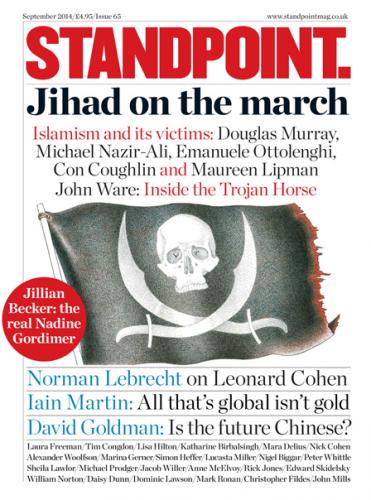
- The Plot to Islamise Birmingham’s Schools
- Nigeria, Iraq, Gaza—The Threat is the Same
- Radical Islam and its Invisible Victims
- The Man Who Tried to Teach us all a Lesson
- Globalisation and The Crisis of the Nation State
- The Medium Isn’t Always the Message
- What sort of Europe does Cameron Want?
- Is China outstripping the West at innovation?
- Piketty’s panacea will make inequality worse
- The Moral Strength of Leonard Cohen
- Designer who taught us to keep it simple
- The US Can Still Help Save Syria — and Iraq
- Russian Resurgence has Blindsided Nato
- On Europe, Nothing Less than Treaty Change will do
- Putin has his Useful Idiots on the Left and the Right
- Sarajevo: Where the Century of Terror Began
- Allen Lane’s Pelicans Take Wing Once More
- How Not to Remember the First World War
- Opera is Not Just Our Most Expensive Noise
- Jonathan Miller: One Man, Two Cultures

1:12 AM
2:12 PM