



His approach—of not even allowing the opponent to "get started"—can best be illustrated by a celebrated victory against Amos Burn in the Paris tournament of 1900. Here it is, with Marshall's own witty notes—which explain why this has gone down in history as "the pipe game": 1.d4 d5 (Britisher Amos Burn was a very conservative player who liked to settle down for a long session of closed, defensive chess. He loved to smoke his pipe while he studied the board) 2.c4 e6 (Burn began hunting through his pockets for his pipe and tobacco) 3.Nc3 Nf6 4.Bg5 Be7 (Not much thought needed on these moves, but Burn had his pipe out and was looking for a pipe cleaner) 5.e3 0-0 6.Nf3 b6 7.Bd3 Bb7 8.cxd5 exd5 (He began filling up his pipe. I speeded up my moves) 9.Bxf6 Bxf6 10.h4 (Made him think on that one. And he still didn't have the pipe going) g6 11.h5 Re8 12.hxg6 hxg6 (Now he was looking for matches) 13.Qc2 Bg7 14.Bxg6 fxg6 (He struck a match and appeared nervous. The match burned his fingers and went out) 15.Qxg6 Nd7 (Another match was on its way) 16.Ng5 Qf6 (He was puffing away and lighting up at last, but too late) 17.Rh8+ Kxh8 18.Qh7 mate (Poor Burn. I think I swindled him out of that one. If he could only have got his pipe going, it might have been a different story. He took it good-naturedly and we shook hands. Then his pipe went out.)
Marshall's name is most closely linked to the unequalled genius that was José Raúl Capablanca, and for several reasons. It was against Capa that Marshall, after years of secret preparation, detonated the bombshell now known as "The Marshall Gambit". The Cuban won that game, but Marshall's invention remains one of the most feared of all chess openings after almost a century's further examination.
It was against Marshall in 1909 that the youthful Capablanca demonstrated his extraordinary talent to the world, by beating the then US champion by the devastating margin of eight wins to one. Most players would have resented such a mortifying defeat to a much younger rival; but Marshall's generous nature and open-hearted love of the game led him to do all he could to promote Capablanca, especially in Europe where there lingered a condescending attitude to players from the New World.
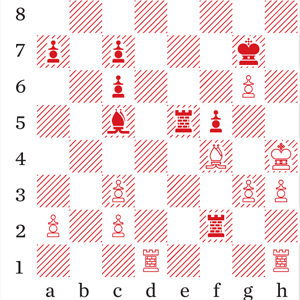
Puzzle: Marshall’s games are so full of dazzling coups, it is hard to be limited to a single example. Here is one from 1899, of which Marshall (Black, to play) shortly before his death four and half decades later, wrote that he still had a “spot in my heart”. White, two pawns up but with his King exposed, has just played the very natural 29.Bf4, attacking Marshall’s rook. What could possibly be wrong with that? Solution: Marshall played 29... Kxg6! So if 30.Bxe5 Be7 mates. Jackson duly blocked that diagonal with 30.Bg5—at which Marshall uncorked the amazing 30...Rf4+!! The point is not just that if 31. Bxf4 Be7 mates (as before) but that after 31.gxf4 Bf2 is also checkmate!


Post your comment

- Islam and the French Republic
- Why On Earth Should Anyone Study Philosophy?
- The Dying Days Of Zuma's South Africa
- His Master's Voice: Scruton On Wagner
- Why The Most Civilised Of Men Felt Like A Fraud
- Political Misconduct
- Cicero's Analysis Of Decline Offers Lessons For The West
- Trump's Appeal Is More Roosevelt Than Reagan