



It was not only chess moves that Fischer would be shouting out, to his neighbours' discomfiture. Although Jewish by birth, Fischer had become an obsessive anti-Semite and would spend many hours posting extracts from the Protocols of the Elders of Zion and similarly toxic tracts underneath the wipers of cars in downtown Pasadena. Such extreme and compulsive Judaeophobia is itself a kind of mental condition bordering on paranoia; while Brady speculates as to the original trigger of the ex-world champion's proselytising anti-Semitism, detailing various cases where Fischer had seen himself as the victim of financial deals by businessmen who happened to be Jews, it seems more likely that Fischer had an inherent paranoid tendency, and was therefore highly susceptible to a pseudo-political theory whereby the whole planet was being manipulated by a secret conspiracy.
Garbus's compelling documentary captures the sheer nastiness of Fischer's tirades in a way no book could accomplish; not just in replaying the radio recording in which he gloats over the 9/11 attacks as a just reprisal against "America and the Jews", but also in footage of Fischer confronting a New York Times reporter in 1992, when he briefly returned to chess to play a rematch against a past-it Boris Spassky in war-torn Serbia. To an innocuous query by the reporter Jeremy Schaap, Fischer suddenly recalls that Schaap's father had long ago written a piece saying that "[Bobby Fischer] does not have a sane bone in his body", and denounces him as "a typical Jew snake". At this point, Schaap, who had, along with the rest of the journalists present, already endured a stream of anti-Semitic ramblings from Fischer, devastatingly retorts: "Bobby, you've done nothing today to disprove anything my father said about you."
Bizarre and offensive as Fischer eventually became, the truth is that he had always been brutally insensitive and supremely selfish as he worked his way to the chess pinnacle — and we chess addicts forgave him all that, as a tiny thing to set against the pleasure he gave us with the artistry of his games. What we couldn't forgive was the fact that he stopped playing; that he became a monstrous waste of a unique talent.
It is in that context that this, the first game of his rematch against Spassky in 1992, should be seen. It was played 20 years and a day after the last time anyone had seen Fischer lift a chess piece; its flawless, flowing harmony reminded us of the genius he had desecrated and denied. 1.e4 e5 2.Nf3 Nc6 3.Bb5 a6 4. Ba4 Nf6 5.0-0 Be7 6.Re1 b5 7.Bb3 d6 8.c3 0-0 9.h3 Nb8 10.d4 Nbd7 11.Nbd2 Bb7 12.Bc2 Re8 13.Nf1 Bf8 14.Ng3 g6 15.Bg5 h6 16.Bd2 Bg7 17.a4 c5 18.d5 c4 19.b4 Nh7 20.Be3 h5 21.Qd2 Rf8 22.Ra3 Ndf6 23.Rea1 Qd7 24.R1a2 Rfc8 25.Qc1 Bf8 26.Qa1 Qe8 27.Nf1! (with the remarkable idea of manoeuvring the knight to a3, after exchanging all the major pieces on the a-file, and then winning Black's b-pawn) Be7 28.N1d2 Kg7 29.Nb1 Nxe4! (a sacrifice to cut across Fischer's awesomely methodical plan) 30.Bxe4 f5 31.Bc2 Bxd5 32.axb5 axb5 33.Ra7 Kf6 34.Nbd2 Rxa7 35.Rxa7 Ra8 36.g4!! (an inspired disruption of Black's pawn mass) hxg4 37.hxg4 Rxa7 38.Qxa7 f4 39.Bxf4! (the true point of Fischer's brilliant 36th move) exf4 40. Nh4! Bf7 41.Qd4+ Ke6 42.Nf5! Bf8 43.Qxf4 Kd7 44.Nd4 Qe1+ 45.Kg2 Bd5+ 46.Be4 Bxe4+ 47.Nxe4 Be7 48.Nxb5 Nf8 49.Nbxd6 Ne6 50.Qe5 and Spassky resigned.
Puzzle: Fischer won the 1963 US championship by winning all 11 games, a feat unmatched before or since. However, in this position after just 21 moves, playing Black against Grandmaster Robert Byrne, Fischer was a piece down. One commentator declared his position lost — and was astounded when it was Byrne who extended his hand in resignation. Can you see the brilliant finish that Fischer was denied?
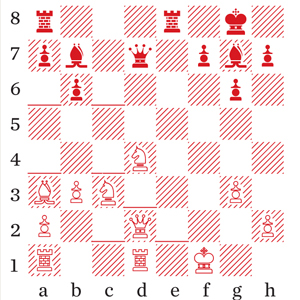
Solution: In his own notes to the game Fischer described Byrne’s resignation as “A bitter disappointment. I’d hoped for 22.Qf2 Qh3+ 23.Kg1 Re1+!! 24. Rxe1 Bxd4 with mate to follow shortly. Also 22.Ndb5 Qh3+ 23.Kg1 Bh6 and the curtain comes down.”


Post your comment

- The Loss Of Faith Made Music Mute
- The Great Betrayal: How Liberals Appease Islam
- Political Correctness Is Devouring Itself
- The New Language Of Political Narcissism
- Why The World Still Loves Shakespeare
- Don’t Listen to Britain’s Designer Demagogues
- Who's in Charge of BBC News?
- An English parliament: the only way to save the UK
- The Loss Of Faith Made Music Mute
- The Great Betrayal: How Liberals Appease Islam
- Political Correctness Is Devouring Itself
- The New Language Of Political Narcissism
- Why The World Still Loves Shakespeare
- Don’t Listen to Britain’s Designer Demagogues
- Who's in Charge of BBC News?
- An English parliament: the only way to save the UK
- The Loss Of Faith Made Music Mute
- The Great Betrayal: How Liberals Appease Islam
- Why The World Still Loves Shakespeare
- Who Will Lead The Berlin Band?
- Putin and the Art of Political Fantasy
- Political Correctness Is Devouring Itself
- The New Language Of Political Narcissism
- Inside The World Of 'Non-Violent' Islamism