



1.b3 (Larsen's Opening-which is probably the best that can be said for it) d5 2.Bb2 c5 3.Nf3 Nc6 4.e3 Bg4 5.Bb5 Qb6 6.a4!? (As far as I know, a theoretical novelty) a6 7.a5! (The point is that he can't play 7...Qxb5 because after 8.Nc3 Qb4 White wins with 9.Nxd5 or even 9.Ra4) Qc7 8.Bxc6+ Qxc6 9.Ra4! (Another point of 7.a5) Bh5 10.g4!? (Very ambitious. My hand was itching to play 10.Rh4, but after 10...Qg6 it seems that White has nothing better than the drawing line 11.0-0 Bxf3 12.Qxf3 Qxc2 13.Qxd5 Qxb2 14.Qxb7 Rd8 15.Qc6+ and perpetual check) Bg6 11.Ne5 Qc7 12.h4 f6 13.h5 Be4 14.f3 fxe5 (Black saw that he could have grabbed a pawn with 14...Bxc2 but didn't fancy the position after 15.Qxc2 fxe5 16.Qf5) 15.fxe4 e6 16.g5 Bd6 17.Qg4 Qd7 18.h6!? (Nigel Short described this to me as "the sort of move that is either very good or very bad". After playing it I felt optimistic about my chances-more based on the fact that my opponent looked concerned rather than that I had the faintest idea what was going on)...gxh6 19.gxh6? (But this is definitely wrong. The correct follow-up would have been 19.exd5 exd5 20.Nc3! Qxg4 21.Rxg4 d4 22.Ne4 Be7 23.g6! hxg6 24.Rxg6 0-0-0 25.Rh5 when White has fantastic compensation for his pawn) Ne7 20.exd5 exd5 21.Qxd7+ Kxd7 22.e4? (This is also stupid. My idea was to fix a square for my Knight on c4 and to win the pawn on c5. Both are achieved, but at the expense of allowing Black's rooks to dominate the board. 22.Rg4 Nc6 23.Rg7+ was much more sensible) d4 23.Na3 Nc6 24.Nc4 Raf8 25.Ba3 Rhg8 26.Nxd6 Kxd6 27.Rc4 Rf4 28.d3 Rg2 29.Rxc5 Ke6 30.Rf1 Rxf1+ 31.Kxf1 Rh2 32.Rd5 Rxc2 33.Rd6+ Kf7 34.Rd7+ Kg6 35.Rxb7 Nxa5 36.Rb6+ Rc6 37.Rxc6+ Nxc6 38.Bf8! (The only move to preserve the importunate pawn on h6. After 38.Bc1 Na5 39.b4 Nb3 White would be dead lost. But now the position is drawn, a conclusion the players managed to reach some inconsequential moves later.) As my schoolteachers used to write: Must do better.
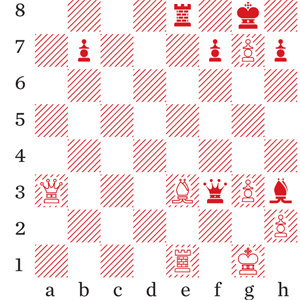
Puzzle: In the final round of the 2013 Thai Open Nigel Short (White, to move) dug an astonishing trap for the Hungarian grandmaster Attila Czebe. In this position after 34 moves—a variation from the actual game—it seems that Short is doomed: how can he both prevent the threatened mate on g2 and cover his loose Bishop on e3?
Solution: The resourceful Englishman had this bit of magic up his sleeve: 35.Qf8+!! Rxf8 36.gxf8=Q+ Kxf8 37.Bh6+ Kg8 38.Re8 checkmate. A trick to remember.


Post your comment

- Cultural Climate Change
- Opposites meet in the land of Scrugletopia
- The Battle Against The Philistines Never Ceases
- Home from home for the Bolshevik elite
- Can Macron Save France — Or Is He Its Undertaker?
- How The EU Elite Paved The Way For Populism
- Why France Is Revolting Against The Ancien Regime
- A Decent Woman Betrayed By Her Gruesome Twosome