


It is not known if the KGB ever called Keres in for a further interrogation over his opening analyses. But the bulk of his extraordinary chess career was played under this shadow. In 1948, when he took part in the tournament to establish a successor to the world championship left vacant by the death of Alexander Alekhine, Keres was told by the KGB that it would be trouble for him and his family if Stalin's favoured candidate Mikhail Botvinnik should fail as a result of anything he did: in other words, Keres should not beat him. And, as it turned out, Keres lost four of his five games against Botvinnik, who went on to win the supreme title. However, it is also known that Botvinnik was furious when he found out that the authorities had been intervening in this way. He wanted to win on his own terms, and in any case believed he had the measure of the Estonian.
Very few others did, however. In his tournament career Keres won against every world champion from Capablanca to Bobby Fischer, making him the only player apart from Viktor Korchnoi ever to have beaten nine undisputed world champions. It is with reason that he is regarded by many as the greatest master never to have become world champion. He once said: "I have been unlucky — like my country." Dying of a heart attack in 1975 at the age of 59, Keres did not live long enough to witness his country's restoration of its independence — which it marked by putting his portrait on one of its new banknotes.
Today, Estonia is one of the ex-Soviet nations fearful of the Russian imperial revanchist Vladimir Putin. As Sosonko notes in his commentary on this excavation from the KGB archive: "Regardless of its content we can acknowledge that Panov's review can be considered an example of the journalism of the time — as well as some of the journalism of today's Russia. Suspicion, the search for potential enemies everywhere and anywhere, the inflation of achievements, a sense of historical destiny, a division of the world into ours and the foreign can be noted in many aspects of Russian life nowadays."
In the circumstances, perhaps it is a fitting irony to end with a game won by Keres representing the Soviet Union — and playing a variation named after the man who shopped him to the KGB. The victim on this occasion (the Leipzig Olympiad of 1960) was the Romanian master Corvin Radovici.
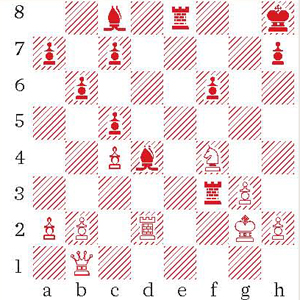
1.e4 c6 2.c4 (the Panov Attack) d5 3.exd5 cxd5 4.cxd5 Qxd5? (4…Nf6 is the standard response. After this premature recapture of the pawn, Keres never gives his opponent a moment’s respite) 5.Nc3 Qd8 6.d4 e6 7.Bf4 Nf6 8.Nf3 Nc6 9.Bc4 Be7 10.0-0 0-0 11.a3 b6 12.b4 Bb7 13.d5 exd5 14.Nxd5 Nxd5 15.Bxd5 Rc8 16.Rc1 Kh8 17.Qb3 Nd4 18.Rxc8 Nxf3+ 19.Qxf3 Bxc8 20.Rd1 Qd7 21.h3 a5 22.Bc4 Qa7 23.Bd6 axb4 24.axb4 h6 25.Qe4 Bxd6 26.Rxd6 Kg8 27.Qd4 Qc7? (27…Bf5 was essential, but after 28.Qxb6 White’s extra pawn should be sufficient. Now, however, Keres reveals the hidden second point of his previous move, and which ends the game on the spot) 28.Rg6! Remarkably, there is no defence against the threatened Qxg7 mate: the black f-pawn is pinned by the White Bishop and so cannot capture Keres’ rampant rook.


