


In this context, it's interesting that the Norwegian Magnus Carlsen, already the highest-rated player in the world at just 19, has now enrolled as a pupil of...Garry Kasparov. I spoke to Magnus's father, Henrik, about this. He said that Kasparov was a notably hard taskmaster. Yet Magnus is himself an example of how the capacity for sustaining long periods of intense concentration might itself be the key to understanding what we call "genius". In Simen Agdestein's Wonderboy (Interchess BV, 2007), we read of Magnus's choosing to spend hours doing 50-piece jigsaw puzzles — at the age of two. Truly, as Kasparov said, the capacity for extremely hard work is itself a rare talent.
Yet, as Kasparov says, it's not simply about an infinite capacity for taking pains: we all do have different cognitive abilities. Some people just have better mental processors than others; those whom we might term geniuses must have very good cerebral hardware, even if their brains would not visibly differ from the rest of humanity's if sliced and examined under a microscope.
There are perhaps only two players in history who stand out as natural talents quite divorced from the benefits of learning and hard work. The first was born in New Orleans in 1837. Paul Morphy learnt the game without even being instructed, just by silently watching his father play — who was staggered when the infant Paul suddenly told him he had made a mistake. Morphy, entirely self-taught, discovered single-handedly the now accepted principles of piece development and placement.
Then there was the Cuban José Raúl Capablanca, who discovered chess as an infant exactly as Morphy had done; yet like Morphy, he did not want to devote his entire life to chess. He was not even especially dedicated, which is why he lost the world championship to the maniacally focused Russian Alexander Alekhine. Yet Alekhine knew that his Cuban rival had something he (and everybody else) lacked. When Capablanca died, Alekhine wrote: "We have lost a genius whose like we shall never see again."
Capablanca's best games had a translucent elegance, which music lovers might describe as Mozartean. Here is a charming example, Capa playing White against the Hungarian-born US champion Herman Steiner in 1933. 1.e4 e5 2.Nf3 Nc6 3.Nc3 Nf6 4.Bb5 Bb4 5.0-0 0-0 6.d3 d6 7.Bg5 Bxc3 8.bxc3 Ne7 9.Nh4 c6 10.Bc4 Be6 11.Bxf6 gxf6 12. Bxe6 fxe6 13.Qg4+ Kf7 14.f4 Rg8 15.Qh5+ Kg7 16.fxe5 dxe5 17.Rxf6! Kxf6 18.Rf1+ Nf5 19.Nxf5! exf5 20.Rxf5+ Ke7 21.Qf7+ Kd6 22.Rf6+ Kc5 23.Qxb7 Qb6 24.Rxc6+! Qxc6 25.Qb4 mate. Genius.
Puzzle: How did Paul Morphy, the world’s first acknowledged chess genius, finish off the wonderfully-named Napoleon Marache (white) in this game from 1857?
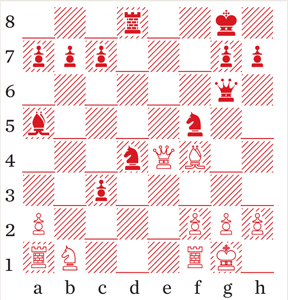
Solution: Morphy played 19…Ng3!! and after 20.Qxg6 delivered an exquisite checkmate with 20….Nde2!


- The Loss Of Faith Made Music Mute
- The Great Betrayal: How Liberals Appease Islam
- Political Correctness Is Devouring Itself
- The New Language Of Political Narcissism
- Why The World Still Loves Shakespeare
- Don’t Listen to Britain’s Designer Demagogues
- An English parliament: the only way to save the UK
- Death By Clickbait
- The Loss Of Faith Made Music Mute
- The Great Betrayal: How Liberals Appease Islam
- Political Correctness Is Devouring Itself
- The New Language Of Political Narcissism
- Why The World Still Loves Shakespeare
- Don’t Listen to Britain’s Designer Demagogues
- An English parliament: the only way to save the UK
- Death By Clickbait
- The Loss Of Faith Made Music Mute
- The Great Betrayal: How Liberals Appease Islam
- Why The World Still Loves Shakespeare
- Political Correctness Is Devouring Itself
- Who Will Lead The Berlin Band?
- Putin and the Art of Political Fantasy
- The New Language Of Political Narcissism
- Inside The World Of 'Non-Violent' Islamism
9:05 AM