


As Gennadi Sosonko, the Russian-born chess trainer and historian, wrote in his obituary of Miles: "He was as though born for chess; he had an innate sense of confidence in himself, which is so necessary for successful play at a high level...He defeated world champions Boris Spassky, Mikhail Tal and Anatoly Karpov. One distinguished grandmaster from the Soviet Union complained: ‘I like all the players from England, except Miles — he does not treat me with the respect I am used to.'"
Yes, I did say obituary. Ten years ago on November 12, 2001, Miles's body was found at his home by the police, after he failed to appear for a scheduled event. Britain's first chess grandmaster had died of a heart attack, brought on by diabetes, at the age of 46. It was a shock, even though Miles, with characteristic cussedness, had refused to take the insulin doctors recommended.
Yet his sad end, living on his own surrounded by a chaotic mess of chess books and trophies, was in another sense not so surprising. Having become one of the planet's leading grandmasters at the start of the 1980s, he had endured only setbacks in his attempts to break into the magic circle of candidates for the ultimate title of world champion. Then, in 1986, he was invited to play a non-title event against Garry Kasparov, as the then world champion wanted some match practice ahead of one of his title bouts against Anatoly Karpov.
A good result by Miles would have restored his confidence and his credentials; but it was a disaster — Kasparov won five games out of the six, allowing Miles a solitary draw. "I thought I was playing the world champion, not a monster with a thousand eyes who sees everything," said Miles afterwards. This brave attempt at humour did not disguise the devastation he felt at such a brutal demonstration of the gulf between him and a player who was a child when the great British hope burst into chess stardom.
Puzzle: Tony Miles was often at his most dangerous when in a seemingly hopeless position. Prepare to be amazed by this conclusion of his game against the Scottish master Craig Pritchett in 1982. Playing White, to move, he can’t take Pritchett’s Bishop, because of checkmate with Qa2. Is there any defence to Black’s assault on b2?
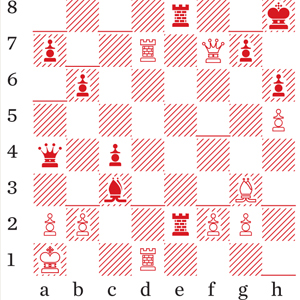
Solution: Yes, and it also wins! Miles played the stupendous 34.Be5!! If Black captures the Bishop with either Rook then he blocks his own Bishop’s defence of g7, allowing 35.Qxg7 mate; but if he captures the Bishop with 34...Bxf6 then Miles mates, starting with 35.Qxe8+. Meanwhile 35.Be5!! also defends b2 in X-ray fashion. So a doubtless dumbfounded Pritchett resigned on the spot.


- Conduct Unbecoming: The Classical Commentaries of Norman Lebrecht in Standpoint
- Propaganda Shouldn’t Pay
- The US Can Still Help Save Syria — and Iraq
- A Putrid Pact between Devils
- Strangers in their own Holy Land
- The Taboo of the Tombola
- Putin has his Useful Idiots on the Left and the Right
- Russian Resurgence has Blindsided Nato
3:11 PM