



What happened was a massacre: Fischer won the long-awaited showdown between the Western world's two best players by six wins to zero, conceding not even a solitary draw. Even 30 years later, it was clear that Larsen was still traumatised by the experience. In a 1998 interview, he described the match as "insufferable...it was a nightmare...It's very difficult to forget this and to start everything from the very beginning. I think that I haven't managed to do this."
Admirably, however, Larsen continued to play in the same optimistic spirit against all other grandmasters. While he might have been shattered by the ending of his undoubted ambition to be world champion, he continued to play to win every game in every tournament he entered, scorning the short draws that others rely on to conserve their energies. In his last tournament, two years ago, the now frail Larsen rejected a number of draw offers from much younger men, and persisted in doing so, even as his defeats piled up.
Part of that might be put down to Larsen's marauding Viking spirit. Yet it was also a testament to his insatiable and undimmed love for the game: he could never be cynical about it, no matter how bitter his disappointment at failing to reach a match for the ultimate title. He once expressed this idealism in romantic terms: "Chess is a beautiful mistress to whom we keep coming back, no matter how many times she rejects us."
Few games in chess history illustrate that beauty more than Larsen's spectacular victory against Tigran Petrosian in the 1966 Piatgorsky Cup. Petrosian was then world champion — and yet Larsen won both their games in the double-round event: no wonder he believed he would be champion himself, one day. Here, playing white, is his first victory over the immensely tough Armenian, a game which will be celebrated for as long as chess itself is played.
1.e4 c5 2.Nf3 Nc6 3.d4 cxd4 4.Nxd4 g6 (A variation which Larsen liked to play himself with the Black pieces. This month's puzzle shows how dynamically he handled such positions from the other side of the board) 5.Be3 Bg7 6.c4 Nf6 7.Nc3 Ng4 8.Qxg4 Nxd4 9.Qd1 Ne6 10.Qd2 d6 11.Be2 Bd7 12.0-0 0-0 13.Rad1 Bc6 14.Nd5 Re8 15.f4 Nc7 16.f5 Na6 17.Bg4 Nc5 18.fxg6 hxg6 19.Qf2 Rf8 20.e5!! (An extraordinary sacrifice to gain a single tempo) Bxe5 21.Qh4 Bxd5 22.Rxd5 Ne6 23.Rf3 Bf6 24.Qh6 Bg7 25.Qxg6! (The stunningly beautiful point of Larsen's play — he sacrifices his Queen against the world champion.) Nf4 (A desperate attempt to break the co-ordination of White's pieces) 26.Rxf4 fxg6 27.Be6+ Rf7 (If 27...Kh7 then 28.Rh4+ Bh6 29.Bxh6 Rf5 30.Rxf5 gxf5 31.Bf7!! e5 32.Rh3 Qb6+ 33.Kh1 and there is no practical defence against Bf8 mate) 28.Rxf7 Kh8 29.Rg5! (As Larsen observed at the time: "Really unanswerable. It is a struggle now between two rooks and two bishops on one side and one king and one bishop on the other. There can only be one possible end.")...b5 (Larsen, again: "Grim humour. The Queen has accomplished nothing and now gets the square a5") 30.Rg3 and the world champion resigned, being unable to face the inevitable execution with 30...Qa5 31.Rh3+ Bh6 32.Rxh6+ Kg8 33.Rxg6+ Kh8 34.Bd4 checkmate.
Puzzle: This is Larsen, playing Black against the young Nigel Short in 1985. How did he compel instant resignation?
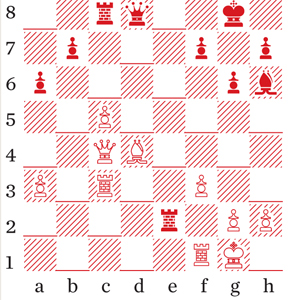
Solution: Larsen played the vicious 23…b5! Short can’t take the pawn en passant, because of 24...Rxc4. If he plays 24.Qxe2 then Larsen replies 24…Qxd4+ winning the white rook next. If 24.Qd3 then 24…Rd2 wins. Finally, if 24.Qb4 then 24…a5! forces the Queen from its defence of the Bishop on d4. So Short resigned on the spot.


Post your comment

- The Zombie Argument that Refuses to Die
- Online Only: The Price Paid for Criticising Islam
- Overrated: Dan Brown
- Overrated: George Monbiot
- Is the Brain the Key to Understanding Religion?
- 'Please Sir, I Just Want to Learn More'
- An Assault on Free Speech at the LSE
- The Alternative History of an Undivided India
- The Zombie Argument that Refuses to Die
- Online Only: The Price Paid for Criticising Islam
- Overrated: Dan Brown
- Overrated: George Monbiot
- Is the Brain the Key to Understanding Religion?
- 'Please Sir, I Just Want to Learn More'
- An Assault on Free Speech at the LSE
- The Alternative History of an Undivided India
- Decline and Fall of the History Men
- Uncritical Theorists Who Misread the Nazis
- The Zombie Argument that Refuses to Die
- The Banality of Hannah Arendt
- From Kitsch to Cool: Picasso and Modern Art
- Is the Brain the Key to Understanding Religion?
- Time to Wise Up to the Muslim Brotherhood
- Midfield Virtuoso Finds His Perfect Pitch
- Online Only: The Price Paid for Criticising Islam
- Overrated: George Monbiot
- Letter from Ukraine: Reviving Lost Literature
- On Pilgrimage with the Hasids
- The Blob Has Run Schools For Decades. Not Any More
- Tsar Of The Holy Land
- Bismarck Versus Blair — A Foreign Policy Crossroads
- My Dieting Guide: Listen To Mother