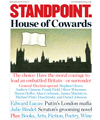



Lord Devlin's contention was that the law had every right to uphold the moral consensus, in the face of liberal reforms that would otherwise permit acts regarded as deeply offensive by the majority. This argument was dismissed at the time as both oppressive and quaint. Faced with the opportunity to impose their morality on the nation, however, people who regard the defeat of Lord Devlin as fundamental to the advance of liberty and human rights, seem to take exactly the same line - with one notable difference, namely, that the "public morality" that they choose to enforce is not that of a majority, but that of a minority of puritans who, despite their habit of wearing leather shoes and woollen cardigans, cannot bear the sight of a Venus in furs. And the very same idea of public morality has been invoked in the Court of Appeal to defend the Hunting Act from review by the European Court of Justice, the government arguing that, even if there are no positive consequences of the Act in the matter of animal welfare, that doesn't matter, since its real purpose is to uphold and enforce the requirements of "public morality", which is offended by the sight of the unspeakable in full pursuit of the uneatable.
I think we would all agree that, if there really is to be a distinction made between moral and legal wrongdoing and between the sphere of private freedom and that of public control, there must be some principle or procedure for determining what the law can and cannot forbid. If we don't have that procedure, or if we can chop and change, invoking liberty when liberty goes in our favour and "public morality" when it goes the other way, we are only pretending to distinguish law from morality. And recent experience of the UK Parliament, which is peopled by a new breed of
puritans who are every bit as keen to impose their views on the rest of us as their 17th-century forebears, and every bit as keen as those forebears to claim the exemptions required by their own way of life, suggests that there is a real temptation among those who find themselves able to make laws for the rest of us, to be guided not by the love of freedom but by the morally-inspired desire to extinguish it.
This, it seems to me, is the crucial point. You cannot have it both ways. If there is to be a genuine limit to the enforcement of morals, then it must be a limit that anyone could come up against, if he really has moral convictions, over and above the conviction that people should live according to liberal laws. If someone comes up against that limit and then invokes "public morality" (meaning his own private morality writ large) in order to transgress it, this simply means that he doesn't recognise it as a limit. Law for him is the servant of his own morality and the morality of others is not the master of law but its slave.


Post your comment

- The Loss Of Faith Made Music Mute
- The Great Betrayal: How Liberals Appease Islam
- Political Correctness Is Devouring Itself
- The New Language Of Political Narcissism
- Why The World Still Loves Shakespeare
- Don’t Listen to Britain’s Designer Demagogues
- An English parliament: the only way to save the UK
- Death By Clickbait
- The Loss Of Faith Made Music Mute
- The Great Betrayal: How Liberals Appease Islam
- Political Correctness Is Devouring Itself
- The New Language Of Political Narcissism
- Why The World Still Loves Shakespeare
- Don’t Listen to Britain’s Designer Demagogues
- An English parliament: the only way to save the UK
- Death By Clickbait
- The Loss Of Faith Made Music Mute
- The Great Betrayal: How Liberals Appease Islam
- Why The World Still Loves Shakespeare
- Political Correctness Is Devouring Itself
- Who Will Lead The Berlin Band?
- Putin and the Art of Political Fantasy
- The New Language Of Political Narcissism
- Inside The World Of 'Non-Violent' Islamism