


Even Hardy isn't clear-cut. The Oxford English syllabus has the novels in the Nineteenth Century and the poetry in the Twentieth. The novels are indisputably a significant body of work. Would anyone deny the staying power of The Mayor of Casterbridge, Tess of the d'Urbervilles and Jude the Obscure? The poetry is more problematic. It shares the flaws of the prose — maladroit lapses and complacent irony — without any compensating narrative compulsion. And Hardy's greatest sequence, the dark 1912-13 poems in memory of his first wife, isn't without its verbal blemishes and ineptitudes (wan wistlessness rhyming desperately with listlessness).
Maybe the genuine poet-novelist is rarer than we think.
In principle, in theory, I have to say why not both? After all, in addition to poetry, I've written critical prose, libretti and plays (two in verse, one in prose). On the other hand, I wouldn't claim ambidexterity as a poet-playwright. I'd leave that to Tony Harrison, simply because he's been more successful in getting his work staged and filmed. But shouldn't a writer be able to write anything?
Then you think of James Joyce, a lord of language who could do anything with words, who never committed a sentence to paper without a reason, without re-rehearsing the sequence of syllables. In his memoir, James Joyce and the Making of Ulysses (Grayson), Frank Budgen recalls how Joyce recited one sentence, a sentence of only nine words from "Lestrygonians", as his full day's work. It was: "With hungered flesh obscurely, he mutely craved to adore." You see, said Joyce, how many different ways that sentence could be arranged. In other words, a boast of verbal attentiveness, of Flaubertian commitment to le mot juste. Ezra Pound famously said that poetry should be at least as well written as prose. The implication of the Joyce anecdote is that prose should be at least as well written as poetry — defined by Coleridge as "the best words in the best possible order". Joyce's finicking with his nine words remind us of Marianne Moore's dismissive encapsulation of poetry as "all this fiddle".
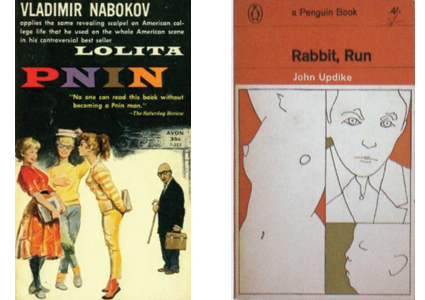
Two awkward considerations present themselves — the failure of Joyce's poetry, which Pound justly told him to keep in the family Bible, and that nine-word sentence, arranged with advertised care but to no great end. Were that sentence all to survive of Joyce, we wouldn't be rushing to read him. Joyce isn't a great poet-novelist. Like Updike, he is mesmerised by the cruder differences between poetry and prose — rhyme and metre. In poetry, both these great prose writers are deeply traditionalist, complacently copying poetry's ersatz externals.
It was almost a decade after that Groucho dinner before I attempted a novel. My notebooks, meanwhile, were full of potential material, things that seemed intrinsically novelistic — mainly, perhaps, because I couldn't see a way of using them as poetry. Now I believe that the compulsion to make poetry out of the recalcitrant, the prosaic, the unpoetic, is the best way — not the easiest way — to write original poetry. In fact, I would say that difficulty is essential to the creative process. I was drawn to the novel as a form because it was more difficult than poetry. I knew how to write poetry. I didn't know how to write a novel.


2:06 AM
2:06 AM