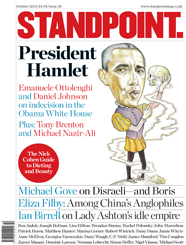



How much will the Iraq experience affect America’s ability to lead in the future? Kagan doesn’t address that question but his answer is implied when he says that the democratic world will still look to the sole superpower for leadership, no matter how “flawed”. It is striking how US leadership recovered after Korea’s unpopular and stalemated war – and even after Vietnam. Whether Kagan believes that history’s return will include the return of US confidence, and how quickly, is unclear.
History’s answer to that question will depend on several factors, including the leadership capacity of the next US administration and whether Iraq ultimately comes to be viewed as a failure or a success – albeit a costly one. But America’s future leadership role may depend even more on how threatening the world appears. Historically, that leadership role has often emerged out of a compelling crisis: Pearl Harbour, the Soviet invasion of Afghanistan and the Iran hostage crisis, Iraq’s invasion of Kuwait, or the attacks of 9/11. Paradoxically, the relative security which Americans have enjoyed since 2001 makes it easier to doubt the necessity of shouldering the burden of leadership. One hopes it will not take another calamity to convince us of the need for a vigilant foreign policy.


- The Zombie Argument that Refuses to Die
- Online Only: The Price Paid for Criticising Islam
- Overrated: Dan Brown
- Is the Brain the Key to Understanding Religion?
- Overrated: George Monbiot
- Time to Wise Up to the Muslim Brotherhood
- 'Please Sir, I Just Want to Learn More'
- The Alternative History of an Undivided India
- The Zombie Argument that Refuses to Die
- Online Only: The Price Paid for Criticising Islam
- Overrated: Dan Brown
- Is the Brain the Key to Understanding Religion?
- Overrated: George Monbiot
- Time to Wise Up to the Muslim Brotherhood
- 'Please Sir, I Just Want to Learn More'
- The Alternative History of an Undivided India
- Decline and Fall of the History Men
- Uncritical Theorists Who Misread the Nazis
- The Zombie Argument that Refuses to Die
- The Banality of Hannah Arendt
- From Kitsch to Cool: Picasso and Modern Art
- Is the Brain the Key to Understanding Religion?
- Time to Wise Up to the Muslim Brotherhood
- Midfield Virtuoso Finds His Perfect Pitch
- Online Only: The Price Paid for Criticising Islam
- Overrated: George Monbiot
- Letter from Ukraine: Reviving Lost Literature
- Tsar Of The Holy Land
- On Pilgrimage with the Hasids
- The Blob Has Run Schools For Decades. Not Any More
- My Dieting Guide: Listen To Mother
- Bismarck Versus Blair — A Foreign Policy Crossroads
12:07 PM