



Kashgar moves slowly. There is little at first to suggest that Xinjiang exploded into communal violence in 2008 and 2009. The unrest only died last spring. In the run-up to the 2008 Beijing Olympics, a series of isolated incidents foretold the coming storm. In March 2008, a woman blew up a bus in Urumqi. Days later, shops belonging to ethnic Chinese Muslims were ransacked. Then Tibet erupted into open rebellion in a desperate attempt to capture the attention of the world as the Olympic flame began its global tour to Beijing. Thousands of Uighurs took to the streets in Hotan and Karakax counties in copycat protests. Hundreds were arrested. That August, two men attacked a Chinese military outpost outside Kashgar with knives and improvised explosives. Days later, shooting erupted in the oasis town of Kuqa and explosions ripped through police stations and offices. Twelve people died. A few weeks later, policemen were stabbed by Uighur separatists and two officers were killed. When the Olympic flame approached Kashgar, Chinese police arrested 70 people.
In July 2009, Xinjiang erupted into the largest and most violent outbreak of violence China has seen since Tiananmen Square. The violence was sparked by the death of two Uighurs during an ethnic brawl in the southern Chinese industrial city of Shaoguan. Protests began in Urumqi and at least 1,000 people marched to the city centre. Eye-witnesses report that when police arrived to quell the protests, the Uighurs began throwing rocks at them and at Han Chinese. The city then descended into chaos, with the police using batons, live rounds, tasers and tear gas to disperse the rioters. Roadblocks were set up and armoured vehicles patrolled the city. Rioting continued. Internet, phone-lines and mobile coverage were disconnected and a strict curfew was established.
It is unclear how many died in the rioting — reports put the figure between 197 and 600 with more than 1,000 injured. Human Rights Watch has documented at least 43 Uighur disappearances. More angry mobs followed, mostly Han Chinese seeking revenge. Protests and sporadic violence continued throughout July.
The crackdown hardened and military forces flooded Urumqi. As violence peaked, the authorities temporarily closed the mosques. For the remainder of 2009, internet access was almost totally blocked in Xinjiang. State-controlled media sites were gradually restored last spring, with full connection to China's already heavily firewalled web restored only in the summer.
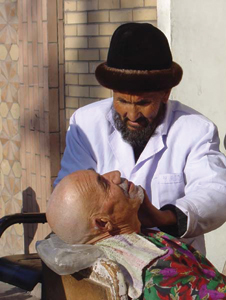
China presents its crackdowns as part of the global war on terrorism. This is not a fabrication. Uighur separatists have been heavily influenced by the jihadism of neighbouring Afghanistan and Pakistan, and many of them have been captured fighting alongside al-Qaeda and the Taliban. The Uighurs will not tell me about dreams of an Islamic state, though they wear more ostentatious displays of traditional headgear and devotion than neighbouring Tadjiks and Kyrgyzs. They said they would like to see "East Turkestan like a Europe country" or "Uighurstan — freedom country". But they pull away quickly when I ask about the riots or rumbling ethnic tensions. "Things have got much worse since the riots. It is dangerous to speak to Western media." I ask if they believe in the eventual independence of East Turkestan. "No," they reply unanimously and unhappily.
Other Uighurs were more combative. Restaurant Tahiti in Kashgar recently went bankrupt. The floor is covered in dirt and the tables are strewn with empty cigarette cartons emblazoned with pagodas. "Watch out for that spray bottle, there is 97 per cent alcohol in there," shouts the Uighur owner. "I designed it myself," he puffs, pointing at his profitless landscape. He has sharp brown teeth and a sleazy manner. He eyes me nervously, wishing I would leave. "My business went bankrupt due to the decline in tourism after the riots." He is teaching a few gormless market-hands how to speak English in a side-room, his dreams of being a Xinjiang Raymond Blanc in ruins.
"You know why I never had children?" he snarls. "Because I didn't want anyone else to live one more minute as a slave to this country." He speaks of spies, the possibility that somebody is listening. "This place is like Russia — the old Russia," he says. "Things may look calm in Kashgar but tensions are here. Something can easily happen."


- Beirut: Hariri — An Assassination Too Far
- New York: A ‘Post-racial’ American vs an Old Coot
- Pristina: Kosovo's Liberal Islam
- Oslo: Courage and Cowardice in Scandinavia
- ONLINE ONLY: Washington, D.C.: It's Not Rocket Science!
- La Hague: Recycling the French Model
- Jerusalem: No Via Media for Anglicans
- ONLINE ONLY: Beirut: Blood Holiday
- Rome: Arrivederci Roma
- Darfur: Panic at the Palace
- ONLINE ONLY: Letter from Bamian
- Caucasus: Diary, August-September, 2008
- ONLINE ONLY: South-East Asia: The Demons of Ignorance
- New York: Diary
- Ypres: Never Say Never Again
- New York: A Cousin in the White House
- Caracas: Chávez's Secret Fan Club
- Prague: Diary
- Park City, Utah: Movie that Pulls Aside the Veil
- Beirut: Blood on the Streets
- India: Tariq Ali's Plan for Pakistan
- Berlin and Cologne: A Tale of Two German Cities
- Mumbai: On the 'Slumdog' Trail
- Budapest: Screwed Left, Right and Centre
- Paris: Mayhem in the Marais
- Stanford, CA: Intellectual Life Under Obama
- Colombia: A Nation Reborn
- Paris: Prisoner of the Barbarians
- United States: The Path to Rome via San Francisco
- ONLINE ONLY: Black Russian
- South Africa: The ANC'S Health Lesson for Obama
- Lisieux, France: Relics of Thérèse
- Germany: Heidegger - Being, Time and Place
- Moscow: Putin's Empire Strikes Out
- Connecticut: My Battle Against Google
- Montana: Home From Home on the Range
- Siberia: In Search of the Gulag
- Rio's Heart of Darkness
- Mogadishu: Armageddon on Steroids
- Havana: The Castros Will Not Be Absolved
- Kaliningrad: Russia's Outpost in Europe's Heart
- Bishkek: Bloodsoaked Revolution
- Bishkek: Downfall of a Dictator
- Oslo: Signing OFF on Human Rights
- Bajaur: A Talk with the Taliban
- Bahrain: Women Drivers Welcome Here
- Tajikistan: In Search of the Yeti
- ONLINE Only: Ankara's Proxy
- Johannesburg: Hard Pressed
- Istanbul: Press Freedom Alla Turca
- Xinjiang: Taming China's Wild West
- The Lesson of Oz
- The Surge is Working — So Far
- A Tale of Love, Bulls and Goats
- Old-order Collapse
- Egypt's New Dawn Chorus
- From Carthage to Kasserine
- After Gaddafi: A New Libya Emerges
- To the Polo Saddle Born
- The Settlements: Life Between the Lines
- Exposed: Carnita's Cover Story
- "At last, I feel proud to be Libyan"
- Books Do Furnish a Little Freedom
- Fat Chance for Christie—This Time
- Easy Lies the Head that Wears the Crown
- Putin's Chinese Whispers
- Cain Isn't Able and Newt Defies Gravity
- The Ten Years' War against the Taliban
- We The People Say: Get Out of The Way
- Wanted: A New Ronald Reagan
- Time to Crunch the Numbers
- Who's Really Supreme?
- From Art as Life to Blood and Soil
- Talking Tactics
- The Wagner Family Soap Opera Rolls On
- Winning the Veepstakes
- Romney Takes a Risk with Ryan
- Window Brothels Get the Red Light
- Can Romney Spring an October surprise?
- Canada's Crusader for Conservatism
- No-Go Areas on the Campaign Trail
- Republicans Must Avoid Civil War
- Norway's Problem with Anti-Semitism
- Turks, Arabs and Jews: The Middle East in Crisis
- Nations United in Hypocrisy
- Siberia: Shamans, Spies and the Secret Police
- Barracked by Obama's Oratory
- Women Come Last in Syrian Refugee Camps
- The Dawn of Obamageddon
- Americans Know Her True Worth. Do We?
- Hapless Hollande’s French Farce Flops
- Save the NYPD So It Can Save the City
- Obama's Secrets Start Unravelling
- Syria Isn't Bosnia: Don't Arm the Rebels
- Who Can Stop Hilary in 2016?
- Teaching China's Anglophiles
- On Pilgrimage with the Hasids
- From Eastern Europe to the East End
- True Grits
- The Rise and Rise of Marine Le Pen
- Cold Comfort On Global Warming
- Hunting the Lynx with the Old Believers
- High-tech Israelis Aim For The Moon
- The Russians Are Coming
- The Turbulent Minister is Right
- Bad Times for Good Samaritans
- This Expat Paradise is a Woman’s Nightmare
- Two Generations Lost to Communism
- Strangers in their own Holy Land
- The Isles are Full of Big Noises
- The Kurds: Israel's not so Improbable Allies
- Islam and Innocence: Canada’s Predicament
- The Fifth Republic’s Darkest Days?
- Let's Make Putin's London Cronies Sweat
- The Global Politics Of Netanyahu's Victory
- A Grim Prospect For South Africa's Jews
- No End In Sight To The Exodus From Libya
- Undeterred, Erdogan Usurps Ataturk's Legacy
- Gaza Withdrawal Symptoms
- Red Flags Flying Over Parliament Square
- Mutinous Talk In The Highlands
- Our Principles Are All We Have
- Why The Swedes Have Had Enough
- Canada's First Nations Come Last
- Islam and the French Republic
- Unconventional Convention
- The Dying Days Of Zuma's South Africa
- I'm Not Antisemitic, But...
- The ELM, Dispatches and Awlaki
- A Larger Than Life Predator

- Cultural Climate Change
- Opposites meet in the land of Scrugletopia
- The Battle Against The Philistines Never Ceases
- Home from home for the Bolshevik elite
- Can Macron Save France — Or Is He Its Undertaker?
- How The EU Elite Paved The Way For Populism
- Why France Is Revolting Against The Ancien Regime
- A Decent Woman Betrayed By Her Gruesome Twosome
7:10 PM