


When the AKP took power, four large private groups owned almost all the country's media-a concentration of power already far too dense for political health. The largest was the Dogan group, which controlled some 70 per cent of the nation's print and broadcast outlets. The group enjoyed warm relations with the AKP until 2007. Then its outlets began reporting details of the Deniz Feneri scandal, the biggest charity corruption case in German history. Billions of dollars raised by this Islamist charity, Dogan newspapers announced, had found their way into AKP coffers. Soon thereafter, the Turkish Ministry of Finance began investigating the group, then levied upon it the largest tax fine ever assessed on a Turkish company. The company is appealing, but if the appeal fails, it will be annihilated.
Then there is Sabah, the second-biggest media conglomerate, which controls the largest-circulation daily in Turkey and the powerful ATV television channel. Facing bankruptcy in 2007, it went up for sale. Curiously, all but one bidder dropped out at the last minute. The bidder left standing was the Calik group, whose CEO is Prime Minister Recep Tayyip Erdogan's son-in-law, Berat Albayrak. A Qatari company, Al-Wasaeel, mysteriously swam up from nowhere to partner Calik's bid — in defiance of Turkish law, which forbids the foreign financing of the media — and two state banks led by figures close to the AKP, Halk and Vakif, lent Calik $750 million to finance the transaction, even though private banks in Turkey and abroad had declined.
Associates of the sect leader Fethullah Gülen, who has been exiled in the US since 1998, control many of these media outlets. No one is quite sure what the reclusive Gülen's agenda really is, but there is no doubt that before the AKP came to power, he was prosecuted here for trying to establish an Islamic state. Nor is there any doubt that he is close to, and supportive of, the AKP. When Gülen is mentioned in the Western press, usually in passing, almost never is the most important fact about him noted: many Turks fear he's their Ayatollah Khomeini. I do not know if they are right. But I don't know that they're wrong, either, and the people here who tell me his influence is a major cause for concern have proved right about many things. Outside a handful of academic publications, Gülen's name is rarely mentioned in the Western media, and when it is, he is usually described — as the New York Times recently put it — as a "provincial Turkish preacher" who organises inspiring summer camps.
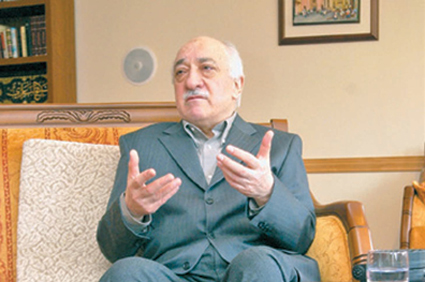
So far, yet close: The exiled Fethullah Gülen
The AKP has by this means brought under its influence most of the media in Turkey, and what it hasn't purchased or neutered, it has terrified. Since taking office in 2003, Erdogan has launched an energetic series of lawsuits against Turkish journalists and cartoonists for character defamation. No one knows how many have been sued, though the number is probably in the hundreds, and Erdogan has refused to answer this question when asked in parliament.
Then there is the hydra-headed Ergenekon case. Ergenekon, supposedly, is an ultra-nationalist terrorist gang that schemed to foment unrest in Turkey by blowing up mosques full of supplicants, shooting down Greek fighter planes and assassinating the Turkish Nobel laureate for literature Orhan Pamuk. The unrest unleashed by this, according to prosecutors, was to be used as a pretext to topple the AKP. A sprawling investigation into this alleged network of shadowy coup-plotters has resulted in the arrest of many prominent journalists critical of the AKP, including the Ankara bureau chief of Cumhuriyet, who is still rotting in jail. Last year, in protest, the front page of Cumhuriyet was left blank but for the words: "If we go silent, who will speak?" I don't recall seeing this reported anywhere in the international press. If it was, I will assume charitably, David Cameron merely overlooked it. Surely he would not deliberately have ignored it. That would have been cynical.


- Beirut: Hariri — An Assassination Too Far
- New York: A ‘Post-racial’ American vs an Old Coot
- Pristina: Kosovo's Liberal Islam
- Oslo: Courage and Cowardice in Scandinavia
- ONLINE ONLY: Washington, D.C.: It's Not Rocket Science!
- La Hague: Recycling the French Model
- Jerusalem: No Via Media for Anglicans
- ONLINE ONLY: Beirut: Blood Holiday
- Rome: Arrivederci Roma
- Darfur: Panic at the Palace
- ONLINE ONLY: Letter from Bamian
- Caucasus: Diary, August-September, 2008
- ONLINE ONLY: South-East Asia: The Demons of Ignorance
- New York: Diary
- Ypres: Never Say Never Again
- New York: A Cousin in the White House
- Caracas: Chávez's Secret Fan Club
- Prague: Diary
- Park City, Utah: Movie that Pulls Aside the Veil
- Beirut: Blood on the Streets
- India: Tariq Ali's Plan for Pakistan
- Berlin and Cologne: A Tale of Two German Cities
- Mumbai: On the 'Slumdog' Trail
- Budapest: Screwed Left, Right and Centre
- Paris: Mayhem in the Marais
- Stanford, CA: Intellectual Life Under Obama
- Colombia: A Nation Reborn
- Paris: Prisoner of the Barbarians
- United States: The Path to Rome via San Francisco
- ONLINE ONLY: Black Russian
- South Africa: The ANC'S Health Lesson for Obama
- Lisieux, France: Relics of Thérèse
- Germany: Heidegger - Being, Time and Place
- Moscow: Putin's Empire Strikes Out
- Connecticut: My Battle Against Google
- Montana: Home From Home on the Range
- Siberia: In Search of the Gulag
- Rio's Heart of Darkness
- Mogadishu: Armageddon on Steroids
- Havana: The Castros Will Not Be Absolved
- Kaliningrad: Russia's Outpost in Europe's Heart
- Bishkek: Bloodsoaked Revolution
- Bishkek: Downfall of a Dictator
- Oslo: Signing OFF on Human Rights
- Bajaur: A Talk with the Taliban
- Bahrain: Women Drivers Welcome Here
- Tajikistan: In Search of the Yeti
- ONLINE Only: Ankara's Proxy
- Johannesburg: Hard Pressed
- Istanbul: Press Freedom Alla Turca
- Xinjiang: Taming China's Wild West
- The Lesson of Oz
- The Surge is Working — So Far
- A Tale of Love, Bulls and Goats
- Old-order Collapse
- Egypt's New Dawn Chorus
- From Carthage to Kasserine
- After Gaddafi: A New Libya Emerges
- To the Polo Saddle Born
- The Settlements: Life Between the Lines
- Exposed: Carnita's Cover Story
- "At last, I feel proud to be Libyan"
- Books Do Furnish a Little Freedom
- Fat Chance for Christie—This Time
- Easy Lies the Head that Wears the Crown
- Putin's Chinese Whispers
- Cain Isn't Able and Newt Defies Gravity
- The Ten Years' War against the Taliban
- We The People Say: Get Out of The Way
- Wanted: A New Ronald Reagan
- Time to Crunch the Numbers
- Who's Really Supreme?
- From Art as Life to Blood and Soil
- Talking Tactics
- The Wagner Family Soap Opera Rolls On
- Winning the Veepstakes
- Romney Takes a Risk with Ryan
- Window Brothels Get the Red Light
- Can Romney Spring an October surprise?
- Canada's Crusader for Conservatism
- No-Go Areas on the Campaign Trail
- Republicans Must Avoid Civil War
- Norway's Problem with Anti-Semitism
- Turks, Arabs and Jews: The Middle East in Crisis
- Nations United in Hypocrisy
- Siberia: Shamans, Spies and the Secret Police
- Barracked by Obama's Oratory
- Women Come Last in Syrian Refugee Camps
- The Dawn of Obamageddon
- Americans Know Her True Worth. Do We?
- Hapless Hollande’s French Farce Flops
- Save the NYPD So It Can Save the City
- Obama's Secrets Start Unravelling
- Syria Isn't Bosnia: Don't Arm the Rebels
- Who Can Stop Hilary in 2016?
- Teaching China's Anglophiles
- On Pilgrimage with the Hasids
- From Eastern Europe to the East End
- True Grits
- The Rise and Rise of Marine Le Pen
- Cold Comfort On Global Warming
- Hunting the Lynx with the Old Believers
- High-tech Israelis Aim For The Moon
- The Russians Are Coming
- The Turbulent Minister is Right
- Bad Times for Good Samaritans
- This Expat Paradise is a Woman’s Nightmare
- Two Generations Lost to Communism
- Strangers in their own Holy Land
- The Isles are Full of Big Noises
- The Kurds: Israel's not so Improbable Allies
- Islam and Innocence: Canada’s Predicament
- The Fifth Republic’s Darkest Days?
- Let's Make Putin's London Cronies Sweat
- The Global Politics Of Netanyahu's Victory
- A Grim Prospect For South Africa's Jews
- No End In Sight To The Exodus From Libya
- Undeterred, Erdogan Usurps Ataturk's Legacy
- Gaza Withdrawal Symptoms
- I'm Not Antisemitic, But...
- The ELM, Dispatches and Awlaki
- A Larger Than Life Predator

11:08 AM