


The problem is the Coalition's energy policy, which is really a climate change policy inherited from the previous Labour government and designed to appease environmental activists by forcing ordinary consumers to subsidise ineffectual and expensive wind energy. As I have argued previously in Standpoint, such policies will merely inflate energy costs — much of the increase ending up in the pockets of large utilities and wealthy wind farm investors — while actually increasing the reliance on natural gas to cover the gaps when the wind fails to blow.
There are some reasons for optimism. Ministers have begun to acknowledge the importance of gas: "We used to regard gas as a transition fuel. We now understand that it is in fact a destination fuel," Charles Hendry MP said recently. They have also begun to take a more active interest in where the gas comes from: David Cameron has discussed with Vladimir Putin the possibility of extending the Russo-German Nordstream pipeline across the North Sea to Britain. But they have done little so far to encourage more exploration, least of all for shale gas.
The political difficulty is obvious: even with opposition to wind power growing increasingly forceful and articulate, it will be embarrassing to row back from an ineffectual policy whose consequences the government clearly did not understand.
But there is the heart of the matter. Wind power will require larger and larger amounts of gas generation to keep the lights on when the wind doesn't blow, which is 70 per cent of the time on a good day and 90 per cent on a bad day. Once this has been accepted, the choice between buying more imports and encouraging the development of potentially huge domestic reserves becomes less difficult.
Unfortunately, by the time this happens the UK will be many years off the economic pace being set by the American shale bonanza. Just one more reason to pray — one cannot expect that British governments will one day again be prepared to leave these sorts of decisions to the market, and not to the vagaries of well-intentioned but ill-understood state interventions.


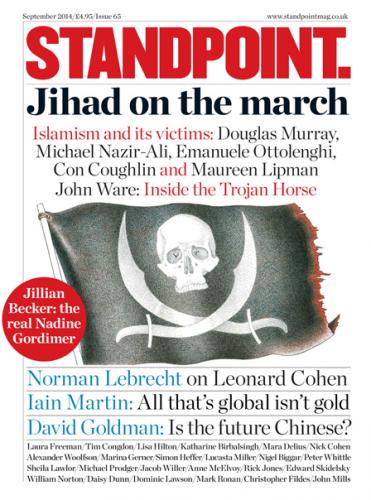
- The Plot to Islamise Birmingham’s Schools
- Nigeria, Iraq, Gaza—The Threat is the Same
- Radical Islam and its Invisible Victims
- The Man Who Tried to Teach us all a Lesson
- Globalisation and The Crisis of the Nation State
- The Medium Isn’t Always the Message
- What sort of Europe does Cameron Want?
- Is China outstripping the West at innovation?
- Piketty’s panacea will make inequality worse
- The Moral Strength of Leonard Cohen
- Designer who taught us to keep it simple
- The US Can Still Help Save Syria — and Iraq
- Russian Resurgence has Blindsided Nato
- On Europe, Nothing Less than Treaty Change will do
- Putin has his Useful Idiots on the Left and the Right
- Sarajevo: Where the Century of Terror Began
- Allen Lane’s Pelicans Take Wing Once More
- How Not to Remember the First World War
- Opera is Not Just Our Most Expensive Noise
- Jonathan Miller: One Man, Two Cultures

12:03 PM
7:11 AM