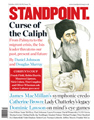

You are here:   Christianity > Jews, Christians and Judaeo-Christians
 

On the feast of Pentecost that followed the crucifixion, Peter and the rest of the apostles were metamorphosed under the influence of the divine Spirit from a group of gutless fugitives into born-again champions of the faith in Jesus, the risen Messiah, and their charismatic proclamation to the Jerusalem crowds instantaneously increased the original nucleus of 120 Jesus followers by 3,000 new Jewish converts. All they were asked to do was to believe in Peter's teaching about Jesus and be baptised in his name. 

The individual members of the Jerusalem Jesus party did not call themselves by any specific name, but their religious movement was known as "the Way" (Acts 9:2; 19:9; 24:14), short for "the Way of God". Only at a later date, after the establishment of a community in Antioch in northern Syria, do we encounter in the Acts of the Apostles 11:26 the specific designation Christianoi ("Christians" or Messianists), applied to the members of that particular church. 

How did the original Judaeo-Christians of Jerusalem compare to their Jewish neighbours? In some essential ways they did not differ from them at all. The Judaeo-Christians considered themselves Jews and their outward behaviour and dietary customs were Jewish. In fact, they faithfully observed all the rules and regulations of the Mosaic Law. In particular, the apostles and their followers continued to frequent the religious centre of Judaism, the Temple of Jerusalem, for private and public worship, and it was there that they performed charismatic healings (Acts 3:1-10; 5:12, 20, 25, 42). According to the Acts, the entire Jesus party assembled for prayer in the sanctuary every day (Acts 2:46). Even Paul, the chief opponent of the obligatory performance of Jewish customs in his churches, turned out to be a temple-goer on his occasional visits to Jerusalem. He once fell into a trance in the course of his prayer in the House of God (Acts 22:17) and on a later occasion he underwent the prescribed purification rituals before commissioning the priests to offer sacrifice on his behalf (Acts 21:24-6). 

In addition to their attachment to the Law of Moses, including worship in the Temple, the religious practice of the first Jewish Christians also included the "breaking of the bread" (Acts 2:46). This breaking of the bread was not a purely symbolical cultic act, but a real meal. It had the double purpose of feeding the participants and symbolically uniting them with one another as well as with their Master Jesus, and with God. The frequency of the rite is not immediately specified, but the initial impression is that it took place daily, not unlike the sacred dinner of the fully initiated Essenes, described by the Jewish writers Philo, Flavius Josephus and the Community Rule of the Dead Sea Scrolls. "And day by day, attending the temple together and breaking bread in their homes, they partook of food with glad and generous heart" (Acts 2:46). On the other hand, according to Acts 20:7, Paul in Troas broke the bread on the first day of the week, and the Didache, the earliest Christian treatise (late first century CE), also orders that the bread should be broken and thanksgiving (Eucharist) performed each Sunday (Did. 14:1). 

View Full Article
 
Share/Save


Steve
December 13th, 2011
6:12 PM
Moshe Idel's book "Ben: Sonship and Jewish Mysticism" is a fascinating (if lengthy) discussion of the concept of 'son' in Jewish mysticism, with the New Testament serving as one of point of reference.

Aaron Beach
December 13th, 2011
6:12 PM
John 4 clearly demonstrates Jesus sharing "the gospel" with Samaritans and many believing. The universality of Jesus message is made clear in John 12:32 reflecting prophesies made in Isaiah (every knee shall bow, tongue confess...). Maybe I'm not being inventive enough - but the idea that Paul invented universal salvation or deified Jesus seems interesting but unbiblical.

Charles
December 13th, 2011
4:12 PM
Excuse me, any relatively well-educated person, not only a specialist, knows that Jesus' first followers were Jews and that Gentile Christianity came later.

Jack
December 13th, 2011
3:12 PM
Great article. I just wish that people would accept the truth for a change. Reading this article would be a good start. The idea of the Messiah, for example, implies no divinity. Messiah is just a man based on the Jewish notion. One has to take the Jewish notion since the very idea came from them. Virgin birth: when are we going to accept that this has to do with ignorance about human physiology since "virgin" in the prophecy really means a young girl! What is the number one commandment according to Jesus? It is the Shema! That means only One God and not the Trinity! Not 3 in 1. Only 1. Jesus would be appalled by such nonsense. The faster we accept these simple truths the better and the less idolatry we commit.

Krzysztof Ciuba
December 13th, 2011
1:12 PM
A good article. Like in any science it shine the light on the epistemology of creation of an axiomatic system of knowledge, here, Christianity ( a system's beliefs). True, the historical Jesus considered himself only as a the Son of Man (read even, Benedict xvi, Jesus from Nazareth, ch. on Jesus's titles). Nicene's Creed is the language of...mataphor; that Fathers did not know the subtelity of St.Thomas 'definition" of God (as not an Greek or other religions intuition as the "best of best of....") or syntactical@semantical meanings of such terms like: being, relation, God, Father, Son, and of course the historical person of Jesus from Nazareth, who after conversion (Mk 1:4,9+Stories of BAptism)) started his mission. The title "Son of God" has a meaning but not of a mythical one of Greek Olimp; but The Son of God is not ...God! (S.Th1,2,3+ 20th cent logic+the hermeneutics of NT: Gr. theos in NT writiongs refer mostly to Father

John Quill
December 13th, 2011
11:12 AM
The author's knowledge of the gospels is very superficial. Jesus indeed made strong statements about being sent to the nation of Israel, but several passages make it very clear that the gospel would go to the Gentiles. Three prominent miracles were for non-Jews (healing the centurions servant, healing the Syro-Phoenician woman with an issue of blood, and exorcising a legion of demons into a herd of swine in the Decapolis). The "woman at the well" was a Samaritan, and she evangelized her city. Some of the parables are clearly indicative of Gentile inclusion (tenants, wedding feast) as are prophecies (Abraham, dreams in Daniel, Isaiah 9). We also have clear indications at his birth (blessing of Simeon in Luke 2, visit by the wise men) that Jesus was Lord of all. However, if you don't believe me, then believe Jesus' last instruction to his disciples in Acts 1:8: "But you will receive power when the Holy Spirit has come upon you, and you will be my witnesses in Jerusalem and in all Judea and Samaria, and to the end of the earth." In short, the church had to start someplace, and the chosen nation of Israel was it. However, the gospel went to the Gentiles rapidly because God has chosen his own from every nation - it was certainly no accident.

Almagor
December 6th, 2011
8:12 AM
It is a sin and a shame that there came to be hostility between the the Christian Jews or the Jewish Christians and the gentile Christians. Jesus never said one negative thing about the religion that God gave to Moses and never said anyone should leave that religion. Christians, later had a lot of hostility against the people who practiced the religion that God gave to Moses because of ignorance of the Bible and ignorance of the meaning of the word Jew. In Jesus day a Jew was a resident of Judea instead of Samaria or the Galilee region. When there are negative things about the Jews said in the Gospels the word can not mean those who practiced the religion that God gave Moses because Jesus was a devout practitioner of that religion and in fact, was a Rabbi. But Gentiles later didn't know that a Jew was a resident of Judea and blamed them for killing Jesus which is ridiculous. God sent Jesus to Earth to teach us about The Father and to be crucified. Since Jesus was crucified to pay for our sins, all of us are responsible for Jesus Crucifixion.

Paddy
December 3rd, 2011
8:12 PM
A most interesting article regarding the early church. Thank you. It is interesting how definitions can change. In modern times (by my unstudied observation), the term Judeo-Christian is popularly used as a propaganda term for those who wish to emphasise the "sameness" between the Jews and the Christians in reference to the Muslims. The reality is that there is much in common between all three religions.

Anonymous
December 1st, 2011
3:12 PM
Jesus most certainly is called the Son of God. Matthew 3:17.

elixelx
December 1st, 2011
7:12 AM
Judge not lest ye be judged; Let he who is without sin cast the first stone: The Gospels. Be deliberate in Judgement! Pirke Aboth. Would the author care to tell us how those two BASIC, FUNDAMENTAL tenets are to be resolved? If you want to enter the kingdom of Heaven give your wealth to the`poor and come follow me... In (Genesis 28:22), Abraham's grandson Jacob also made a commitment to give God back a tenth of his increase if God would fulfill certain conditions like God would be with him and will watch over him on this journey Jacob was taking and would give him food to eat and clothes to wear, so that I return safely to my father’s household (Genesis 28:20-22). Would the author care to explain and resolve the Mitzva of tithing and how having money and increase of riches DISQUALIFIED one from the Kingdom of Heaven? I am the Way, the Truth and the Life. And what does the LORD require of you But to do justly, To love mercy, And to walk humbly with your God?" (NKJV) Would the author care to explain why one group has dirct communication with the Almighty while the other requires an intermediary? Finally, why did the early Christans reject the Oral Law and its practitioners, the Pharisees and come to see these as hypocrites and finally enemies? How did it happen that Jew-haters came to dominate the power of the Church?

Post your comment

CAPTCHA
This question is for testing whether you are a human visitor and to prevent automated spam submissions.