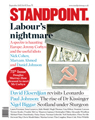



Rather it is the lack of political purpose behind the ambition that shocks. The closer you look at Johnson the less there is to see. The point about him is that there is no point. Students at Oxford in the 1980s were the first to notice that there was nothing behind the Wodehousian façade, and it has taken the rest of Britain a long time to catch up. He ran for the presidency of the Oxford Union as a High Tory, relying on the Etonian old boy network to see him through. He lost. And to make matters worse he lost to a state school boy called Neil Sherlock, who mocked Johnson's sense of entitlement.
In 1985, he tried again and won, but the new Johnson bore no relation to the old. He was no longer any kind of Tory. His arguments against the first-past-the-post electoral system and the extremism of the Thatcher years made the voters assume that he was a social democrat. Sherlock was amazed, and has continued to regard Johnson with amazement ever since. Most politicians have a mission, a belief that brings them into public life and drives them forward, he told Purnell. Johnson has no core beliefs and "without those passions, it's not obvious why he would want to pursue a political career".
The pattern he set at Oxford determined his life. Johnson became the Telegraph's correspondent in Brussels in the early 1990s, and developed a brilliant polemical line of attack on the European Union.
He was the first journalist to paint the EU as a nest of sinister bureaucrats overseen by bombastic Germans, cunning Frenchmen and oily Italians who outmanoeuvred the limp-wristed Brits. His tales of the EU punishing the rubber industry for making undersized condoms or ordering the straightening of bananas, or insisting on fishermen wearing hairnets were not always entirely accurate, but they had an enormous impact. British eurosceptics said that the articles inspired them to break with the Conservative Party and found UKIP. The Foreign Office set up a special unit to respond to Johnson's critiques. In May 1992, as Danes were preparing to ratify the Maastricht Treaty, Johnson ran a puffed-up story under the headline "Delors Plan to Rule Europe". It claimed that the then President of the European Commission, Jacques Delors, intended to scrap the rotation of the EU presidency between countries and assert central control. Danish eurosceptics translated the article and used it in a successful last-minute propaganda effort to persuade Danes to vote the treaty down.


- How Jeremy Corbyn's Coup Hijacked Labour
- Corbyn's Signpost Back To The Ghetto
- Unionists, Don't Despair: Scotland Is Not Lost — Yet
- Britain's Apologists For Child Abuse
- Lift The Fee Cap And Set Universities Free
- The Story Behind One Dead Man's Penny
- Hitler's 'Ecological Panic' Didn't Cause The Holocaust
- Meet The Montalvos: The First Global Family
- Mr Gove, Here Is Our Statute of Liberty
- A British Bill Of Rights
- Something For Nothing Just Won't Do Any More
- Ditch Ed Miliband's Crazy Energy Legacy
- The English Public School: An Apologia
- An Open Letter To Nicky Morgan
- Escape The Heat: Head To London's Crow's Nests
- Collusion Cut Both Ways In The Troubles
- Decline Of The East? The Chinese Say No
- Conservative, Moi? Jamais De La Vie!
- How To Rescue Iraq From Obama's Folly
- Europe Must Never Again Betray Its Jews

8:11 PM
1:11 PM
9:11 PM