


And the third reason for the paradox is, of course, the short time-horizon of the financial markets, of the media, and all too often of governments faced with the problem of re-election. Moreover change, however healthy, is always unsettling; and there is always popular pressure to prevent it.
For all these reasons, the cycle is perhaps bound to loom large. But whatever the reasons for the perverse focus on what economic policy-makers cannot achieve at the expense of what they can, does this matter?
I believe it does. It matters in political terms that the public are systematically miseducated on a matter as important as this is. And it is clearly a debasement of democracy if governments are to be elected or ejected largely on the basis of the particular phase of the inescapable economic cycle at the time an election is held.
But it matters in economic terms, too. I have little doubt that perpetuation of the notion that the cycle can be avoided or that "boom and bust" can be abolished — what might be described as the myth of the straight line — is in practice likely to lead the cycle to be more pronounced than it might otherwise have been. For the ever-present awareness that we live, as we always have done, in a cyclical world, could do more than anything else to prevent the excesses of optimism and pessimism that play such a large part in the cycle, and in so doing reduce the severity of the cycle itself.
Certainly, recent events suggest that the longer the cycle is suppressed the more damaging are the eventual consequences. Moreover, obsession with mitigating the vagaries of the cycle can all too easily lead those responsible for the conduct of economic policy to devote far less attention than they should to those issues, both at the national and the international level, that really will affect the prosperity of the people over the longer term.
But, it may be argued, can we not both have our cake and eat it? What possible harm could be done by delaying the required fiscal consolidation until the economy is stronger? In the real world, the answer is "a great deal".
First, in the words of Sir Alan Budd, the founding director of the independent Office of Budget Responsibility, "We have not yet brought forecasting and economic management to the level at which one can safely use changes in fiscal policy as a short-term method of adjusting demand."


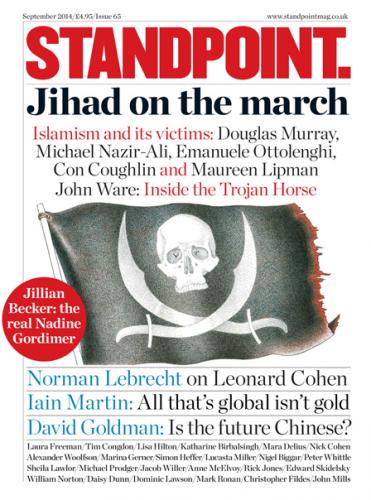
- The Plot to Islamise Birmingham’s Schools
- Nigeria, Iraq, Gaza—The Threat is the Same
- Radical Islam and its Invisible Victims
- The Man Who Tried to Teach us all a Lesson
- Globalisation and The Crisis of the Nation State
- The Medium Isn’t Always the Message
- What sort of Europe does Cameron Want?
- Is China outstripping the West at innovation?
- Piketty’s panacea will make inequality worse
- The Moral Strength of Leonard Cohen
- Designer who taught us to keep it simple
- The US Can Still Help Save Syria — and Iraq
- Russian Resurgence has Blindsided Nato
- On Europe, Nothing Less than Treaty Change will do
- Putin has his Useful Idiots on the Left and the Right
- Sarajevo: Where the Century of Terror Began
- Allen Lane’s Pelicans Take Wing Once More
- How Not to Remember the First World War
- Opera is Not Just Our Most Expensive Noise
- Jonathan Miller: One Man, Two Cultures

4:09 PM
9:02 PM
9:01 PM
4:01 PM
2:01 PM