


There is another more ideological justification for history as "source analysis". Our history classrooms are hobbled by a radical relativism which states that no one historical account should be given predominance over another. Instead of narrative textbooks, most school history books are now made up of bitty excerpts from primary sources-a photograph here, a heavily-doctored diary entry there. It is claimed that through investigating this primary evidence for themselves, pupils are empowered to construct their own version of the past.
Of course, the very process of selecting the evidence automatically renders it subjective. The GCSE syllabus I teach (designed by the SHP) is a perfect example of this: our 2,000-year study of Medicine Through Time is a teleological narrative of the triumph of science over religion, culminating with the crowning glory of the NHS; our in-depth study of the American West is a story of European racial genocide against the peace-loving Native Americans; and for our study of the Troubles in Northern Ireland, the textbook ignores the IRA's mainland bombing campaign. The result is doubly duplicitous. Pupils are told they are constructing their own historical narratives, while simultaneously being fed the soft-left worldview of the educators who put together the textbooks.
Today, traditional history lessons are invariably seen as boring, but nothing could be farther from the truth. Have you ever heard someone reminisce about an inspiring history teacher who was a "guide on the side"? Great history teachers draw upon a passion for and knowledge of the subject to tell stories, explain ideas and bring the past alive. They do not have to rely on nonsense "learning activities" to make the subject engaging, for discussing the story of humankind is interesting in its own right. In short, they teach from the front.
A pupil from a 1950s grammar school interviewed for David Cannadine's recent book The Right Kind of History sums up what this kind of teacher can achieve. "We sat in rows, facing the teacher . . . kept quiet, listened, asked questions. We had textbooks and homework and, I think, weekly informal tests." Today, such a teacher would be derided, but the pupil remembers this teacher as "fantastic". She "had a good degree and loved her subject [and] made lessons fun and interesting". Chalk-and-talk teaching does not make history boring. It is the anti-teaching, anti-narrative and anti-knowledge dogmas within state education that make history boring. Less than a third of today's schoolchildren (the beneficiaries of New History) choose to study the subject for GCSE. This is fewer than those who chose to study the considerably more challenging history O-level or CSE exams 30 years ago.
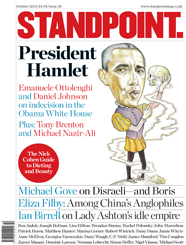
Most members of the public are unaware of how debased the teaching of history has become. For this reason, the significance of Michael Gove's reforms is frequently misunderstood, and they are repeatedly parodied as rote learning the kings and queens of England. Gove is an intelligent man and he should be given more credit than this. He is the first Secretary of State for Education to have really taken on the insidious ideologies that distort modern classroom practice. But how can he overcome them?
Draft programmes for the new national curriculum for history expected early this year will lay out in detail which historical topics pupils should study when, but this is not the answer. Quite apart from academies and free schools (now the majority in secondary education) being exempt from the national curriculum, the choice of topics has never been the fundamental problem. While I believe that a chronological study of British history, followed by forays into global history, is the best model, I am happy to accept that studying history from a global perspective can provide a first-class secondary education. Whether or not all pupils learn that Wolfe won Quebec will always be a political issue and is perhaps not for the government to dictate. The replacement of the history GCSE, due in 2015, is a more promising development. A knowledge-driven exam should give teachers a significant nudge to change their ways. However, what needs to change above all else is the received wisdom on what makes a good history teacher. A whole generation of child-centred teachers will have to be retrained or retire before this can happen. Only then will we stand a chance of producing school-leavers who can identify Winston Churchill—or even General James Wolfe.


- Admit It, Mr Kerry: You Blundered
- Bismarck Versus Blair — A Foreign Policy Crossroads
- Arab Spring, Islamist Summer — What Next?
- The Diplomat the Whole World Ignores
- The Blob Has Run Schools For Decades. Not Any More
- Would You Intervene — Or Pass On The Other Side?
- He Died That Others Might Live In Peace
- The Hero's Journey is Hollywood's McMyth
- Online Only: Countering the Counter-Jihadists
- Online Only: The Price Paid for Criticising Islam
- 'Please Sir, I Just Want to Learn More'
- Why Students Should Be Glad To Pay Tuition Fees
- A 'Liberal Racist'? Me? I Felt Like a Heretic
- Demolish the Relics of Yesterday's Future
- Was Britain Right To Go To War In 1914?
- German Victorians Who Helped Transform Britain
- The Alternative History of an Undivided India
- Online Only: Heirs to the Left
- ONLINE ONLY: The Hayward Gallery's Fashionable Primitives
- ONLINE ONLY: A Spiritual Corner of Southwark

- The Zombie Argument that Refuses to Die
- Online Only: The Price Paid for Criticising Islam
- Overrated: Dan Brown
- Is the Brain the Key to Understanding Religion?
- Overrated: George Monbiot
- Time to Wise Up to the Muslim Brotherhood
- 'Please Sir, I Just Want to Learn More'
- The Alternative History of an Undivided India
- The Zombie Argument that Refuses to Die
- Online Only: The Price Paid for Criticising Islam
- Overrated: Dan Brown
- Is the Brain the Key to Understanding Religion?
- Overrated: George Monbiot
- Time to Wise Up to the Muslim Brotherhood
- 'Please Sir, I Just Want to Learn More'
- The Alternative History of an Undivided India
- Decline and Fall of the History Men
- Uncritical Theorists Who Misread the Nazis
- The Zombie Argument that Refuses to Die
- The Banality of Hannah Arendt
- From Kitsch to Cool: Picasso and Modern Art
- Is the Brain the Key to Understanding Religion?
- Time to Wise Up to the Muslim Brotherhood
- Midfield Virtuoso Finds His Perfect Pitch
12:01 PM
12:01 PM
10:01 AM
8:01 AM
11:01 AM
10:12 PM
10:12 PM
2:12 PM
2:12 PM
2:12 AM