


Arendt's licence with detail is unfortunately characteristic. In the film, New Yorker editor William Shawn says: "She doesn't strike me as someone who's off on the facts." But half a century on, we know indisputably that she was: Arendt the adroit philosopher wasn't aiming for a second career as an ace journalist. She was rather more credulous towards Eichmann's testimony than she had reason to be. (Shockingly more credulous, just as she had been with Heidegger.) She claimed that Eichmann in Jerusalem was a "trial report" — but as the film accurately depicts, Arendt was present in Jerusalem for only part of the four-month-long trial, and otherwise relied on court reports and transcripts. The historian David Cesarani's fastidious study of the case reveals that Arendt wasn't present for Eichmann's most damning admissions, in which the defendant's benign self-presentation gave way to pride in revealing how he actively forged new policies and more genocidal "achievements".
Ironically, because she had been driven out of her native country, Arendt was writing in English — her third language — and she didn't employ it with the precision one would wish from a philosopher. Usually McCarthy was able to prevail on usage errors ("the use of ‘ignore' to mean ‘be ignorant of'"), but her objection to Arendt's description of Eichmann's "notable characteristic", "the inability to think", as "thoughtlessness" was ignored.
McCarthy's objection was prescient. The slippery word opened the floodgates for subsequent debates over whether this "thoughtlessness" — one aspect of the defendant's "banality" — was exculpatory. Arendt was accused of writing a defence of Eichmann. Besieged, harassed, feeling misunderstood by philosophers and historians, in whom could she confide but a novelist? To whom could she admit that she had in fact written the book "in a curious state of euphoria. And that ever since I did it, I feel light-hearted about the whole matter. Don't tell anybody; is it not proof positive that I have no ‘soul'?"
The testimony of survivors was a controversial part of the Eichmann case. We are now living in the last years in which such testimony is even possible. Soon there will be no more eyewitnesses to the German evil of evils, and no more voices to testify against those who inflicted it. Our memory of the Holocaust is too precious to let it be distorted, manipulated, confused.


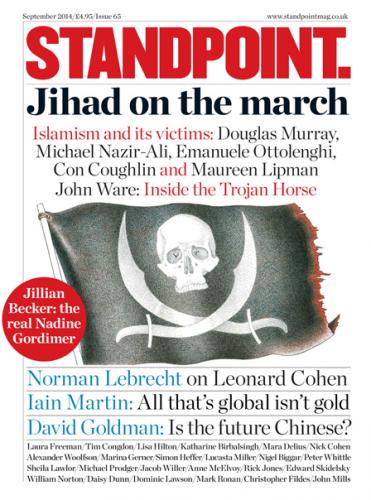
- The Plot to Islamise Birmingham’s Schools
- Nigeria, Iraq, Gaza—The Threat is the Same
- Radical Islam and its Invisible Victims
- The Man Who Tried to Teach us all a Lesson
- Globalisation and The Crisis of the Nation State
- The Medium Isn’t Always the Message
- What sort of Europe does Cameron Want?
- Is China outstripping the West at innovation?
- Piketty’s panacea will make inequality worse
- The Moral Strength of Leonard Cohen
- Designer who taught us to keep it simple
- The US Can Still Help Save Syria — and Iraq
- Russian Resurgence has Blindsided Nato
- On Europe, Nothing Less than Treaty Change will do
- Putin has his Useful Idiots on the Left and the Right
- Sarajevo: Where the Century of Terror Began
- Allen Lane’s Pelicans Take Wing Once More
- How Not to Remember the First World War
- Opera is Not Just Our Most Expensive Noise
- Jonathan Miller: One Man, Two Cultures

7:08 PM
12:08 PM
10:07 PM
10:07 PM
5:07 PM
1:07 PM
3:07 AM
4:07 PM
1:07 AM