


The winners lists of major literary prizes are littered with one-night stands. At one time they were the best-dressed talents in the club. Dolled up in fashionable frocks or fancy pants, they provoked promises of eternal devotion. But last night's prized possession rarely proves to be a lifelong love. Who outside the universities still thinks Murray Bail's Eucalyptus, a 1999 Commonwealth Writers' Prize Best Book winner, was worth chatting up?
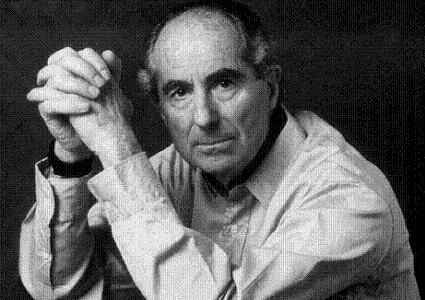
The decision to give Philip Roth the 2011 Man Booker International Prize for Fiction in May is the latest literary controversy. Carmen Callil, the founder of Virago Press, resigned from the three-person judging panel in protest. Roth, she said at the time, is repetitious: he carries "on and on and on about the same subject" in almost every book. "It's as though he's sitting on your face and you can't breathe," Callil said, which is an odd way to put a criticism of Roth, with its imagery fit to entertain Alexander Portnoy on his lonely 107 bus ride from New York. "I don't rate him as a writer at all."
This was tough talk, and Callil tempered it in a curious piece published in the Guardian. There she explained why — like one of Jupiter's silly little moons spinning out of orbit — she dissociated herself from the author of one of the funniest novels ever written. She began by explaining the terms of the prize: the winner must be alive, and published "either originally, or in translation, in English." Furthermore, the prize is "not awarded for any particular novel, but for the writer's achievement in fiction." Her full piece resists a summary, so I'll quote what I think is the point of Callil's complaint against Roth:
My objections to this outcome [Roth's win] are many. The international aspect of this prize is its critical difference: to search out and value other voices. This was especially important to me because I believe that we live in times when English-speaking readers need — and want — the access that speakers of other languages have to such books: fewer writers are translated into English than into any other language.
I imagined the prize would, while including English-speaking writers of course, want to celebrate the work of translation and of translators who so widen our understanding of other countries, other cultures.
[...]
So, to give this prize to yet another North American writer, when we had such great writers to choose from (the previous winner was the truly great Canadian writer, Alice Munro) suggests a limited vision, to say the least.
[...]
There are great moments in Roth's work. He is clever, harsh, comic, but his reach is narrow. Not in the Austen, Bellow or Updike sense, because they use a narrow canvas to convey the widest concepts and ideas. Roth digs brilliantly into himself, but little else is there. His self-involvement and self-regard restrict him as a novelist. And so he uses a big canvas to do small things, and yet his small things take up oceanic room. The more I read, the more tedious I found his work, the more I heard the swish of emperor's clothes.


- Admit It, Mr Kerry: You Blundered
- Bismarck Versus Blair — A Foreign Policy Crossroads
- Arab Spring, Islamist Summer — What Next?
- The Diplomat the Whole World Ignores
- The Blob Has Run Schools For Decades. Not Any More
- Would You Intervene — Or Pass On The Other Side?
- He Died That Others Might Live In Peace
- The Hero's Journey is Hollywood's McMyth
- Online Only: Countering the Counter-Jihadists
- Online Only: The Price Paid for Criticising Islam
- 'Please Sir, I Just Want to Learn More'
- Why Students Should Be Glad To Pay Tuition Fees
- A 'Liberal Racist'? Me? I Felt Like a Heretic
- Demolish the Relics of Yesterday's Future
- Was Britain Right To Go To War In 1914?
- German Victorians Who Helped Transform Britain
- The Alternative History of an Undivided India
- Online Only: Heirs to the Left
- ONLINE ONLY: The Hayward Gallery's Fashionable Primitives
- ONLINE ONLY: A Spiritual Corner of Southwark

- The Zombie Argument that Refuses to Die
- Online Only: The Price Paid for Criticising Islam
- Overrated: Dan Brown
- Is the Brain the Key to Understanding Religion?
- Overrated: George Monbiot
- Time to Wise Up to the Muslim Brotherhood
- 'Please Sir, I Just Want to Learn More'
- The Alternative History of an Undivided India
- The Zombie Argument that Refuses to Die
- Online Only: The Price Paid for Criticising Islam
- Overrated: Dan Brown
- Is the Brain the Key to Understanding Religion?
- Overrated: George Monbiot
- Time to Wise Up to the Muslim Brotherhood
- 'Please Sir, I Just Want to Learn More'
- The Alternative History of an Undivided India
- Decline and Fall of the History Men
- Uncritical Theorists Who Misread the Nazis
- The Zombie Argument that Refuses to Die
- The Banality of Hannah Arendt
- From Kitsch to Cool: Picasso and Modern Art
- Is the Brain the Key to Understanding Religion?
- Time to Wise Up to the Muslim Brotherhood
- Midfield Virtuoso Finds His Perfect Pitch
9:06 AM