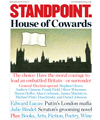



A true Tory revival would require persuading UKIP voters — who are angry about uncontrolled immigration, furious with the European Union and sceptical about globalisation and economic change — that they should join forces with more centrist voters and vote for Cameron. Sufficient numbers of voters might — just might — be persuaded to do this if they felt the Tories offered some great unifying national mission or a sense of vision. But with less than a year to go there is no sign that those in the Conservative leadership have it yet — or are even looking for it.
A party that is down to almost 100,000 members, that has no representation in large parts of Britain, looks almost unfit for purpose in such circumstances. Is it really capable of generating the ideas and policies that might underpin a conservative reinvigoration and rebirth of the Tories as a great national party? It looks highly unlikely in light of the current evidence.
Ask senior Conservatives about the manifesto, or what might be in it, and they tend to look vague. Someone (the policy board) is working on some stuff, they say, and they're sure it will all be marvelous but, oh look, is that the time? Initially, I presumed that they were reluctant to be drawn because there were all manner of great ideas being worked up in secret on the tax system, or the next stage of education reform, or infrastructure, or defence. But no, they cannot even explain when asked what the broad themes might be. They don't know.
Although the policy unit in Number 10 is working diligently under Jo Johnson and various think-tanks say they have ideas to offer, it hardly amounts to a conservative intellectual renaissance. The Tory modernisers' latest wheeze, in the shape of a new document from the Bright Blue think-tank, is the legalisation of drugs, which seems at best a marginal idea in the context of the enormous economic and productivity challenges confronting the UK. The Tories look like a party that has run out of steam.
There will be a Conservative manifesto for 2015 eventually, of course there will. The only two Tory figures who are allowed to make decisions on these matters — Cameron and Osborne — will meet and task advisers with preparing a document. This is how they have always operated, relying on pragmatism and tactical manoeuvres to navigate their way round obstacles such as elections. It is not even that Cameron believes in nothing. His is an instinctive shire conservatism, which means he is suspicious of ideologues and ideas in general if they are expressed too forcefully. David Cameron's biggest idea is that David Cameron should carry on governing.
To illustrate the point, a former government adviser recently described to me the meetings of Cameron's coterie that are held to begin preparing his annual party conference speech: "Everyone has a drink and a jolly time and then there is always that moment when David leans back in his chair and says, now, what do I believe?"
It all smacks of drift and the complacency Number 10 claims to be at such pains to avoid. Indeed, the uninspiring Tory plan next time amounts to fighting on the coalition's mixed record, relying on Cameron's force of personality, which didn't work in the 2010 election, and hoping that Labour's extensive limitations swing it. This may even be sufficient to ensure the Tories get away with it against Miliband, which might be good enough for David Cameron, keeping him in Number 10 after 2015 at the head of another cursed coalition with what is left of the Lib Dems. For those of us hoping for a more energising and inspiring vision of how Britain might be improved and made more prosperous in the next decade or so, it is a pretty unimpressive offer.
A party that is down to almost 100,000 members, that has no representation in large parts of Britain, looks almost unfit for purpose in such circumstances. Is it really capable of generating the ideas and policies that might underpin a conservative reinvigoration and rebirth of the Tories as a great national party? It looks highly unlikely in light of the current evidence.
Ask senior Conservatives about the manifesto, or what might be in it, and they tend to look vague. Someone (the policy board) is working on some stuff, they say, and they're sure it will all be marvelous but, oh look, is that the time? Initially, I presumed that they were reluctant to be drawn because there were all manner of great ideas being worked up in secret on the tax system, or the next stage of education reform, or infrastructure, or defence. But no, they cannot even explain when asked what the broad themes might be. They don't know.
Although the policy unit in Number 10 is working diligently under Jo Johnson and various think-tanks say they have ideas to offer, it hardly amounts to a conservative intellectual renaissance. The Tory modernisers' latest wheeze, in the shape of a new document from the Bright Blue think-tank, is the legalisation of drugs, which seems at best a marginal idea in the context of the enormous economic and productivity challenges confronting the UK. The Tories look like a party that has run out of steam.
There will be a Conservative manifesto for 2015 eventually, of course there will. The only two Tory figures who are allowed to make decisions on these matters — Cameron and Osborne — will meet and task advisers with preparing a document. This is how they have always operated, relying on pragmatism and tactical manoeuvres to navigate their way round obstacles such as elections. It is not even that Cameron believes in nothing. His is an instinctive shire conservatism, which means he is suspicious of ideologues and ideas in general if they are expressed too forcefully. David Cameron's biggest idea is that David Cameron should carry on governing.
To illustrate the point, a former government adviser recently described to me the meetings of Cameron's coterie that are held to begin preparing his annual party conference speech: "Everyone has a drink and a jolly time and then there is always that moment when David leans back in his chair and says, now, what do I believe?"
It all smacks of drift and the complacency Number 10 claims to be at such pains to avoid. Indeed, the uninspiring Tory plan next time amounts to fighting on the coalition's mixed record, relying on Cameron's force of personality, which didn't work in the 2010 election, and hoping that Labour's extensive limitations swing it. This may even be sufficient to ensure the Tories get away with it against Miliband, which might be good enough for David Cameron, keeping him in Number 10 after 2015 at the head of another cursed coalition with what is left of the Lib Dems. For those of us hoping for a more energising and inspiring vision of how Britain might be improved and made more prosperous in the next decade or so, it is a pretty unimpressive offer.
Like this article? Share, save or print using the icons below:


More Features
- Mr Cameron, Show The Country That You Care
- Campaign Diary
- Defying Duopoly: The Rise Of The Insurgents
- Don't Rig The System In Favour Of Coalitions
- Warring Gangsters Who Run The Country
- Political Correctness Is Devouring Itself
- An Archival Treasure Trove—And All Online
- Do we value freedom of speech in Britain?
- Can Europe's Jews Feel Safe Alongside Muslims?
- We Cannot Avoid The Battle Over Blasphemy
- Inside The World Of 'Non-Violent' Islamism
- We Can Fix The Economy But Not Human Nature
- The Keynesian Versus The Monetarist: A Lost Decade
- The Keynesian Versus The Monetarist: Time To Re-Read Keynes
- The New Language Of Political Narcissism
- Two Words You Won't Hear This Election: Foreign Policy
- The Many Faces Of Holocaust Denial
- Why Is 'Fifty Shades of Grey' the New Normal?
- Obama scuttles. America retreats. Things fall apart
- Putin and the Art of Political Fantasy
Popular Standpoint topics

5:06 PM
6:06 PM
7:06 PM
12:06 AM
9:05 AM
2:05 AM