

You are here:   A.S. Neill > Chaotic Legacy of the Classroom Radicals


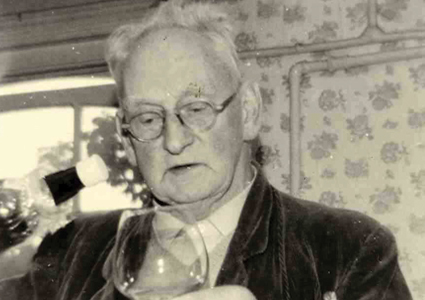
Apostle of permissiveness: A.S. Neill, founder of the progressive Summerhill School and best-selling author 

Halfway through my first year as a history teacher at an inner-city comprehensive in England, I am reeling from the volley of abuse and misbehaviour that makes up my daily grind. I can be sure that at some point in my day I will be aggressively confronted, blithely disobeyed, and probably sworn at. Restless nights are common, and nervousness ongoing. Still, talking to my friends from teacher training, I feel I'm having a comparatively easy ride. I have not yet been physically assaulted, and so far I have avoided the much-feared mid-lesson breakdown. 

At schools such as this, the deprived background of the children is routinely presented as a catch-all explanation for bad behaviour. The pupils' chaotic home lives, their lack of prospects, and an absence of aspiration in the local community are all popular excuses for the pandemonium that pervades inner-city schools. These factors undoubtedly have an effect, but such thinking lets schools like this off the hook. The endemic discipline problem within the state sector is in reality self-inflicted. At least half a century of "progressive" thinking on pupil behaviour has had disastrous consequences. In the competitive field of follies wrought by 1960s radicalism, there is a very good case for progressive education being the most socially destructive.

My school's discipline problem is depressingly normal. A survey last October for the Guardian Teacher Network — hardly a bastion of old-fashioned disciplinarians — found that 40 per cent of teachers complained of being bullied by pupils and, of those who considered quitting, 50 per cent named pupil behaviour as the reason. A 2010 National Union of Teachers (NUT) survey found that 92 per cent of teachers believed pupil behaviour had worsened over the course of their career, and 79 per cent claimed that they were unable to teach effectively because of poor behaviour. During the last school year, 44 teachers were hospitalised with severe injuries from pupil attacks at a five-year high. Perhaps most worryingly of all, a 2008 Policy Exchange report showed that the atrocious reputation of British schools for poor behaviour was the main factor in deterring new graduates from becoming teachers. 

Despite the recent arrival of an energetic new head, my school's results remain stubbornly unimpressive. It is strikingly obvious to me and many of my colleagues that the fundamental impediment to pupils learning is a lack of classroom discipline. However, when I suggested this to a member of senior management at a training session, he winced at the very word "discipline". "Right," he said swallowing uncomfortably, "behaviour for learning" — this being the trendy euphemism, modishly abbreviated to B4L, favoured by schools too right-on to use the D-word. How, I wondered to myself, did British education get to a state where discipline is a dirty word?

View Full Article
 
Share/Save


William Donaldson
February 26th, 2012
8:02 PM
Your article on classroom discipline rings true with me, I'm probably a casualty of those 'progressive' thinkers you mentioned. I had to get out of the school I was in for the sake of my health, marriage and family. I would have been a basket case if I stayed on. Discipline was getting progressively more difficult, the rowdies would wreck any attempt to teach an 'interesting' lesson. I find it extraordinary to think that the educational elite have probably very little contact with kids in the classroom situation especially in an inner city school. They would run a mile. It should be obligatory for anyone in a position of power in education that they experience several weeks in a difficult school. Then we'll see how progressive they are! It makes my blood boil that these people have wrecked education, and indirectly my career in teaching with their bleeding hearts and useless policies. It has unquestionably had a bad effect on society generally and the erosion of authority in all areas of life. Funny thing is politicians are not really interested apart from the occasional pronouncement saying how authority is going to be given back to the teacher. I've heard this but haven't seen it put into effect

jess
February 25th, 2012
9:02 PM
i have worked in a variety of schools. discipline is more critical than the building, the resources, the teachers, the parents, anything. a good school can have poor resources in a scruffy building with average teachers. providing the discipline means the teacher is in charge. but the most expensive school in the world is still crap if you have no discipline. and it just takes consistency and fairness to get discipline with all but the most difficult of kids. Some idiot, a few years ago, published a report saying student discipline is good in the UK. Staggering. It would be delightfully poignant if a couple of current school kids happened to accost him on the way home one night and gave him a taste of what so many teachers have to endure. Retribution based fantasies aside, what a terrible disservice he did to our nations children. Delighted to see an honest report as quoted above.

Emily
February 25th, 2012
7:02 PM
I am a big believer in children making decisions and being accountable for their own actions, however it would mean going the whole way and this is always going to be tricky in a big school. Didactic approaches used so many times in schools do not work for children with behavioural challenges. However teaching staff are under increasing pressure to reel out great results and fast. There is little time for empathic understanding of children's needs. This is unfortunate for our future generations and must change. Without an increase in compassion we are going to end up with a society of hate and even less respect. I do not blame the children for their challenging behaviour, they can be expected to conform in situations that they find impossible. The example of 'educating Essex' showed us, constantly punishing children for their lack of conformity gets you no where. Things have to change and teachers need to be given more chance and time to truly see individuals for who they are.

burkard
February 25th, 2012
7:02 PM
Great article--alas, it's going to take a lot more than Ofsted to effect a sea-change in the corrupt 'behaviour management' strategies that dominate educational thinking and practice. Last September, when the Centre for Policy Studies published our proposal to start a free school run by veterans of the armed forces, the media response overwhelmed us. For two days, I was constantly in the local BBC studios, or at home entertaining camera crews from Sky and ITV. Since then a week hasn't gone by without a request for an interview or an article in the press. No less than 23 TV companies have offered to film a documentary charting our progress (the nod went to Vivian White at Panorama). Neither Capt Affan Burki nor I can really say who first suggested this idea--I tend to think it was him, but I suspect we just were thinking along the same lines. He contacted me because I was the author of another Centre for Policy Studies pamphlet, published in February 2008, advocating that we adopt the American 'Troops-to-Teachers programme (which was immediately endorsed by Michael Gove, and is now being implemented). However, the idea of a school were all of the teachers are ex-forces personnel is--as far as we know--a first. We chose Oldham because Capt Burki grew up in Manchester, and the 2001 Olham race riots have made it a symbol of what has gone wrong with multi-culturalism in Britain. Cities like Birmingham, where I lived and worked in the 1970s and early 80s, have escaped the worst of this because they have succeed in building a common Brummie culture which people from all over Britain and the Commonwealth can buy into. Nonetheless, we were still a bit worried that Oldham's Muslim community might be swayed by the perception that Britain's armed forces are 'infidel invaders'. Our canvassing revealed that this was the least of our problems. There were four people who spearheaded our recruitment drive--Capt Burki, Ajmal Ali, an Oldham garage owner, myself, and a white teacher who was 7 months pregnant. At first, we thought that it would be better if whites canvassed white primary schools, and Asians concentrated on the Asians. Very soon, we found that this made no difference at all. Everywhere we went, we found that concern over discipline far outweighed race. And I'm happy to say that we overshot our offical target of 120 pupils required by the DfE: as of 24 Feb, our deadline, we had 204 pupils signed up. Of course, the Oldham Council is determined to stop us--as is the Oldham NUT representative, who claims that discipline is just fine in Oldham schools. When I appeared on Today with Mary Bousted of the ATL and Woman's hour with Christine Blower of the NUT, they seemed more interested in protecting progressive doctrine than their members' sanity--let alone the education and welfare of the hapless pupils who have to endure years of chaos because of their ideological fantasies. As educational publishers, we work with teachers all the time, and in all honesty I have every admiration for the great majority who put common sense before doctrine, and who work incredibly hard to keep the show on the road. However, the system is badly in need of a powerful injection of common sense, and both Capt Burki and myself have seen what the military approach to discipline can do. I must hasten to add that the media have been well wide of the mark in thinking that we want to impose the kind of glasshouse discipline that went out with the National Service half a century ago. You cannot maintain a volunteer army unless you can motivate young men and women to do dangerous and difficult jobs without coercion. Nonetheless, officers and NCOs have no qualms whatever about their authority: you do not get promoted if you can't win the respect of your comrades. We know we can translate these virtues to schools. We also know that we can offer a quality of education seldom seen outside the independent sector. When teachers have the freedom to teach (and not just pretend to be 'learning facilitators'), it's amazing what children can learn.

Despairing teacher
February 25th, 2012
10:02 AM
I'm an ex-teacher and there were times when I could have done with more support in disciplinary matters. A supportive, strong leadership that backs up classroom teachers is essential - watch the documentary "Educating Essex" to see this at its best. But this article's insistance that classroom indiscipline can be laid at the door of some woolly idea of "progressive education" is wide of the mark. The worst indiscipline I encountered during my teaching career was when a school-leaver poured paint over the head during the final assembly. But this wasn't at an out-of-control comprehensive - it was at a top independent school with uniforms, short haircuts and so on. I hope the culprit was arrested for assault. The writer of this article peddles the myth of the "precipitous" decline of English education when compared with other countries since 2000. I suggest that the writer reads "Looking at the English Education System through the Prism of PISA", an OECD publication which categorically says that the 2000 figures for the UK have been found to be flawed and should NOT be used for comparison. This doesn't stop Gove, Gibb and educational journalists who should know better from repeated the data. This makes me wonder why so many politicians and commentators are so keen to portray English state education as not fit-for-purpose. The PISA 2009 results showed UK pupils were at the OECD average for Reading and Maths which is not catastrophic. And UK pupils were ABOVE average for Science. Perhaps it's something to do with opening the door so profit-making "education providers" can make some money out of the £2 billion English education system.

Malcolm McLean
February 23rd, 2012
9:02 PM
At Summerhill, children genuinely do make the decisions. With the exception of explusions (but not suspensions), and hiring and firing of staff, and a few safety or legal issues, everything is decided democratically. However it probably only works if you go the whole hog. If lessons are completely voluntary then you don't get much disruption, because those who don't want to learn don't turn up. If you give children a sense of entitlement and go on about them being mature and responsible learners, but don't actually let them decide anything of importance, then ypu're going to get a bad response. (Often schools don't even have prefects, but my favourite example is the school vending machine. The choice of soft drinks it contains is considered a too imporant matter for schoolchildren to decide, and is now dictated from Whitehall.)

Anonymous
February 23rd, 2012
3:02 PM
I retired from teaching some years ago. I taught in a shire county, and did not experience many of the conditions described here. But behavious was getting worse over the years, and I certainly heard horror stories from teachers in other schools. Discipline certainly became a taboo word. The worst offenders were the 'educational experts' - people in Departments of Education in Universities and in LEA Education Departments. Some of these had never taught in schools; some had for about a year, then made their first career move - out of the classroom. So many of them were divorced from reality (a few, a very few, were very good). I'm afraid I would hesitate to recommend teaching as a career in state schools today to any young person, which is a great pity as there are still some excellent schools. The whole culture has to be changed, but it will take a generation, even if it is allowed to happen.

Post your comment

CAPTCHA
This question is for testing whether you are a human visitor and to prevent automated spam submissions.