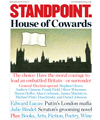



In an essay on education written in 1961, the political theorist Hannah Arendt foresaw the steady erosion of discipline in Western schools. She wrote: "The problem of education in the modern world lies in the fact that by its very nature it cannot forgo either authority or tradition, and yet must proceed in a world that is neither structured by authority nor held together by tradition." If this was a problem in 1961, it is a catastrophe in 2012.
Since Arendt wrote her essay, legions of progressive educators have denied the need for authority in schools. The permissive rhetoric of 1960s radicalism was particularly influential among teachers, and their ideological precepts were applied to classroom culture. The undisputed leader of this "progressive" movement in Britain was A.S. Neill, founder of the revolutionary Summerhill School. Neill documented his philosophy in his 1962 book Summerhill, a runaway success which sold more than two million copies. In it he claimed, "I believe that to impose anything by authority is wrong. The child should not do anything until he comes to the opinion — his own opinion — that it should be done."
After the 1960s, radical educationists who subscribed to this thinking began their long march through the institutions. The idea of child-led learning came to dominate our teacher-training colleges and classrooms. Such thinking claimed that teachers should never coerce pupils to learn against their will, but instead place them in a situation where they can learn for themselves. The favoured description of a teacher's job changed from "teaching" to "facilitating". The rhetoric of child-led education was, and still is, extremely seductive, but it has failed to deliver. It is premised upon a fatally misplaced assumption that pupils can be relied upon to know what is best for them. The practical consequence of this utopian thinking has been the consistent fall in standards of British state education.
Over the course of the 1970s and 1980s, British comprehensive schools gained their reputation for ill-discipline and low expectations. One of the most articulate critics of these developments was the poet, teacher and literary critic, Brian Cox. Born in Grimsby and raised on Milton and Methodism, Cox was a working-class intellectual of the old school. Together with such luminaries as Iris Murdoch, Kingsley Amis and Robert Conquest he edited the Black Papers — a series of strident attacks on the changes happening in British education. In his 1992 memoir The Great Betrayal, Cox wrote that "the abdication of authority by teachers has fundamentally damaged our society".


- Mr Cameron, Show The Country That You Care
- Campaign Diary
- Defying Duopoly: The Rise Of The Insurgents
- Don't Rig The System In Favour Of Coalitions
- Warring Gangsters Who Run The Country
- Political Correctness Is Devouring Itself
- An Archival Treasure Trove—And All Online
- Do we value freedom of speech in Britain?
- Can Europe's Jews Feel Safe Alongside Muslims?
- We Cannot Avoid The Battle Over Blasphemy
- Inside The World Of 'Non-Violent' Islamism
- We Can Fix The Economy But Not Human Nature
- The Keynesian Versus The Monetarist: A Lost Decade
- The Keynesian Versus The Monetarist: Time To Re-Read Keynes
- The New Language Of Political Narcissism
- Two Words You Won't Hear This Election: Foreign Policy
- The Many Faces Of Holocaust Denial
- Why Is 'Fifty Shades of Grey' the New Normal?
- Obama scuttles. America retreats. Things fall apart
- Putin and the Art of Political Fantasy

- The Loss Of Faith Made Music Mute
- The Great Betrayal: How Liberals Appease Islam
- Political Correctness Is Devouring Itself
- The New Language Of Political Narcissism
- Why The World Still Loves Shakespeare
- Don’t Listen to Britain’s Designer Demagogues
- Who's in Charge of BBC News?
- An English parliament: the only way to save the UK
- The Loss Of Faith Made Music Mute
- The Great Betrayal: How Liberals Appease Islam
- Political Correctness Is Devouring Itself
- The New Language Of Political Narcissism
- Why The World Still Loves Shakespeare
- Don’t Listen to Britain’s Designer Demagogues
- Who's in Charge of BBC News?
- An English parliament: the only way to save the UK
- The Loss Of Faith Made Music Mute
- The Great Betrayal: How Liberals Appease Islam
- Why The World Still Loves Shakespeare
- Who Will Lead The Berlin Band?
- Putin and the Art of Political Fantasy
- Political Correctness Is Devouring Itself
- The New Language Of Political Narcissism
- Inside The World Of 'Non-Violent' Islamism
1:07 PM
6:05 AM
2:04 PM
10:04 PM
2:03 PM
1:03 PM
4:03 PM
10:03 AM
9:03 AM
12:03 AM