


First, however, it was suggested I make several changes (including cutting down the number of Litvinenko's own clips), which I duly did, and the programme went on air. Incredibly for people working in radio, the editors later admitted that reading Litvinenko's sentence, "I know who killed Anna, it was Putin" on paper, they could not imagine how powerful his speech would sound when actually broadcast. On hearing it, they got cold feet and pulled the programme.
It was at this point that I asked for an editorial discussion of my feature, suggesting that it should include experts on Russia as well as BBC journalists. This was at the stage when Polonium 210, the radioactive element that had been used to kill Litvinenko, had already been discovered on Russian planes and British investigators had started interrogating suspects. With the Russian media trying to dismiss the whole episode as a joke and growing increasingly anti-British, I thought it was important for the BBC Russian Service to discuss how it could best serve its listeners in Russia in a new political climate. But a discussion obviously was not deemed necessary and I was informed that the BBC was starting a disciplinary procedure against me for breaching editorial guidelines.
The issue of such a breach had not come up before the programme was broadcast, because in this case my bosses should have stopped it going out. But they did not, and it was only after they pulled it that they felt the need to justify their decision. BBC editorial guidelines were the most convenient tool they could use. My programme was accused of "lack of balance" and allowing "serious allegations to go on air unchallenged" — offences deserving a "written warning". The "outcome letter", which I received after the disciplinary interview, said: "The end result is a programme that presents much stronger and detailed arguments from one side of the discussion and under-represents the other." The under-represented side here was, of course, the Kremlin. The fact that the anti-Kremlin side's arguments were much stronger and more detailed, not just in my programme but in real life, than the desultory and illogical comments of the pro-Kremlin speakers did not bother my bosses. It was not an objective picture that they were after: it was a balance within one particular programme, which could not have been achieved without sacrificing the truth.
When I mentioned in my defence that we broadcast to Russia, where you could hardly call the Kremlin position under-represented in the media, given that nearly all the Russian media were strictly controlled by the Kremlin, I received the following response: "The BBC must remain objective at all times and it is not the duty of the Russian Service to use its programmes to take into consideration the possible distortions of the Russian media market when we report on any issue." This conclusion totally contradicted the main document that was supposed to guide our work, the Russian 2010 Strategy paper presented to the Service by the Regional Head in October 2006. The strategy saw precisely this task as being part of our mission. It stated: "We will complement the local news market by being the trusted source of reliable, objective, accurate news, giving the global context analysis and bringing to the debate issues and opinions not heard on state-controlled media." This was exactly what I did in my programme, believing then, as I believe now, that including voices that are not allowed on the state-controlled media works for objectivity, rather than against it.


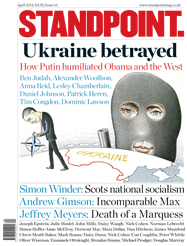
- Scottish Nationalism is Built on a Big Lie
- The Tragic Destiny of Basil Blackwood
- As America Retreats, the World Goes to Hell
- A Borderland on the Edge
- Europe Cannot Do Without Putin's Gas
- Father of Russia's Conservatism
- Snubbing Putin at Sochi Did Not Help Ukraine
- The Russian Enigma: Is The Bear Turning East?
- Ofsted Must Judge By Results, Not Methods
- The Ordeal of Muslim Women: No More Excuses
- Even a Fading Farage Can Deny Cameron Victory
- Northern Tories Need a Chips-and-Gravy Offensive
- Failed Utopia of the Baby Boom Era
- Republicans Cannot Go On As The 'Party Of No'
- Misunderstood For Six Hundred Years
- Performance-Related Pay Will Be A Débacle
- A Self-Portrait Of The Young Man As An Artist
- The First Steps of a Great Newspaperman
- What Will Georgian England Look Like?
- Scrap the Licence Fee and Privatise the BBC

4:02 PM
8:11 PM
7:11 PM
12:11 PM
5:10 AM
2:10 PM
7:10 PM