


There is one sense, though, in which the parallel can be fairly drawn. The Communist cadres who seized power in Central and Eastern Europe in the 1940s believed that the force of their ideology trumped any considerations of freedom, democracy or the rule of law. They saw Marxism-Leninism as both irrefutable and inexorable and, while they had no intention of allowing their doctrines to be rejected at the ballot box, many of them sincerely hoped that the suspension of democracy would be temporary. Once socialism had proved its superiority, once it had shown itself to be more economically efficient than capitalism as well as more just, it might be possible to move to a phased restoration of parliamentary rule.
Such reasoning was shaken by the Hungarian rising of 1956 and obliterated by the Prague Spring of 1968. After that date, the apparatchiks gave up trying to persuade their electorates. Instead of agreement, they demanded acquiescence; instead of conviction, consent. The dots and commas of Das Kapital became far less important than the maintenance of their place in society.
Something similar has happened to eurocrats. In the early days, the Brussels institutions were dominated by true believers, convinced that, in burying nationalism, they were burying war. They, too, saw the lack of democracy as contingent: once the people saw the benefits of European integration, it would be possible to make the system more accountable. Their Prague Spring moment came in 2005, when 55 per cent of French voters and 62 per cent of Dutch voters rejected the European Constitution. The mood change in Brussels was immediate and palpable. One of my friends, a senior French eurocrat, asked wretchedly: "How can the voters have drifted so far away from me?" (It is human nature, I suppose, to place oneself at the centre of the universe.)
Since then, euro-apparatchiks have been defensive and tetchy. Like their Comecon counterparts in the 1970s and 1980s, they have been more concerned with keeping their positions than with winning the argument, less interested in altering public opinion than in avoiding it. Before the "No" votes, they could convince themselves that euroscepticism was essentially a British phenomenon, with perhaps a tiny offshoot in Scandinavia. Now, they know that almost any electorate will reject the transfer of powers to Brussels.


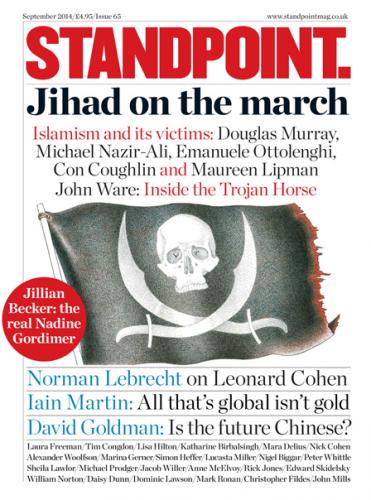
- The Plot to Islamise Birmingham’s Schools
- Nigeria, Iraq, Gaza—The Threat is the Same
- Radical Islam and its Invisible Victims
- The Man Who Tried to Teach us all a Lesson
- Globalisation and The Crisis of the Nation State
- The Medium Isn’t Always the Message
- What sort of Europe does Cameron Want?
- Is China outstripping the West at innovation?
- Piketty’s panacea will make inequality worse
- The Moral Strength of Leonard Cohen
- Designer who taught us to keep it simple
- The US Can Still Help Save Syria — and Iraq
- Russian Resurgence has Blindsided Nato
- On Europe, Nothing Less than Treaty Change will do
- Putin has his Useful Idiots on the Left and the Right
- Sarajevo: Where the Century of Terror Began
- Allen Lane’s Pelicans Take Wing Once More
- How Not to Remember the First World War
- Opera is Not Just Our Most Expensive Noise
- Jonathan Miller: One Man, Two Cultures

11:11 PM
1:11 PM
1:10 PM
5:10 PM
11:10 AM
10:10 AM
10:10 AM
8:10 AM
8:10 AM
8:10 AM