


The results of neglect: The London Riots of 2011
I do not teach Dylan Page, but I know who he is. Everyone at our school knows who Dylan is. He comes and goes to lessons as he pleases, habitually swears at teachers, and is an accomplished playground bully. After a year of horrifying stories, there is not a single thing I could hear about Dylan's behaviour that I would not believe.
During the school prize-giving ceremony at the end of the year, I was surprised to hear Dylan's name announced. He had collected one of the largest amounts of "reward stickers" in year seven, and was due to collect a prize. Many teachers, it turned out, had taken to bribing him with these stickers in a desperate attempt to appease his unruliness. As the school applauded his name, I thought of the dozens of his classmates who had had a year of learning ruined by this one pupil. Such is the moral condition of many of today's state schools.
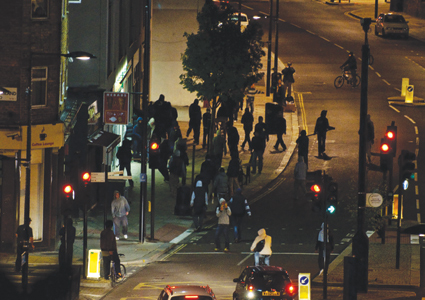
There has been renewed interest in the role of morality in schooling over the past year, with much of the debate centred on the importance of "character". In the aftermath of the dreadful energy released by the August riots in 2011, many public figures looked to schools to play a greater role in nurturing the character of their pupils. Speaking in the House of Lords after the emergency recalling of Parliament, the Archbishop of Canterbury pointed the finger at an "educational philosophy" which over the last two decades has become "less and less concerned with a building of virtue, character and citizenship — ‘civic excellence' as we might say." In May, the Master of Wellington College, Anthony Seldon, wrote in the Daily Telegraph: "Character, and specifically its neglect, is the number one issue of our age."
While these commentators do diagnose a major problem with today's schooling, I fear that they do not realise quite what a battle the fulfilment of their suggestions would entail. Massed against the idea of character formation in state schools is an entrenched ideology which sees such a "moralising" agenda as reactionary and oppressive. Having been educated at a public school, where the ethos was still shaped by the 19th-century ideal of muscular Christianity, I had little idea what I was letting myself in for when I applied to teach at a struggling state secondary school. Many state schools, in both affluent and deprived areas, are actively amoral in their notion of how to nurture children. For those with the good fortune to have attended schools where a moral underpinning remains an unremarkable part of the institutional fabric, such a school is hard to imagine. So here is a brief picture.


- Admit It, Mr Kerry: You Blundered
- Bismarck Versus Blair — A Foreign Policy Crossroads
- Arab Spring, Islamist Summer — What Next?
- The Diplomat the Whole World Ignores
- The Blob Has Run Schools For Decades. Not Any More
- Would You Intervene — Or Pass On The Other Side?
- He Died That Others Might Live In Peace
- The Hero's Journey is Hollywood's McMyth
- Online Only: Countering the Counter-Jihadists
- Online Only: The Price Paid for Criticising Islam
- 'Please Sir, I Just Want to Learn More'
- Why Students Should Be Glad To Pay Tuition Fees
- A 'Liberal Racist'? Me? I Felt Like a Heretic
- Demolish the Relics of Yesterday's Future
- Was Britain Right To Go To War In 1914?
- German Victorians Who Helped Transform Britain
- The Alternative History of an Undivided India
- Online Only: Heirs to the Left
- ONLINE ONLY: The Hayward Gallery's Fashionable Primitives
- ONLINE ONLY: A Spiritual Corner of Southwark

- The Zombie Argument that Refuses to Die
- Online Only: The Price Paid for Criticising Islam
- Overrated: Dan Brown
- Is the Brain the Key to Understanding Religion?
- Overrated: George Monbiot
- Time to Wise Up to the Muslim Brotherhood
- 'Please Sir, I Just Want to Learn More'
- The Alternative History of an Undivided India
- The Zombie Argument that Refuses to Die
- Online Only: The Price Paid for Criticising Islam
- Overrated: Dan Brown
- Is the Brain the Key to Understanding Religion?
- Overrated: George Monbiot
- Time to Wise Up to the Muslim Brotherhood
- 'Please Sir, I Just Want to Learn More'
- The Alternative History of an Undivided India
- Decline and Fall of the History Men
- Uncritical Theorists Who Misread the Nazis
- The Zombie Argument that Refuses to Die
- The Banality of Hannah Arendt
- From Kitsch to Cool: Picasso and Modern Art
- Is the Brain the Key to Understanding Religion?
- Time to Wise Up to the Muslim Brotherhood
- Midfield Virtuoso Finds His Perfect Pitch
8:10 AM