


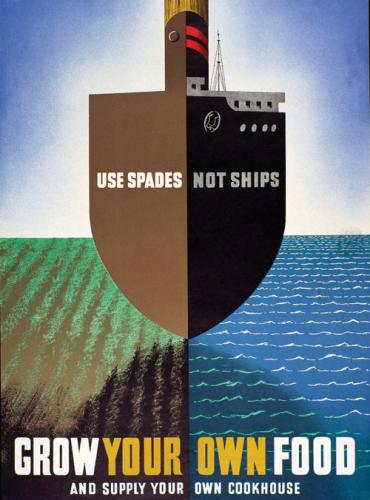
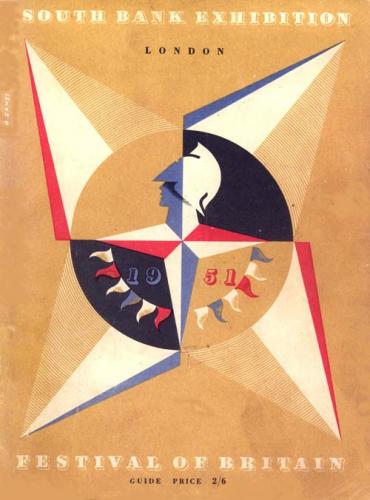
In 1937, out of a job and eager to see his own posters on London's billboards, he bought 70 copies of the journal Art & Industry, which featured a double-page spread of his designs, and sent them to prospective clients, including the General Post Office, Shell and London Transport. Within a few months, Frank Pick, the head of the London Underground, who had commissioned the struck-through roundel that is still the symbol of the Tube network today and Harry Beck's "circuit board" Tube map, had commissioned Games for his first poster. Eighteen more would follow.
Two of the early designs are elegant examples of Games's battle cry, "Maximum meaning, minimum means." They were intended for a campaign to encourage Underground users to visit London's cultural attractions. In one, for concerts, ballet and the opera, the Tube roundel has been turned into a treble clef. In the other, for galleries, exhibitions and museums, the roundel has become an artist's palette.
The most successful of his designs delighted both the London Transport board and the public. Responding to a request for "a gay, colourful and light-hearted poster" for London Zoo, Games came up with a tiger built up from the bars and circles of the Tube insignia. A set of sketches of giraffes, leopards and zebras — all animals with graphic markings — shows how Games experimented until deciding on a tiger whose tail looks like the last few stops at the end of a Tube line. A socialist, he liked the idea of designing for everyone — hot commuters and cheerful day trippers — rather than an elite of art world patrons.
Like this article? Share, save or print using the icons below:


Post your comment
More Features
- Now Or Never
- Who Will Heal This Divided Country?
- What Made The West Great Is What Will Save Us
- Shock And Awe: Tales Of A Washington Insider
- We Shouldn't Let Old Men Rot Away In Jail
- Arnold Wesker’s Bid To Build A New Jerusalem
- Our EU Deal Gives Us The Best Of Both Worlds
- Brexit Would Save Us And Set Europe An Example
- Are Both Sides Playing By The Referendum Rules?
- Should We Stay Or Should We Go?
- Ignore Project Fear: Brexit Won't Ruin Us
- Uncontrolled Immigration Means Finis Britanniae
- The Next US President Must Carry A Big Stick
- Can Clinton Or Trump Crack The US Tax Code?
- How to Survive the Fourth Industrial Revolution
- The Spectre Of Mayor Khan's Islamist London
- Students Are Leading The Free Speech Fightback
- Fortress Europe Faces An African Migrant Tsunami
- Trump May Be Bad, But What Comes Next Will Be Worse
- Myth Of Stressed-Out Soldiers On The Street
Popular Standpoint topics
