



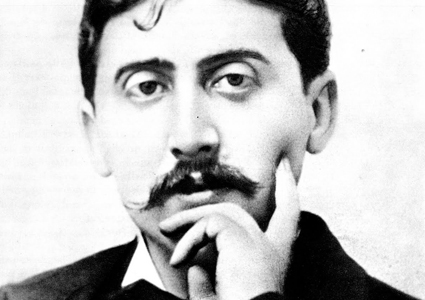
A la recherche du Proust perdu? Many readers begin his great work but fall by the wayside
On an autumn evening in 2013 we were having dinner in my garden, when the talk turned to Proust and A la recherche du temps perdu; it was the centenary of the publication of Du côté de chez Swann. My friend Alan had never attempted it, while I had tried three times to get beyond The Guermantes Way into the Cities of the Plain; I always stalled there, and then I would have to go back to the beginning again because of all the bits I’d forgotten. So the Proust book club was born: we and some like-minded friends would meet every three months or so and over two years would read the whole thing, inspired by each other’s industry, or too ashamed to give up. Well, we did it, with a mixture of people, some falling by the wayside but most soldiering on until the end, reading in French or English or both, in a variety of translations and editions. When we finished, I found myself missing Marcel and his world, so when I heard that Clive James had written a verse commentary on Proust, I was delighted. I have to say though that the title Gate of Lilacs gave me pause for thought. I rang Alan.
“I can’t remember any gate of lilacs in it,” I said. “Hawthorns yes, obviously, and apple blossom, Japanese chrysanthemums and cattleyas, but not lilacs. Do you think I’m going to have to read the whole thing again to find them? Shall I google ‘lilacs in Proust’? ‘Gate of lilacs’ sounds like a song by Brassens, but I’m not sure which . . .”
We sang a few snatches of likely Brassens songs: “Quand je vais chez la fleuriste, je n’achète que des lilas.” It was fun, but not conclusive. How could I write a review of a book when I couldn’t even place the title?
I needn’t have worried; that was the essence of the thing: be patient and all will be revealed. Trust both writers, Proust and James: the seemingly random will have meaning.
Clive James tells us, in both prose and verse, that he learnt French by reading Proust in the original, yes, the whole thing, and he tells us in prose, in one of the wonderful notes that follow the verse, that the Gate of Lilacs is the Paris Métro station (as well as the Closerie des Lilas brasserie frequented by Hemingway) and, for him, therefore, the gate into Proust’s world, which is itself a gate into the world of French literature and culture, which in turn leads into what we might call the world of civilisation, which is James’s world, where with him as our guide we brush shoulders with Diderot, Chamfort, Montesquieu, Akhmatova (yes, Mr James, accent on the second syllable, of course), Leonid Pasternak, Renoir and Monet, Colette, Cocteau, Reynaldo Hahn, Diaghilev and many, many more . . . we move with him through time and space and perhaps to feel quite at home in Clive James’s world we need to share his nostalgia for a more recent past, where the Impressionists still hang in the Jeu de Paume Gallery in the Tuileries (with Bergotte weeping in front of Vermeer’s patch of yellow) and where Renoir’s lovely painting La loge is still in the old Courtauld in Bloomsbury.
Like this article? Share, save or print using the icons below:


1:07 PM
7:07 AM
12:07 AM
3:07 PM
1:07 PM