



For Josephus, the James episode serves to illustrate the violent career of the high priest Ananus. In the gubernatorial vacuum — the procurator Festus (60-62 CE) was already dead and the incoming Albinus (62-64) still on his way — Ananus attempted to flex his political muscles. He brought his opponents, James "and certain others", before the Sanhedrin and sentenced them to be stoned for transgressing the Law. The fair-minded and strictly observant representatives of the ruling classes — no doubt the leading Pharisees who opposed Ananus and his heartless Sadducees — were outraged and appealed to King Agrippa II. Agrippa, who had been granted the privilege to appoint and dismiss high priests by the emperor Claudius, promptly sacked Ananus, a mere three months after his elevation to office.
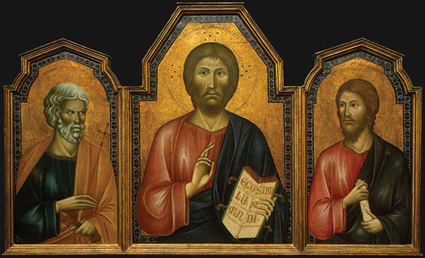
Fraternal love: Jesus and his brother, James (right)
Josephus's notice possesses all the appearances of authenticity. It lacks New Testament parallels that might have inspired a forger. Moreover, the church fathers, Origen (185-254) and Eusebius (260-340), not only attest to the existence of the passage, but also assert that Josephus saw in the fall of Jerusalem divine punishment for the murder of James. Unfortunately, no surviving Josephus manuscript contains such a statement and its authenticity is doubtful.
Christian tradition presents a substantially different version of James's killing. According to the second-century chronicler of the early church, Hegesippus, James was pushed from the parapet of the Temple but survived the fall and the subsequent stoning.
Finally, he was clubbed to death. Josephus's interest is wholly centred on Ananus's misconduct and has nothing to say about the admirable virtues heaped on the victim by Hegesippus: James "the Righteous" was holy from birth, was teetotal and vegetarian, never cut his hair or beard and shunned cosmetic oil and bath water. Compared to this, the sober picture of Josephus appears all the more believable.
As a final comment, Josephus's identification of James as "the brother of Jesus called Christ" would have made no sense unless there was an earlier mention of Jesus in Antiquities. The Testimonium Flavianum is likely to be this prior reference.


- Now Or Never
- Who Will Heal This Divided Country?
- What Made The West Great Is What Will Save Us
- Shock And Awe: Tales Of A Washington Insider
- We Shouldn't Let Old Men Rot Away In Jail
- Arnold Wesker’s Bid To Build A New Jerusalem
- Our EU Deal Gives Us The Best Of Both Worlds
- Brexit Would Save Us And Set Europe An Example
- Are Both Sides Playing By The Referendum Rules?
- Should We Stay Or Should We Go?
- Ignore Project Fear: Brexit Won't Ruin Us
- Uncontrolled Immigration Means Finis Britanniae
- The Next US President Must Carry A Big Stick
- Can Clinton Or Trump Crack The US Tax Code?
- How to Survive the Fourth Industrial Revolution
- The Spectre Of Mayor Khan's Islamist London
- Students Are Leading The Free Speech Fightback
- Fortress Europe Faces An African Migrant Tsunami
- Trump May Be Bad, But What Comes Next Will Be Worse
- Myth Of Stressed-Out Soldiers On The Street

2:12 AM
1:12 PM