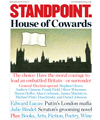



Like everybody else, British Muslims, especially women and girls, are entitled to the protection of the law. However, as Geoffrey Robertson QC explains (page 30), British citizens who commit war crimes and crimes against humanity in Syria, Iraq or elsewhere must be made to understand that the long arm of our law will reach them wherever they hide. Never before, at least in modern times, have British citizens committed such heinous offences; the War Crimes Act 1991 was intended to deal with those who had escaped justice for Nazi crimes by becoming British citizens, but only one person was convicted under it. As unprecedented as our predicament is the task of bringing the culprits to court and gathering evidence reliable enough to convict them. As Robertson says, we have not only the right but the duty to put war criminals on trial if they fall under our jurisdiction by virtue of their origins. The murder of Western hostages has rightly outraged public opinion, but the law should have no less regard for the unknown numbers of other victims of British jihadists flying the black flag of Islamic State. Their blood, like that of Abel, cries out for justice.
Standpoint has championed plenty of supposedly lost causes. We warned against the power vacuum that would be left by President Obama's administration ("we don't have a strategy yet") and predicted that Putin's Russia would take advantage of Nato's weakness. We warned that the "Arab Spring" would fuel the rise of Islamism and that European anti-Semitism was back in business. We warned that political insiders were underestimating the challenge posed by populist outsiders, a revolt of the masses against their masters on both sides of the Atlantic and even within the United Kingdom. We warned that the referendum on Scotland was unpredictable, that Britain might leave the EU, and that governments should not be panicked by the financial crisis or climate change.
It has been flattering, too, to have our articles picked up by much bigger media partners and our commitment to serious journalism is appreciated throughout the English-speaking world. Most recently the Guardian, of all papers, has decided to publish more "long form" essays. We have successfully resisted pressure to abandon the printed word; both our form and content have been quietly imitated by competitors. There is indeed a place for Standpoint in the intellectual marketplace. And we should like to thank our readers and supporters for keeping faith with us.
Standpoint has championed plenty of supposedly lost causes. We warned against the power vacuum that would be left by President Obama's administration ("we don't have a strategy yet") and predicted that Putin's Russia would take advantage of Nato's weakness. We warned that the "Arab Spring" would fuel the rise of Islamism and that European anti-Semitism was back in business. We warned that political insiders were underestimating the challenge posed by populist outsiders, a revolt of the masses against their masters on both sides of the Atlantic and even within the United Kingdom. We warned that the referendum on Scotland was unpredictable, that Britain might leave the EU, and that governments should not be panicked by the financial crisis or climate change.
It has been flattering, too, to have our articles picked up by much bigger media partners and our commitment to serious journalism is appreciated throughout the English-speaking world. Most recently the Guardian, of all papers, has decided to publish more "long form" essays. We have successfully resisted pressure to abandon the printed word; both our form and content have been quietly imitated by competitors. There is indeed a place for Standpoint in the intellectual marketplace. And we should like to thank our readers and supporters for keeping faith with us.
Like this article? Share, save or print using the icons below:


2:10 PM
7:09 PM
8:09 AM