


As the international boycott movement subscribes to a strategy first adopted by the Arab League to prevent the establishment of a Jewish homeland in 1945, three years before Israel's foundation, it is hardly surprising Israelis feel besieged. Having watched the United Nations General Assembly equate Zionism with racism forty years ago, and then witnessed the constant, continuing attempts by a series of international institutions to delegitimise Israel, many Israelis have concluded that the world is hostile to Jewish self-determination in any guise, rather than simply any specific government's policies. Casting Israel out as a pariah among the nations may satisfy those who wish to dismantle the Jewish state. But it is counter productive if your goal is a two state solution.
By indiscriminately discriminating against the people of an entire nation, a boycott shuts down engagement with those individuals, on both sides of the Green Line, who are working most tirelessly and innovatively to alter the status quo and bring about peace. The daily sacrifices and struggles of these brave Israelis and Palestinians are undermined by the simplistic, self righteousness of those who seek to impose a lazy, Manichean interpretation of good and evil on such an intractable, complex conflict. The morally repugnant and historically specious comparison of Israel with Apartheid South Africa peddled by the boycotters is a gross injustice to all who strive for democracy, peace and human rights. By excommunicating Israel from the global community, the boycott would segregate those in the Middle East from the international support they require as they seek to improve life for themselves and their fellow citizens. It would deprive the world of the life giving medicines, technological innovations and internationally renowned scholars produced by Israel's world-class universities, which have done so much to uplift humanity.
Ultimately, what is at stake for the international community, and particularly for us in Britain, is not the fate of Israel but the fundamental principles of academic freedom, free thought and the free exchange of ideas. By foreclosing every avenue for interaction with one nation, and a pluralistic one at that, by preventing discussion with those who differ with you on an issue, or merely want to discuss it with you, and by professing to know everything about a subject, such that your mind is closed to any further inquiry, a society does far greater intellectual damage to itself than that it seeks to silence.


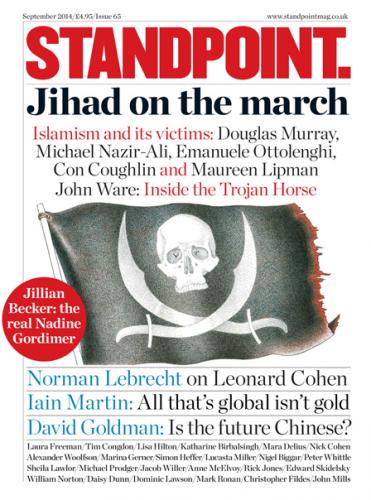
- The Plot to Islamise Birmingham’s Schools
- Nigeria, Iraq, Gaza—The Threat is the Same
- Radical Islam and its Invisible Victims
- The Man Who Tried to Teach us all a Lesson
- Globalisation and The Crisis of the Nation State
- The Medium Isn’t Always the Message
- What sort of Europe does Cameron Want?
- Is China outstripping the West at innovation?
- Piketty’s panacea will make inequality worse
- The Moral Strength of Leonard Cohen
- Designer who taught us to keep it simple
- The US Can Still Help Save Syria — and Iraq
- Russian Resurgence has Blindsided Nato
- On Europe, Nothing Less than Treaty Change will do
- Putin has his Useful Idiots on the Left and the Right
- Sarajevo: Where the Century of Terror Began
- Allen Lane’s Pelicans Take Wing Once More
- How Not to Remember the First World War
- Opera is Not Just Our Most Expensive Noise
- Jonathan Miller: One Man, Two Cultures

8:06 AM
11:06 PM
11:05 PM
12:05 PM
12:05 PM
2:05 PM
7:05 AM
9:05 PM
6:05 PM