



The Bala Hissar fort at Kabul, November 13, 1893. Beneath the brilliance of the cold autumn sky, Abdur Rehman Khan, Afghanistan's "Iron Amir," is holding a durbar (ceremonial gathering). Carried to a podium in an ornate sedan chair, he announces his farewell to Sir Henry Mortimer Durand, the Foreign Secretary of India, his guest these past seven weeks. It is, writes Durand in his journal later that night, "a first-rate speech, insisting on value of English alliance — insisting nothing could have been better".
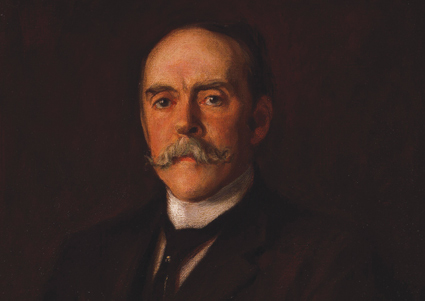
Sir Henry Mortimer Durand: He feared another Indian Mutiny
The Amir wishes Durand "laughter and all happiness" and gives him "various messages which I was to deliver to the Queen and ‘his friend' Lord Salisbury, and Gladstone if I saw him". Noting the early snows on the mountains, Durand takes his leave. In a couple of days, he is halfway back to the British stronghold at Peshawar, floating down the Kabul River on a raft made of bullock skins.
For many years to come, the diplomatic mission he has just concluded, the drawing of the first "scientific frontier" between British India — now Pakistan — and Afghanistan, will be regarded as a triumph. All the way home, Durand boasts enthusiastically of his many congratulatory telegrams: from the Viceroy, the Secretary of State for India and Queen Victoria. In the words of his biographer, Sir Percival Sykes, whose book was published in 1926, two years after Durand's death: "Durand served his country right well, and generations yet unborn will benefit from the Durand Line that he negotiated." Durand, he added, "stands out in his generation as the great Boundary-Maker and consequently as the great Peace-Maker".
That judgment now looks questionable. Because it messily divides the Pathan (or Pashtun) people between Afghanistan and Pakistan, splitting tribes, clans and families, the Durand Line is the ultimate reason for many of the tactical difficulties faced by the West in its current struggle against Islamist extremism. The line is not merely porous. In many areas, it does not really exist at all. Last year, a senior Pakistani intelligence officer gave me an illustrated briefing in Islamabad. He showed me satellite photos to demonstrate how the line splits villages and even buildings in two. Small wonder that for most of its 1,200-mile journey, across some of the most rugged terrain on earth, it is easily breached by guerrillas — such as, towards the end of 2001, Osama bin Laden and his leading al-Qaeda cohorts, who fled to Pakistan from the caves of Tora Bora.
The British aid worker Linda Norgrove, who was killed in an attempt to rescue her from her kidnappers in September 2010, was taken very close to the frontier in the Afghan province of Kunar: her abductors would also have had a ready refuge in Pakistan. The past year has seen an escalation in the frequency of American drone strikes across the line against Taliban Pakistani targets. These have killed some important local commanders. But this has come at a price: the growing alienation of Pakistani opinion and, at times, its government, and the partial closure to Nato forces of their critical supply line, the Khyber Pass.


- Mr Cameron, Show The Country That You Care
- Campaign Diary
- Defying Duopoly: The Rise Of The Insurgents
- Don't Rig The System In Favour Of Coalitions
- Warring Gangsters Who Run The Country
- Political Correctness Is Devouring Itself
- An Archival Treasure Trove—And All Online
- Do we value freedom of speech in Britain?
- Can Europe's Jews Feel Safe Alongside Muslims?
- We Cannot Avoid The Battle Over Blasphemy
- Inside The World Of 'Non-Violent' Islamism
- We Can Fix The Economy But Not Human Nature
- The Keynesian Versus The Monetarist: A Lost Decade
- The Keynesian Versus The Monetarist: Time To Re-Read Keynes
- The New Language Of Political Narcissism
- Two Words You Won't Hear This Election: Foreign Policy
- The Many Faces Of Holocaust Denial
- Why Is 'Fifty Shades of Grey' the New Normal?
- Obama scuttles. America retreats. Things fall apart
- Putin and the Art of Political Fantasy

- The Loss Of Faith Made Music Mute
- The Great Betrayal: How Liberals Appease Islam
- Political Correctness Is Devouring Itself
- The New Language Of Political Narcissism
- Why The World Still Loves Shakespeare
- Don’t Listen to Britain’s Designer Demagogues
- Who's in Charge of BBC News?
- An English parliament: the only way to save the UK
- The Loss Of Faith Made Music Mute
- The Great Betrayal: How Liberals Appease Islam
- Political Correctness Is Devouring Itself
- The New Language Of Political Narcissism
- Why The World Still Loves Shakespeare
- Don’t Listen to Britain’s Designer Demagogues
- Who's in Charge of BBC News?
- An English parliament: the only way to save the UK
- The Loss Of Faith Made Music Mute
- The Great Betrayal: How Liberals Appease Islam
- Why The World Still Loves Shakespeare
- Who Will Lead The Berlin Band?
- Putin and the Art of Political Fantasy
- Political Correctness Is Devouring Itself
- The New Language Of Political Narcissism
- Inside The World Of 'Non-Violent' Islamism
4:03 PM