


Pioneer of sociology: In his philosophy of history, Ibn Khaldun recognised the value of "Asabiyah" (social cohesion)
It is not clear that the West has successfully met the challenge of 9/11. Worse: it is not clear that the West yet fully understands what the challenge is.
To understand 2001 we have to go back to 1989, the year of the collapse of the Soviet Union, the end of the Cold War, and the fall of the Berlin Wall. It was an historic moment that few had expected. What did it mean? It was then that two stories were born, with one of which we are familiar, the other of which we seem hardly to know or understand at all.
The first narrative was that the West had won. Communism had imploded. In the end, it failed to deliver the goods. People wanted freedom. They sought affluence. The Soviet Union had delivered neither. Politically it was repressive. Economically it was inefficient. For freedom you need liberal democracy. For affluence you need the market economy. 1989 marked the victory of both. From here on democratic capitalism would spread slowly but surely across the world. To adapt Francis Fukuyama's phrase of the time, it was the beginning of the end of history.
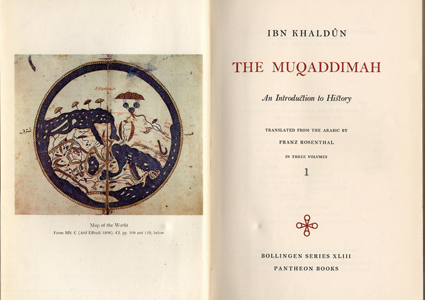
The other narrative was quite different but has the advantage of so far being proved correct. Unlike Fukuyama's, it was based not on Hegel but on the 14th-century Islamic thinker Ibn Khaldun. We don't know much about Ibn Khaldun in the West but we should. He was one of the truly great thinkers of the Middle Ages. He has every claim to be called the world's first sociologist. Not for another 300 years would the West produce a figure of comparable originality: Giambattista Vico. Both produced compelling accounts of the rise and fall of civilisations. Both knew what most people most of the time forget: that the greatest civilisations eventually fall. The reason they do so is not necessarily the rise of a stronger power. It is their own internal decay.
Most accounts of al-Qaeda focus on the intellectual influence of the 20th-century thinker and critic of the West, Sayyid Qutb. That influence was real. But the deeper story the leaders of al-Qaeda told in 1989, without which 9/11 is unintelligible, had less to do with Qutb and hatred of the West and its freedoms; and much more to do with the key precipitating event of the fall of Communism: the withdrawal, in 1989, of the Soviet army from Afghanistan.


- Migrant Crisis? Europe Hasn't Seen Anything Yet
- Why Palmyra Should Matter To The West
- Corbyn's Rise Makes Cameron Redundant
- No, Jeremy: Politics Is All About Borders Now
- Why 'Lady Chatterley' Still Provokes Us
- For Climate Alarmism, The Poor Pay The Price
- Will Putin's Empire Outlast The Soviets?
- British Witnesses To Lenin's Revolution
- Bibliophiles Beware: Online Prices Are A Lottery
- How Jeremy Corbyn's Coup Hijacked Labour
- Corbyn's Signpost Back To The Ghetto
- Unionists, Don't Despair: Scotland Is Not Lost — Yet
- Britain's Apologists For Child Abuse
- Lift The Fee Cap And Set Universities Free
- The Story Behind One Dead Man's Penny
- Hitler's 'Ecological Panic' Didn't Cause The Holocaust
- Meet The Montalvos: The First Global Family
- Mr Gove, Here Is Our Statute of Liberty
- A British Bill Of Rights
- Something For Nothing Just Won't Do Any More

6:11 PM
9:11 PM
1:11 PM
11:10 AM
11:10 AM
5:09 AM
1:09 PM
11:09 PM
9:09 PM
10:09 PM