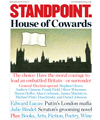



Yet on December 9 last year, at what was then the latest "Save the Euro" summit, he did something rather extraordinary. Wielding the veto, he broke the historical continuum by which Britain moved gradually from a trading relationship to deep immersion in an integrationist project. Britain would not sign up to France and Germany's treaty facilitating a fiscal union, the prime minister told his fellow EU leaders. It was one against 26, the 17 of the Eurozone and the other nine EU members, many of them slated to join — eventually. The 26 will press ahead, while Britain stands (not for the first time in its history) alone.
When Cameron unexpectedly broke free of the old thinking and vetoed it was like a dam bursting. His overwhelmingly eurosceptic party, which had been fractious and mutinous, was overjoyed. Polling has suggested strong backing from the public. Pro-EU forces in Britain, including the Conservatives' coalition partners the Liberal Democrats, went into an extended period of mourning, lamenting that Cameron had left Britain isolated in Europe. Although, as Terry Smith, the pugnacious and hard-headed City CEO, put it: Britain is isolated in the way that a man on the Southampton quayside who has turned down a ticket on the maiden voyage of the Titanic is isolated.
Suddenly there is Tory optimism that on Europe Cameron is on the verge of achieving something important. He has, it seems, found his "game-changer" and gained the opportunity to revivify his premiership. To understand why, and to fully appreciate the enormity of what he appears to have started, one has to examine the post-war history of the Conservative party and the profound shift in its attitude to Europe.
Edward Heath was always the Tory exception. Here was a leader more gripped by pro-European fervour than possibly even Monnet himself. His war experiences, and the failure of his efforts on behalf of Macmillan to negotiate EEC entry, meant he was eventually prepared to accept dreadful terms dictated by the French on fishing, agriculture and financial contributions. As Robin Harris notes in his magnificent new party history, The Conservatives: "Few political lives in modern Britain brought such unhappy consequences as the life of Edward Heath."


- Mr Cameron, Show The Country That You Care
- Campaign Diary
- Defying Duopoly: The Rise Of The Insurgents
- Don't Rig The System In Favour Of Coalitions
- Warring Gangsters Who Run The Country
- Political Correctness Is Devouring Itself
- An Archival Treasure Trove—And All Online
- Do we value freedom of speech in Britain?
- Can Europe's Jews Feel Safe Alongside Muslims?
- We Cannot Avoid The Battle Over Blasphemy
- Inside The World Of 'Non-Violent' Islamism
- We Can Fix The Economy But Not Human Nature
- The Keynesian Versus The Monetarist: A Lost Decade
- The Keynesian Versus The Monetarist: Time To Re-Read Keynes
- The New Language Of Political Narcissism
- Two Words You Won't Hear This Election: Foreign Policy
- The Many Faces Of Holocaust Denial
- Why Is 'Fifty Shades of Grey' the New Normal?
- Obama scuttles. America retreats. Things fall apart
- Putin and the Art of Political Fantasy

- The Loss Of Faith Made Music Mute
- The Great Betrayal: How Liberals Appease Islam
- Political Correctness Is Devouring Itself
- The New Language Of Political Narcissism
- Why The World Still Loves Shakespeare
- Don’t Listen to Britain’s Designer Demagogues
- An English parliament: the only way to save the UK
- Death By Clickbait
- The Loss Of Faith Made Music Mute
- The Great Betrayal: How Liberals Appease Islam
- Political Correctness Is Devouring Itself
- The New Language Of Political Narcissism
- Why The World Still Loves Shakespeare
- Don’t Listen to Britain’s Designer Demagogues
- An English parliament: the only way to save the UK
- Death By Clickbait
- The Loss Of Faith Made Music Mute
- The Great Betrayal: How Liberals Appease Islam
- Why The World Still Loves Shakespeare
- Political Correctness Is Devouring Itself
- Who Will Lead The Berlin Band?
- Putin and the Art of Political Fantasy
- The New Language Of Political Narcissism
- Inside The World Of 'Non-Violent' Islamism
9:01 PM