


In Downing Street, they love Barack Obama. The Prime Minister and his Chancellor see the re-election of the US President as pointing the way to Tory triumph at the next UK general election because it supposedly vindicates their own modernising approach. It suggests incumbents can win, even when they haven't done a great job. A stuttering economic recovery seems to be no barrier to election success.
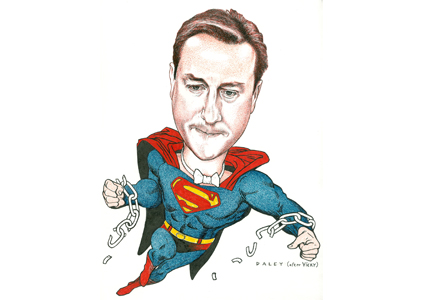 Yes He Cam: The Prime Minister’s prospects are better than many think
Indeed, in the hours after the US result became clear, the Prime Minister was desperate to associate himself with the man who had given him renewed hope. He made sure he won the race to be the first leader to congratulate Obama, tweeting his tribute early on November 7. Rather demeaningly, No 10 later issued a picture of the Prime Minister purportedly on the telephone to the President. There is no way of knowing whether it really was Obama on the other end of the line, or whether Cameron was on hold. Perhaps he was just leaving a message on the answerphone in the Oval Office. Or maybe he was attempting to emulate his hero, Harold Macmillan, who reveled in his personal special relationship with the glamorous John F. Kennedy.
Days after the Cameron call, George Osborne, billed by his lately somewhat shrunken fan club as the master strategist, took the Obama worship a step farther. Breaking off from concentrating "110 per cent" on the economy, he wrote a piece for The Times on what he made of the President's victory. The resulting column was Osborne in a nutshell. The Chancellor is obsessively tactical—bright in a metropolitan way, trend-obsessed and an obvious lover of US electoral geekery and West Wing wonkery. However, when writing such pieces he does tend to give himself away. There were the obligatory and worryingly long sections on opinion polling and a part where he appeared to suggest that Obama only really got back on track when he adopted an Osborne-ite message: "Beginning the long, hard road to recovery." Apparently the similarity and resonance of what Obama and Cameron are both saying is "striking".
It is dangerous to read too much into American elections from a British perspective. The UK and the US are different, and the idea that from the 1960s until the end of the Blair era we were somehow on similar cycles has not applied for many a year. Blair's cooperation with the Republican George W. Bush was closer, and more eventful, than his partnership with the Democrat Bill Clinton. The Conservative Cameron didn't want the Republican Mitt Romney to win.


- Licence To Chill? Not Yet, Prime Minister
- Money Can't Buy Us Love: Profiting From Loneliness
- More Immigration Means Less Integration
- Is France As Doomed As Houellebecq Thinks?
- Compassion To Refugees, Not Capitulation To Islamic State
- How Mervyn King Got Northern Rock Wrong
- Fix Rotten Boroughs Or Risk Voting Wars
- Migrant Crisis? Europe Hasn't Seen Anything Yet
- Why Palmyra Should Matter To The West
- Corbyn's Rise Makes Cameron Redundant
- No, Jeremy: Politics Is All About Borders Now
- Why 'Lady Chatterley' Still Provokes Us
- For Climate Alarmism, The Poor Pay The Price
- Will Putin's Empire Outlast The Soviets?
- British Witnesses To Lenin's Revolution
- Bibliophiles Beware: Online Prices Are A Lottery
- How Jeremy Corbyn's Coup Hijacked Labour
- Corbyn's Signpost Back To The Ghetto
- Unionists, Don't Despair: Scotland Is Not Lost — Yet
- Britain's Apologists For Child Abuse

2:03 PM
10:12 AM