


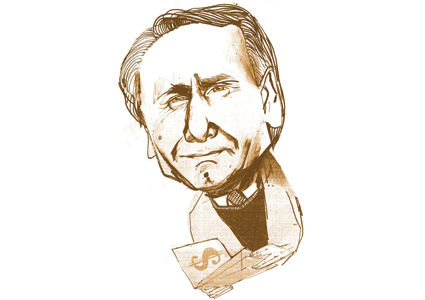
You have to be careful not to tread too heavily on sour grapes when it comes to Dan Brown, because the wine it creates is foul and bitter, and leaves you rather than the author of The Da Vinci Code with a bloody awful hangover. There is nothing wrong in doing extremely well writing potboilers about lawyers, dinosaurs, or Napoleonic soldiers, or even raptor-riding barristers at Waterloo, but it's Brown's deliberate obscuring of the vital barrier between fact and fiction that is so problematic. He injects a strong political and theological agenda into his writing, and claims to be exposing his readers to truths they otherwise would never know. So it's not that he writes so badly — and every reviewer has listed the stylistic howlers and aching clichés — but that he has a genuinely noxious influence.
The man is overestimated in that he is, simply, taken extremely seriously by more people than we might like to believe, and has led myriad innocents to question or lose their Christian faith, or embrace entirely ersatz history. If you doubt it, visit the Temple in London and hear the guides begin their chat with a long correction of Dan Brown's version of medieval Europe. Good Lord, it's why the tourists are there in the first place!
Brown's new novel, Inferno, is simply more of the last book, which was more of the one before that. This time he misunderstands and perverts the writings of Dante, libels the Philippines, pretty much advocates eugenics and strident population control, and mocks anybody who believes in the concepts of sin, salvation and heaven. Oh, and there's plenty of Catholic-bashing and wild conspiracy theories again, of course.
It was The Da Vinci Code that made Brown famous, in which he gave us the hysterical claim that Christ's followers never thought of Him as a messianic figure, and that the earliest written documents substantiate this.


- The Loss Of Faith Made Music Mute
- The Great Betrayal: How Liberals Appease Islam
- Why The World Still Loves Shakespeare
- Who Will Lead The Berlin Band?
- Putin and the Art of Political Fantasy
- The New Language Of Political Narcissism
- Inside The World Of 'Non-Violent' Islamism
- Political Correctness Is Devouring Itself
2:10 AM
6:07 PM
7:07 PM
11:07 PM
11:07 PM
10:07 PM
12:07 PM
4:07 AM
1:07 AM
11:07 PM